
Best Time to Add Oil to Roti Dough for Perfect Softness
Confused about when to put oil in roti dough? Get real tips and answers for the softest, tastiest rotis.
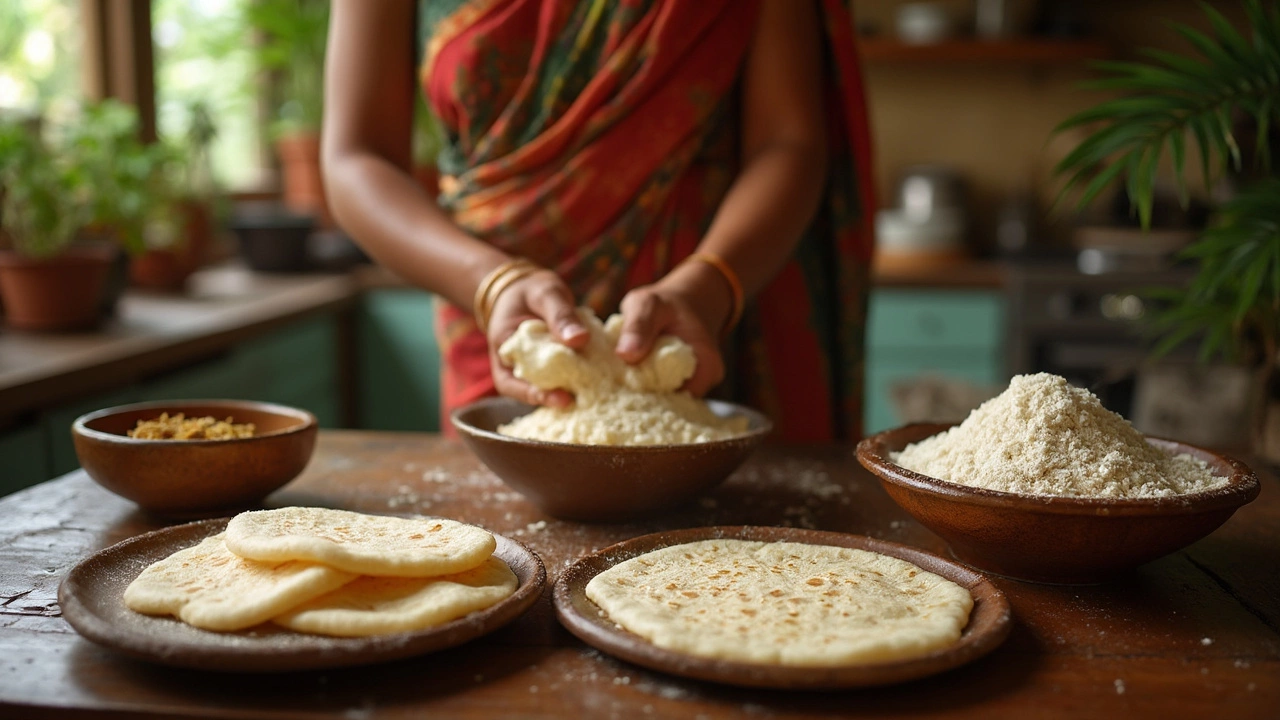
When you pull a warm, puffed roti, a traditional Indian flatbread made from whole wheat flour and water. Also known as chapati, it's the daily staple that holds together curries, chutneys, and family meals across India. The secret isn’t in fancy ingredients—it’s in technique. You don’t need baking powder, yeast, or milk to get that perfect puff. Just flour, water, a little patience, and the right heat.
Most people mess up roti by skipping the resting step. Dough needs time—minimum 30 minutes—to let the gluten relax. If you roll it too soon, it shrinks back like a spring. And if you roll it too thin in spots, it tears. Aim for even thickness, not paper-thin. The flour, fine whole wheat atta, not refined maida matters too. Look for atta labeled for roti—it’s ground finer and holds moisture better. Water temperature? Room temp. Cold water makes dough stiff; hot water makes it gummy. Mix until smooth, then cover and walk away.
When it’s time to cook, your tawa or skillet needs to be properly heated—not smoking, but hot enough that a drop of water sizzles and dances. Press the roti gently with a dry cloth as it starts to bubble. That’s when steam builds underneath, lifting it like a balloon. Flip it once. Let it puff. If it doesn’t, your heat is too low or your dough’s too dry. Don’t press it down with a spatula—that kills the puff. And never store roti in the fridge. It dries out fast. Keep them wrapped in a clean towel until ready to eat.
Some swear by adding a spoon of ghee to the dough. Others skip it. The truth? It helps with softness, but it’s not required. If you’re making roti for kids or elderly folks who need extra tenderness, a tiny bit of ghee or oil makes a difference. But purists? They’ll tell you the real flavor comes from just flour and fire.
And here’s the thing: roti isn’t about perfection. It’s about practice. One bad roti? No big deal. The next one will be better. That’s how the best roti makers learned—by making dozens, then hundreds, then thousands. You don’t need a professional tandoor. Your stovetop is enough. Just focus on the dough, the roll, the heat. Get those three right, and you’ll have soft roti that lifts off the plate on its own.
Below, you’ll find real, tested tips from people who make roti every day—not just recipes, but fixes for dry dough, stubborn flatbreads, and why your roti won’t puff. No fluff. Just what works.
Confused about when to put oil in roti dough? Get real tips and answers for the softest, tastiest rotis.
Curious about adding baking soda to your roti dough? This article explains exactly how baking soda changes the texture, look, and taste of your rotis. You’ll find out when and how to use it, plus common mistakes and the science behind the results. Get ready for softer, fluffier rotis—or learn why you might want to avoid this shortcut. Dive in for real-life kitchen stories, surprising facts, and practical tips that’ll change your roti game.