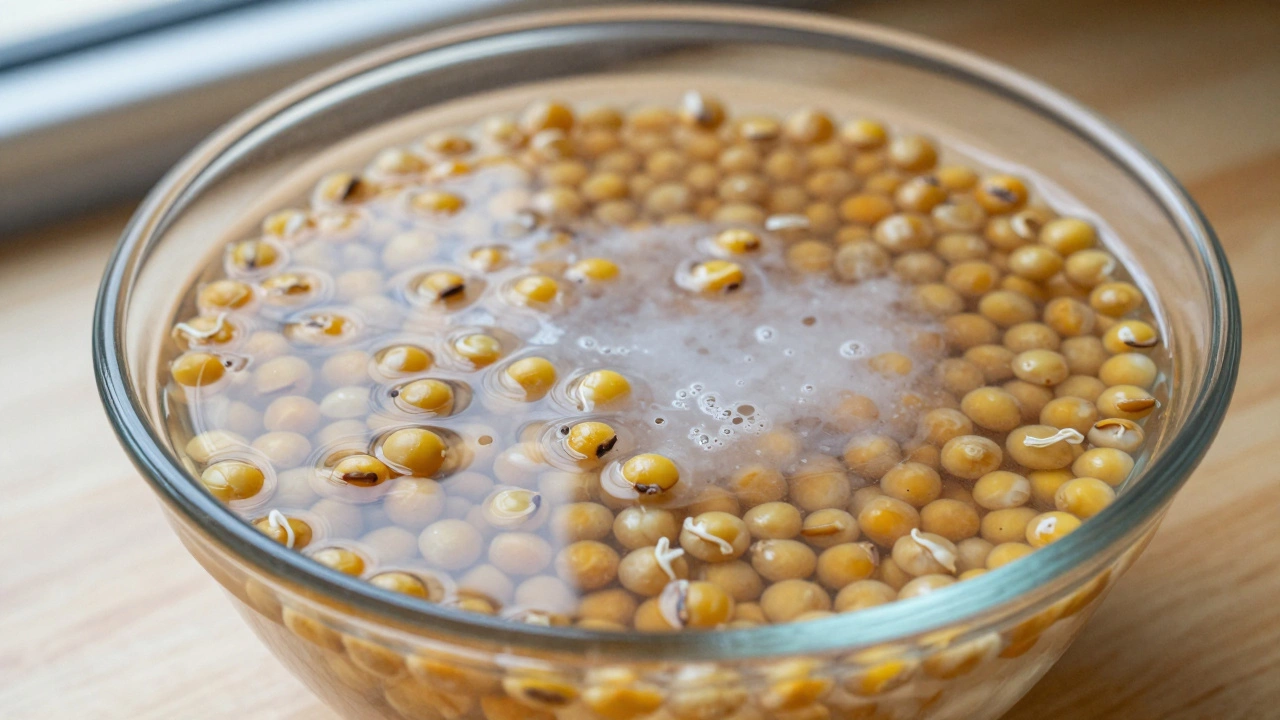
How Long to Soak Urad Dal for Perfect Dosa Batter
Soak urad dal for 6 to 8 hours for fluffy, crisp dosas. Too short and the batter won't ferment; too long and it turns slimy. Learn the right time, water tips, and seasonal fixes.
When you soak urad dal, you're not just prepping a legume—you're unlocking its full potential. Urad dal, a black lentil widely used in Indian cooking for dosas, idlis, and dals, is naturally dense and hard. Without soaking, it stays chewy, takes forever to cook, and can cause digestive discomfort. Also known as black gram, this lentil is a staple across South and East India, where it's turned into batter, paste, or whole dishes. Soaking breaks down phytic acid and enzyme inhibitors, making nutrients more available and reducing cooking time by nearly half.
Why does this matter in real kitchens? If you’ve ever made idli batter that didn’t rise, or dal that stayed gritty, soaking is likely the missing link. Food preparation techniques like soaking aren’t optional—they’re foundational. In Indian households, soaking urad dal for 6–8 hours (or overnight) is standard. Cold water works fine; no need for warm water or salt unless you’re fermenting. Skip this step, and you risk uneven texture, longer cooking, and wasted energy. Compare that to soaking paneer, a fresh cheese often soaked to improve texture—both are about transforming a raw ingredient into something tender and usable. Urad dal doesn’t need acid like paneer, but it needs time. And time, in cooking, is often the best ingredient.
Some people soak urad dal with rice for idli or dosa batter—that’s a different process, but the principle stays the same: hydration enables fermentation and texture control. Others soak it alone, then blend it into thick pastes for vadas or dal makhani. Either way, the goal is softness without mushiness. The right soak turns a tough seed into a smooth, creamy base that holds its shape. If you’re making batter, you’ll notice the difference in rise and fluffiness. If you’re cooking whole dal, you’ll taste the difference in tenderness and flavor absorption. This isn’t magic—it’s basic food science, applied the way generations of cooks have known.
What you’ll find in the posts below isn’t just a list of recipes. It’s a practical guide to the real steps behind Indian food manufacturing and home cooking—how soaking, blending, fermenting, and simmering all connect. You’ll see how the same principles that make perfect paneer also apply to lentils. You’ll learn why skipping prep steps leads to failed dishes. And you’ll get clear, no-fluff answers to what actually works in the kitchen, backed by real results—not just tradition.
Soak urad dal for 6 to 8 hours for fluffy, crisp dosas. Too short and the batter won't ferment; too long and it turns slimy. Learn the right time, water tips, and seasonal fixes.
Ever wondered how long you need to soak urad dal to make the perfect dosa batter? Here's everything you need to know. This guide explores the ideal soaking time for urad dal, offers tips for achieving the right batter consistency, and shares some clever hacks to speed up the process. Whether you're a dosa newbie or a seasoned cook, this article ensures you're well-prepared for your next dosa-making adventure.