How Long to Soak Urad Dal for Perfect Dosa Batter
Urad Dal Soak Time Calculator
Input Parameters
Results
Enter your values to see recommended soak time
Warning: This temperature may cause over/under soaking.
Getting the right soak time for urad dal is the difference between fluffy, crisp dosas and dense, rubbery ones. If you’ve ever made dosa batter that didn’t ferment well or turned out too thick, the problem likely started before you even turned on the stove-it was in the soaking bowl.
Why Soaking Urad Dal Matters
Urad dal, also known as black gram, is the secret behind the airy bubbles in dosa batter. But unlike rice, which just needs to soften, urad dal needs time to release its natural enzymes and proteins. These are what help the batter ferment and rise. If you skip or shorten the soak, you’re not just making the grinding harder-you’re killing the fermentation.
Most recipes say ‘soak overnight,’ but that’s not always enough. The ideal soak time depends on your climate, water temperature, and even the age of the dal. In colder places like Birmingham, where winter temps hover around 5°C, you need longer. In warmer kitchens, it can go faster.
The Perfect Soak Time: 6 to 8 Hours
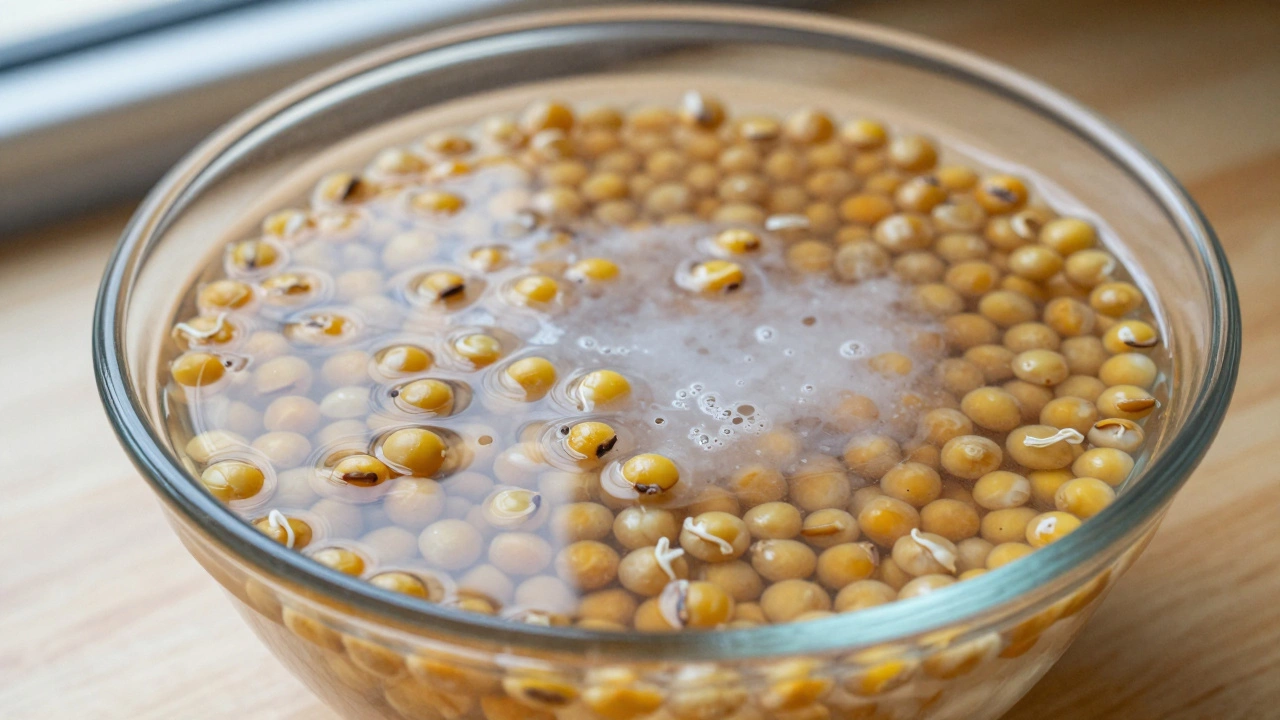
For best results, soak urad dal for 6 to 8 hours. That’s the sweet spot where the dal swells to nearly double its size, becomes soft enough to crush between your fingers, and starts to lose its chalky texture. You’ll know it’s ready when the skin slips off easily if you rub a grain between your thumb and finger.
Don’t soak it longer than 10 hours unless you’re in a very cool environment. Over-soaked urad dal turns slimy, loses its structure, and can start fermenting too early-leading to sour or gummy batter. And if you’re soaking it for more than 12 hours, you’re risking bacterial growth, not better fermentation.
Water Temperature and Ratio
Use room temperature water, not hot or ice-cold. Hot water kills the natural yeasts and bacteria needed for fermentation. Cold water slows everything down too much.
Use about 2.5 cups of water for every 1 cup of urad dal. That’s enough to cover the dal with a good inch of water above it. The dal will expand, so don’t skimp. Drain the water completely after soaking. Don’t rinse it unless it’s dusty-rinsing washes away surface microbes that help fermentation.
What About Rice? Soak It Too
You’re not just soaking urad dal-you’re soaking rice too. For dosa batter, use idli rice or parboiled rice. Soak it at the same time as the urad dal. Use 3 cups rice to 1 cup urad dal. The rice doesn’t need to get as soft as the dal, but it should lose its hard center. After soaking, drain both together.
Some people soak rice separately, but that’s unnecessary. Soaking them together saves time and ensures they ferment evenly. The rice provides starch, the urad dal provides protein and airiness. They work as a team.
Seasonal Adjustments
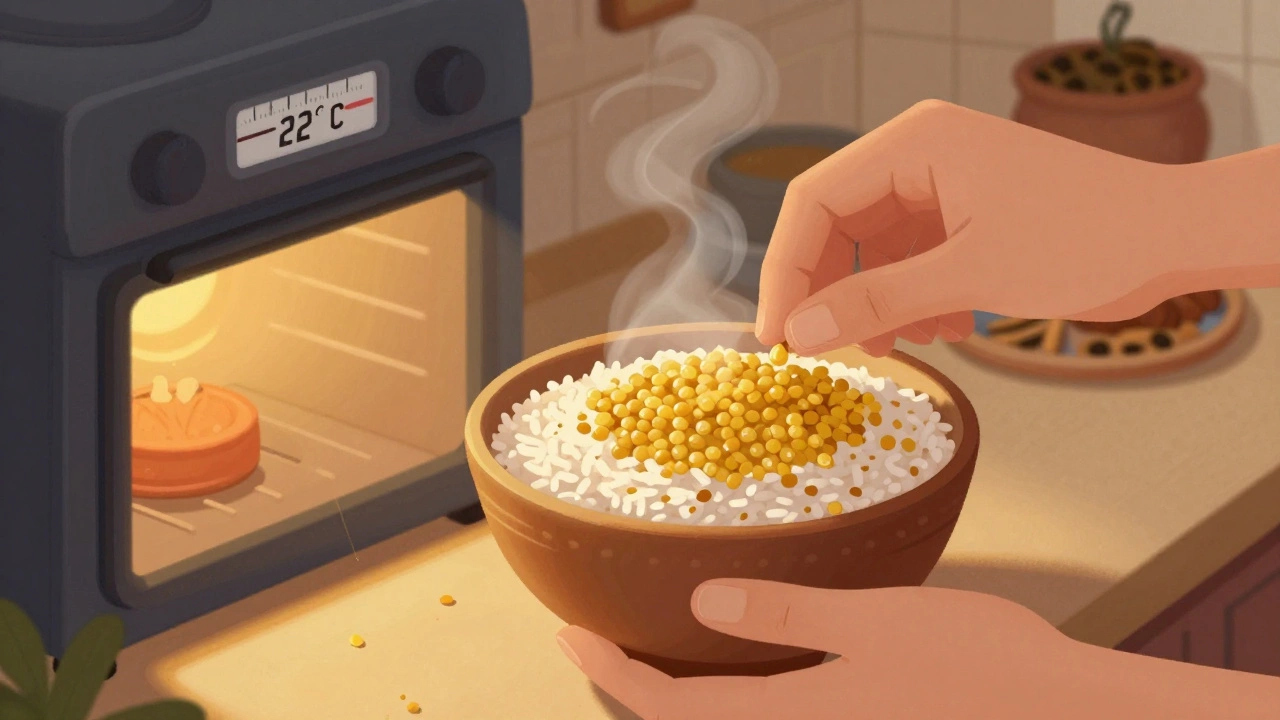
In summer (above 28°C), 6 hours is plenty. In winter (below 18°C), go for 8 hours. If your kitchen is chilly, put the soaking bowl in a warm spot-near the oven if it’s on, or inside a turned-off microwave with a cup of hot water beside it. Don’t use a heating pad or direct heat. You want gentle warmth, not cooking.
One trick I’ve used in Birmingham winters: soak the dal in the morning, then leave the bowl in the oven with just the light on. The bulb gives off enough heat to keep it around 22-24°C. Works every time.
What Happens If You Under-Soak?
If you soak urad dal for only 2-4 hours, you’ll notice:
- The batter is gritty after grinding
- Fermentation takes over 18 hours-or doesn’t happen at all
- Dosas come out thick, heavy, and don’t crisp up
It’s not just inconvenient-it’s frustrating. You end up wasting rice, dal, time, and fuel. And no one wants a dosa that sticks to the pan because the batter didn’t ferment properly.
What Happens If You Over-Soak?
Soaking for 12+ hours can cause:
- Urad dal turns mushy and slimy
- Batter smells off before fermentation even starts
- Final dosas taste sour or bitter, not tangy
Over-soaked dal breaks down too much. The proteins and starches start to leach out, and the batter loses its ability to trap air. You’ll still get something edible, but it won’t be the light, lacy dosa you’re after.
Pro Tips for Perfect Soaking
- Use clean, filtered water if your tap water is heavily chlorinated. Chlorine kills natural microbes.
- Don’t soak in metal bowls. Use glass, ceramic, or food-grade plastic. Metal can react with the dal and affect flavor.
- Soak whole urad dal, not split. Split urad dal ferments too fast and doesn’t give the same texture.
- If you’re in a hurry, soak for 4 hours, then grind and ferment in a warm spot. It’s not ideal, but it works.
- Store soaked dal in the fridge only if you’re delaying grinding. Don’t soak and then refrigerate-it stops fermentation before it starts.
How to Tell If It’s Ready
Here’s a simple test: take one soaked urad dal grain and pinch it between your fingers. If it crushes easily into a smooth paste with no hard center, it’s ready. If it’s still crunchy or chalky inside, give it another hour.
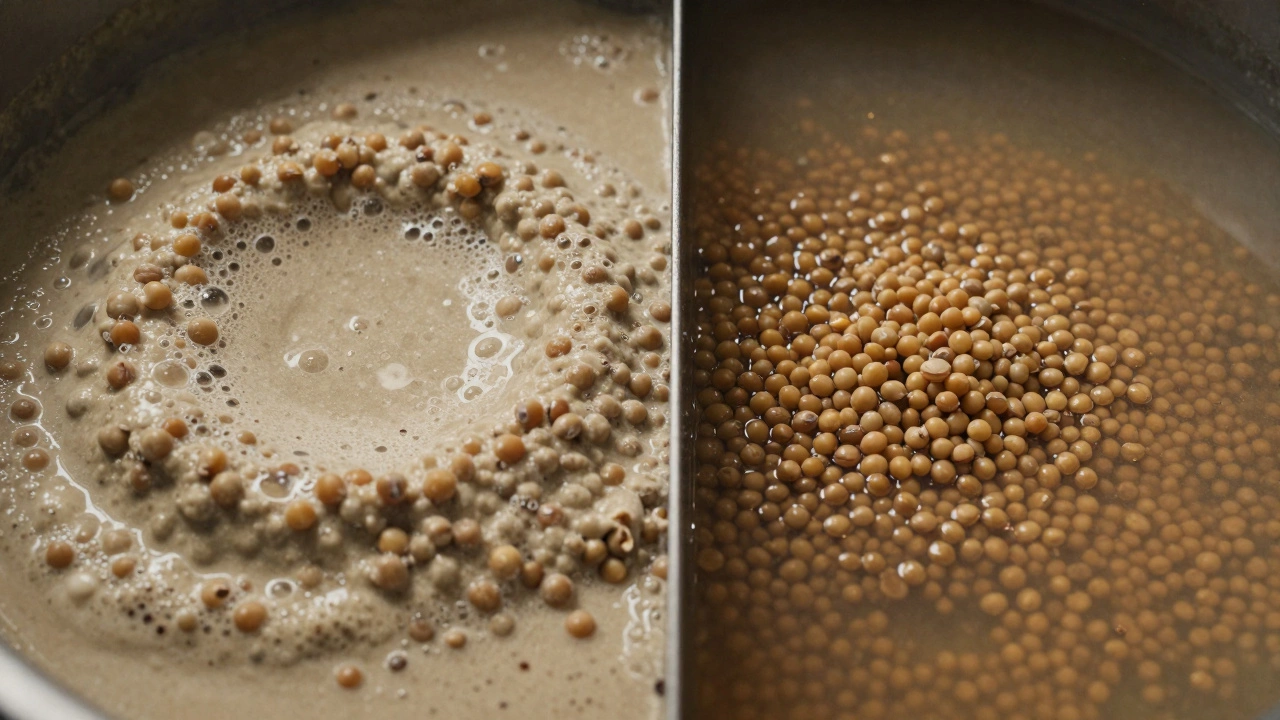
Also, the water should look slightly cloudy-not muddy, but not clear. That cloudiness means the dal is releasing its starches and proteins. That’s good.
Next Steps After Soaking
Drain the dal and rice together. Grind the urad dal first-add just a splash of water, little by little, until you get a thick, fluffy paste. It should hold a peak when you lift the grinder blade. Then grind the rice separately into a slightly coarser paste. Mix both together, add salt, and leave the batter in a warm place for 8-12 hours.
It’s done when the batter has doubled in volume and has a pleasant sour smell-not rotten, not sweet. Poke it with a finger. If the hole stays, it’s ready. If it springs back, wait another hour.
Common Mistakes to Avoid
- Using old urad dal (more than 6 months old). Fresh dal ferments better.
- Adding baking soda to help fermentation. It’s a band-aid. Real fermentation doesn’t need it.
- Putting the batter in the fridge to ferment. Cold kills the good bacteria.
- Using a lid that seals tightly. You need airflow for fermentation. Cover with a cloth or loose lid.
There’s no shortcut to good dosa batter. It’s not about speed-it’s about patience. The right soak time sets the stage. Everything else follows.
Can I soak urad dal for dosa in the fridge?
No. Soaking in the fridge slows down the natural enzymes and microbes that start fermentation. You want room temperature for soaking. If you need to delay grinding, soak at room temp first, then refrigerate the soaked dal-but only after it’s fully soaked and drained.
Why is my dosa batter not fermenting?
The most common reason is under-soaked urad dal. If the dal wasn’t soaked long enough, the enzymes needed for fermentation aren’t activated. Other causes: cold kitchen, old dal, chlorinated water, or sealing the batter in an airtight container. Try soaking for 8 hours in a warm spot next time.
Can I use split urad dal for dosa?
Technically yes, but you won’t get the same texture. Split urad dal ferments too fast and creates a denser batter. Whole urad dal gives you the airy, bubbly structure that makes dosa light and crisp. Always use whole, unsplit black gram for dosa batter.
How long should I ferment the batter after grinding?
After grinding, let the batter ferment for 8 to 12 hours in a warm place. In warm climates, it might be ready in 8 hours. In cooler ones like the UK, aim for 10-12. It’s ready when it’s puffy, smells slightly sour, and holds its shape when you poke it.
Can I soak urad dal and rice together?
Yes, and you should. Soaking them together saves time and ensures they ferment evenly. Use 3 parts rice to 1 part urad dal, cover with water, and soak for 6-8 hours. Drain both together before grinding.