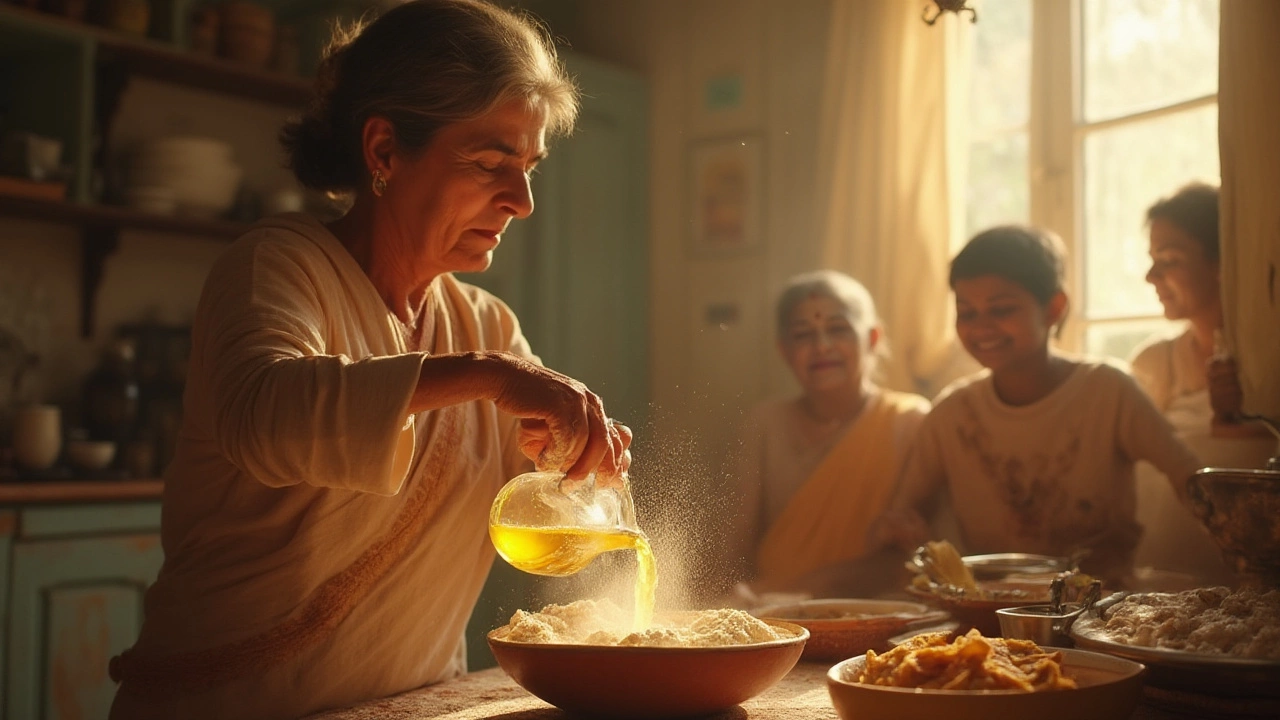
Best Time to Add Oil to Roti Dough for Perfect Softness
Confused about when to put oil in roti dough? Get real tips and answers for the softest, tastiest rotis.
When you make roti, a traditional Indian unleavened flatbread made from whole wheat flour, water, and salt. Also known as chapati, it’s the daily bread for over a billion people—not because it’s trendy, but because it’s simple, nutritious, and works. The secret isn’t fancy ingredients. It’s technique. You don’t need baking powder, yeast, or milk. In fact, adding those ruins the authentic texture. Real roti puffs because of steam, not chemicals. And steam only forms when the dough is right, the rolling is even, and the tawa is hot enough.
Most people fail at roti because they skip the basics. The dough needs to rest—just 20 minutes, no more, no less. Too little, and it won’t be smooth. Too long, and it gets sticky. The flour matters too. Atta, or whole wheat flour milled fine, is the only kind that works. Regular whole wheat flour from the grocery store? It’ll tear when you roll it. And the tawa—your cooking surface—needs to be medium-hot, not blazing. A too-hot tawa burns the outside before the inside steams. A too-cold one? You get a hard, rubbery disc. The flip is simple: press gently with a cloth as it starts to bubble. That’s when the steam lifts it into a balloon. No force. No tools. Just patience.
Related to this are other staples like paneer, a fresh Indian cheese made by curdling milk with acid, and dosa batter, a fermented mix of rice and urad dal. Both rely on timing and temperature like roti does. You don’t rush fermentation. You don’t force puffing. You let the process work. That’s the thread connecting these foods: respect for the natural chemistry of ingredients. Whether you’re making roti for breakfast, pairing it with dal, or using it to scoop up curry, the goal is the same: soft, pliable, slightly charred, and full of that warm, nutty flavor only whole wheat gives you.
Below, you’ll find real fixes for the mistakes most home cooks make—over-kneading, wrong flour, cold tawa, skipping the rest. You’ll see why some recipes promise fluffiness with baking powder (and why they’re wrong). And you’ll learn how the same principles that make perfect roti also apply to other Indian breads. No fluff. Just what works.
Confused about when to put oil in roti dough? Get real tips and answers for the softest, tastiest rotis.