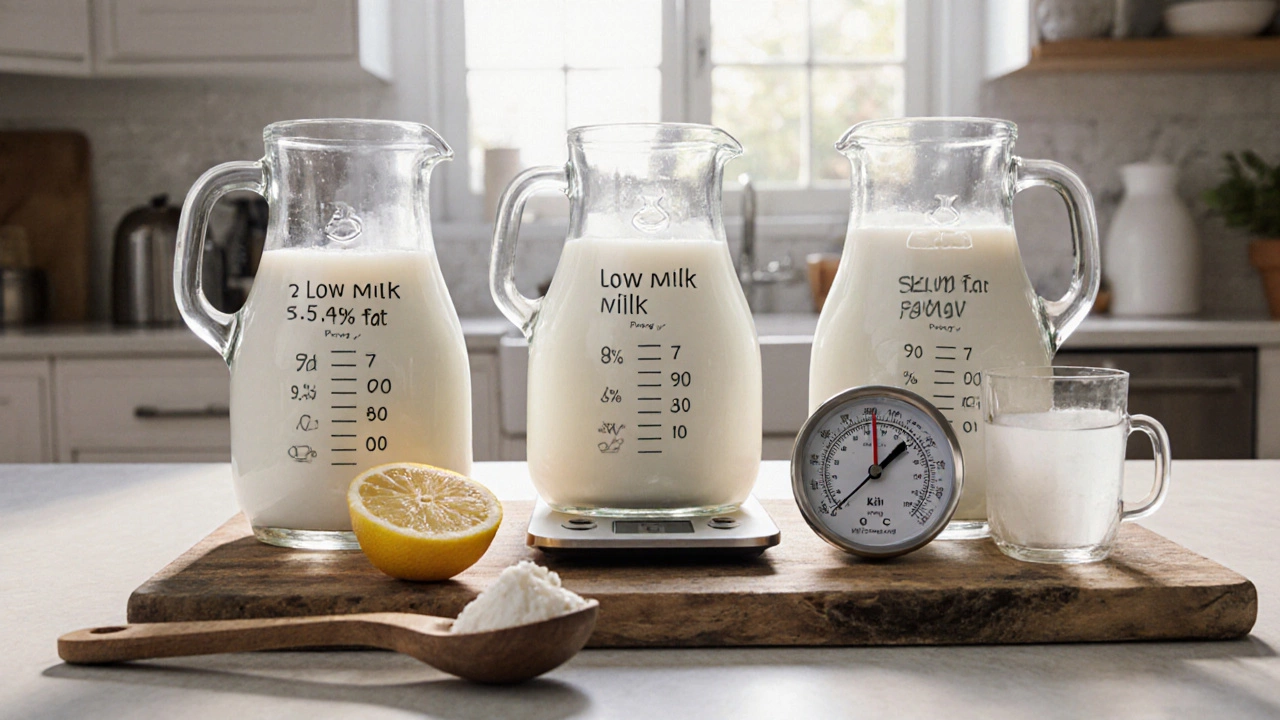
How Much Milk Do You Need to Make Paneer at Home?
Learn exactly how much milk you need to make paneer at home, with detailed ratios, step‑by‑step instructions and tips for different milk types.
When you make paneer yield, the amount of fresh Indian cheese you get from a given volume of milk. Also known as cheese recovery rate, it’s the number every home cook and small producer cares about—because every liter of milk costs money, and wasting it hurts. Most people assume 1 liter of milk gives you 200 grams of paneer. But that’s often wrong. With the right technique, you can get 250 to 300 grams. And if you’re doing it wrong? You might end up with barely 150 grams—and a pot of watery whey you didn’t need to throw away.
What controls paneer yield? It’s not magic. It’s science. The fat and protein content in your milk is the biggest factor. Full-fat cow’s milk gives more than toned or skimmed milk. But even with the same milk, your method changes everything. Boiling the milk too fast? You’ll lose protein. Adding acid too early? The curds won’t bind well. Not draining long enough? You’re keeping water instead of cheese. And if you skip soaking the paneer after pressing? That’s not just a texture issue—it’s a yield issue too. Moisture trapped inside means less solid cheese in the end.
Then there’s the acid. Lemon juice is common, but vinegar or citric acid can give you cleaner curds and better separation. Some commercial producers use food-grade acid for consistent results. And don’t forget the milk temperature. Too cold? The curds won’t form properly. Too hot? You’ll scorch the proteins. The sweet spot is just below boiling—around 85°C. Let it cool for a minute, then add acid slowly while stirring gently. Wait five minutes. Then strain. Let it drain under weight for 30 to 45 minutes. That’s when you get the dense, firm paneer that holds up in curries and tikkas.
You’ll find posts here that show you how to make paneer from scratch, how to fix rubbery results, and even why soaking it before cooking matters. But none of that matters if you start with low yield. This collection isn’t just about recipes. It’s about understanding the real numbers behind your cheese. How much milk do you need for 500 grams of paneer? Why does store-bought paneer seem denser? What do Indian dairies do differently? We’ve gathered the practical answers—no fluff, no theory, just what works in your kitchen or small production setup. Whether you’re making paneer for family dinners or running a tiny cheese business, these posts will help you turn more milk into more cheese—and waste less.
Learn exactly how much milk you need to make paneer at home, with detailed ratios, step‑by‑step instructions and tips for different milk types.