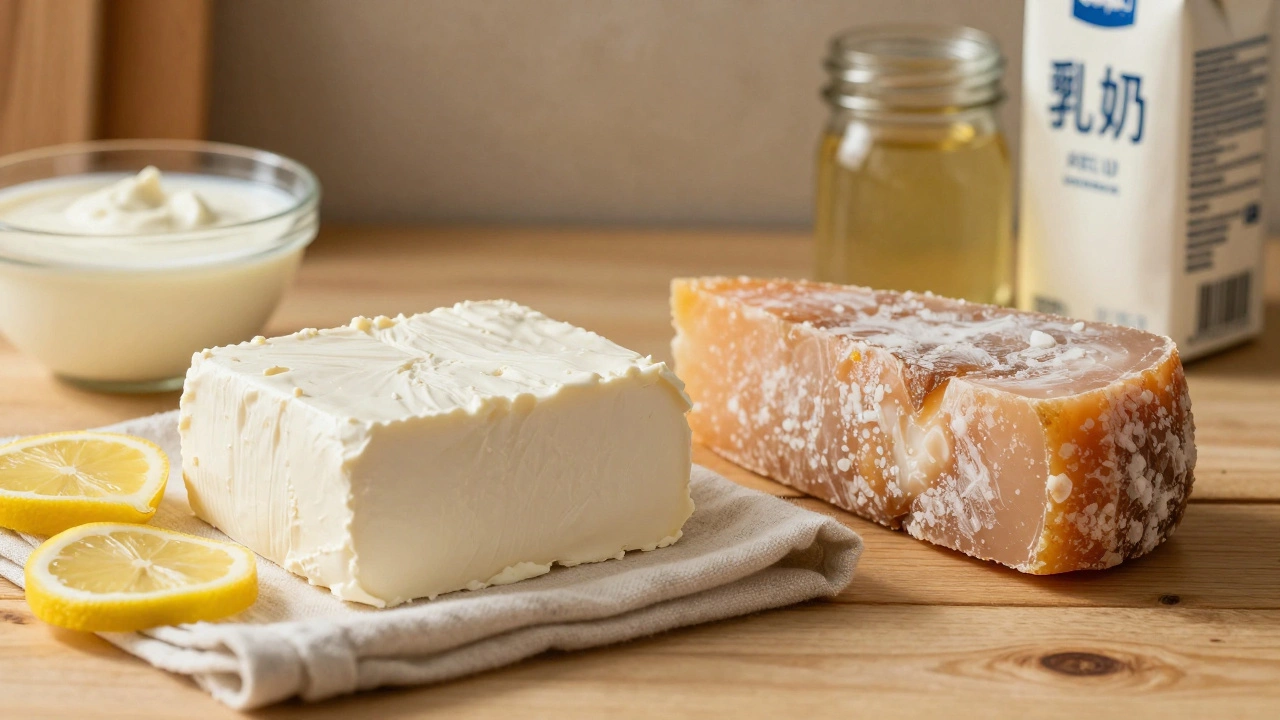
Paneer vs Halloumi: Key Differences and Uses in Cooking
When you think of paneer, a fresh, unaged Indian cheese made by curdling milk with acid like lemon juice or vinegar. Also known as Indian cottage cheese, it's the backbone of countless curries, tikkas, and street food snacks across India. It’s soft, crumbly when fresh, and soaks up spices like a sponge. Now, think of halloumi, a semi-hard, brined cheese from Cyprus that doesn’t melt when heated. Also known as grill cheese, it’s famous for sizzling on the grill or frying until golden and chewy. Both are cheeses you can cook with—but that’s where the similarities end.
Paneer is made from cow or buffalo milk, often skimmed, and pressed lightly to keep it tender. You don’t salt it much—its flavor comes from what you cook it with. Halloumi, on the other hand, is made from a mix of sheep and goat milk, salted during production, and stored in brine. That saltiness gives it a bold taste even before you touch the pan. If you’ve ever tried frying paneer and ended up with rubbery cubes, you probably didn’t soak it first. But halloumi? It’s built for the grill. It holds its shape, gets crispy on the outside, and stays springy inside. No soaking needed.
These cheeses aren’t interchangeable. You wouldn’t swap halloumi into a paneer butter masala—it’s too salty and won’t melt into the sauce. And you wouldn’t grill paneer expecting it to hold up like halloumi; it’ll fall apart unless you press it hard and freeze it first. That’s why Indian restaurants soak paneer in warm water before cooking—to make it soft, not chewy. Meanwhile, Mediterranean cooks toss halloumi into salads, wrap it in fig leaves, or serve it with watermelon just to balance its salt with sweetness.
Both cheeses are popular in home kitchens today, but for different reasons. Paneer is cheap, easy to make from milk you already have, and fits into vegetarian meals every day. Halloumi is pricier, imported, and often treated like a special ingredient—something you splurge on for weekend grilling. But if you’re trying to understand how cheese behaves in cooking, comparing these two gives you a real-world lesson in texture, salt, and heat.
Below, you’ll find real guides on making paneer from scratch, fixing rubbery texture, and even how much milk you actually need to get a good yield. You’ll also see how other cheeses behave under heat, and why some hold up better than others in Indian and global dishes. Whether you’re cooking a weeknight curry or planning a summer BBQ, knowing the difference between paneer and halloumi saves you time, money, and a ruined meal.