Is Paneer Like Halloumi? The Real Differences and Similarities
Cheese Selector Tool
Which Cheese Is Right for Your Dish?
Select your cooking scenario to get personalized recommendations based on the article's expert guidance.
Ever stood in the grocery aisle, staring at a block of halloumi and thinking, is this just paneer with a fancy name? You’re not alone. Both are firm, white cheeses that hold their shape when grilled or fried. Both are popular in vegetarian dishes. But if you’ve tried cooking with both, you know they don’t behave the same way. One melts into gooey strings. The other squeaks when you bite into it. So what’s really going on?
Paneer is fresh, unaged, and made with acid
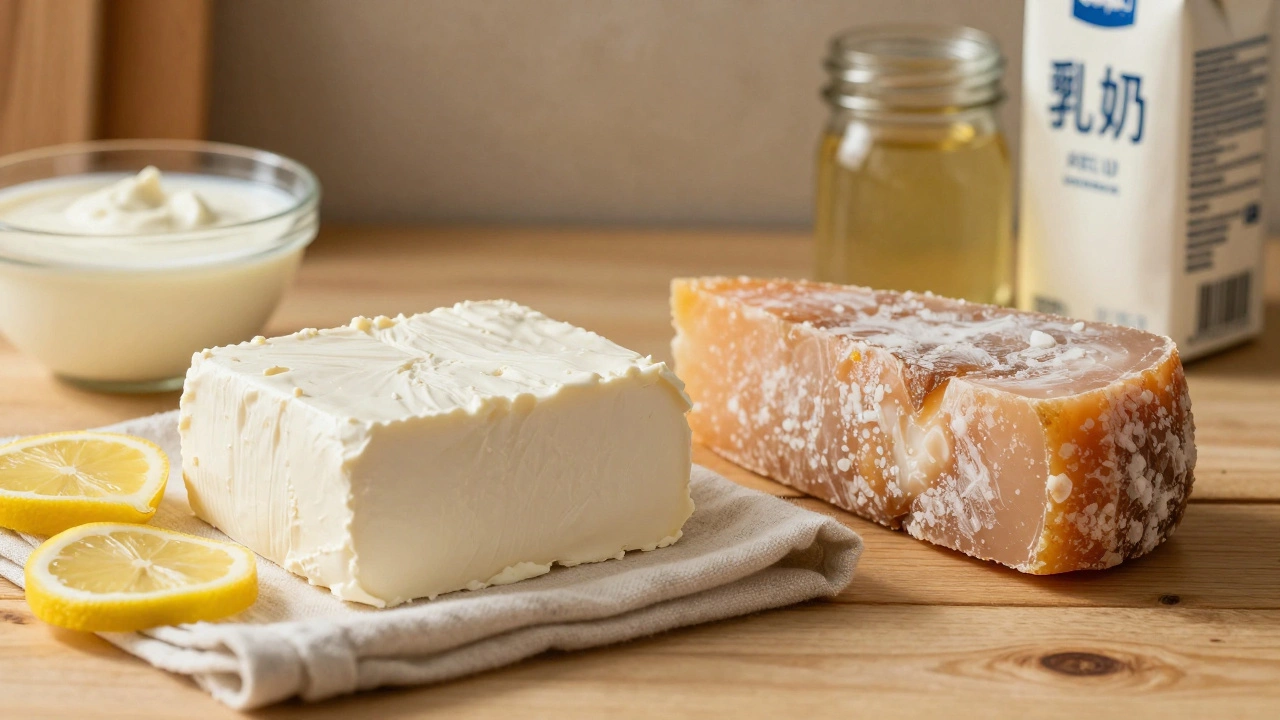
Paneer is a simple cheese you can make in your kitchen with just milk and lemon juice or vinegar. It’s a staple in Indian homes-used in curries like palak paneer, paneer tikka, or even crumbled over salads. You heat milk, add acid to curdle it, then strain the solids in a cloth and press them into a block. No aging. No salt added during production. That’s why paneer tastes mild, milky, and slightly tangy. It’s meant to soak up spices, not stand out on its own.
Because it’s fresh and lacks salt or cultures, paneer doesn’t have a long shelf life. It’s best used within a few days. In India, it’s often made daily. Outside South Asia, you’ll find it refrigerated in the dairy section, sometimes labeled as "Indian cottage cheese." But don’t confuse it with cottage cheese-paneer is denser, firmer, and holds up under heat.
Halloumi is salted, aged, and made with rennet
Halloumi comes from Cyprus. It’s traditionally made from a mix of goat’s and sheep’s milk, though cow’s milk versions are common now. Unlike paneer, halloumi uses rennet to coagulate the milk. That’s the same enzyme used in cheddar or mozzarella. After curdling, the cheese is salted, shaped, and briefly aged in brine. That’s why it tastes salty and has a slightly tangy, earthy flavor.
The real magic? Halloumi doesn’t melt. Not even a little. That’s because of its high melting point, created by the way the proteins bond during aging and brining. When you grill or fry it, the outside gets golden and crisp. The inside stays firm, springy, and slightly chewy. That’s the famous "squeak"-the sound your teeth make when you bite into it. It’s not a flaw. It’s the point.
They both grill well-but for different reasons
Both paneer and halloumi are great on the grill. But why? It’s not the same reason.
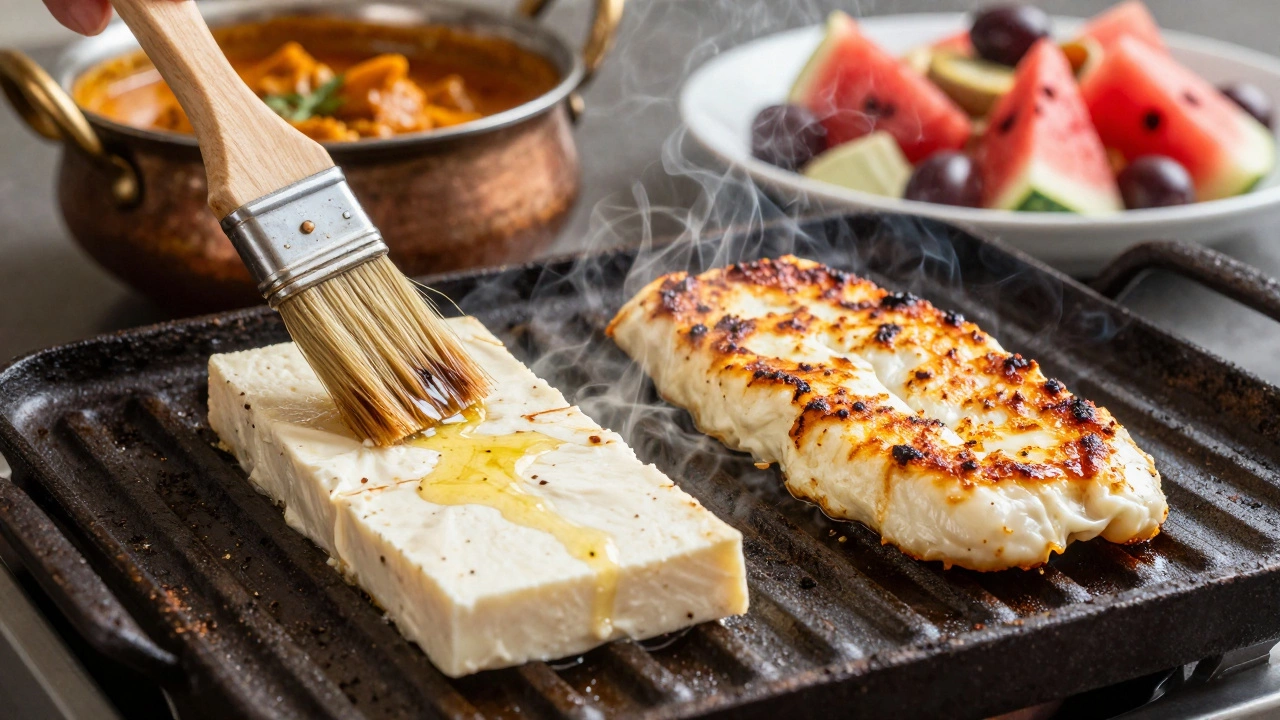
Paneer holds its shape because it’s pressed and drained. It has almost no moisture left. That makes it sturdy enough to skewer and char over flames. But if you cook it too long, it dries out. It doesn’t brown as easily as halloumi because it lacks salt and fat. You often need to fry it in oil to get color.
Halloumi browns beautifully because of its salt content and higher fat. Salt draws moisture to the surface, helping it caramelize. The fat content (around 20-25%) lets it develop a rich, golden crust without sticking. You can cook halloumi on a dry grill. Paneer? You’ll need oil.
Flavor-wise, they’re worlds apart
Paneer is a blank canvas. It tastes like milk. That’s intentional. It’s designed to absorb the flavors of curry spices-turmeric, cumin, garam masala, chili. If you taste paneer on its own, it’s bland. That’s not a flaw. It’s a feature.
Halloumi has its own personality. The salt hits first. Then a faint tang from the sheep or goat milk. There’s a buttery richness underneath. It’s delicious on its own, with a drizzle of olive oil and a squeeze of lemon. You’ll find it in Greek salads, on sandwiches, or served with watermelon. It doesn’t need sauce. It’s the star.
Can you substitute one for the other?
Technically? Yes. But you’ll be disappointed.
If you try to swap halloumi for paneer in a butter chicken recipe, you’ll end up with a salty, rubbery bite that overwhelms the sauce. The dish will taste off.
If you use paneer instead of halloumi in a grilled vegetable salad, you’ll get a soft, bland cube that falls apart. No squeak. No crust. No flavor punch.
They’re both cheeses that don’t melt-but that’s where the similarity ends. Think of them like tofu and tempeh. Both are soy-based. Both are used in vegetarian cooking. But you wouldn’t swap them in a stir-fry and expect the same result.

What about homemade versions?
You can make paneer at home in under an hour. Boil milk, add lemon juice, strain, press. Done. It’s cheap. A liter of milk gives you about 200 grams of paneer.
Making true halloumi at home? Nearly impossible without rennet, salt brine, and aging time. Even if you find rennet online, the brining and pressing process takes days. Most homemade "halloumi" recipes are just paneer with extra salt. They might grill okay, but they won’t squeak. They won’t taste right.
That’s why most people who try to replicate halloumi at home end up with a salty paneer. It’s close-but not the same.
Which one should you buy?
Choose paneer if:
- You’re making Indian curries, tikkas, or stuffed parathas
- You want a neutral cheese that absorbs spices
- You’re on a budget-paneer costs about half the price of halloumi in the UK
Choose halloumi if:
- You want to grill cheese for salads, sandwiches, or appetizers
- You like bold, salty flavors
- You want a cheese that holds its shape without frying in oil
Many supermarkets in the UK now stock both. Look for paneer in the Indian section. Halloumi is usually near the Mediterranean cheeses. Check the label: if it says "made with rennet" or "brined," it’s halloumi. If it says "acid-set" or "fresh cheese," it’s paneer.
Bottom line: They’re cousins, not twins
Paneer and halloumi share one trick: they don’t melt. But that’s where the resemblance ends. Paneer is humble, mild, and made for cooking into sauces. Halloumi is bold, salty, and made to be eaten on its own. One comes from the spice markets of Delhi. The other from the hills of Cyprus.
Don’t treat them like interchangeable parts. Use them for what they’re meant to do. That’s how you get the best results-and the most flavor.
Can you freeze paneer or halloumi?
Yes, you can freeze both, but they’ll change texture. Paneer becomes crumbly and drier after thawing. It’s still fine for curries, but won’t work for grilling. Halloumi loses some of its springiness and squeak. It’s better used in cooked dishes after freezing, not as a grilled appetizer.
Is halloumi vegetarian?
Most halloumi is vegetarian, but not all. Traditional versions use animal rennet. Look for labels that say "vegetarian rennet" or "microbial rennet." Many UK brands now use plant-based enzymes. Paneer is always vegetarian-it’s made with lemon juice or vinegar, not rennet.
Why does halloumi squeak?
The squeak comes from long protein strands rubbing against your teeth. It’s caused by the way the cheese is cooked, salted, and aged. The proteins form tight networks that don’t break down easily. That’s why fresh, soft cheeses like mozzarella don’t squeak-they’re too moist and delicate. Halloumi’s firmness and salt content lock those strands in place.
Can you make paneer with plant-based milk?
No. Paneer needs milk proteins (casein) that coagulate with acid. Soy, almond, or oat milk won’t curdle the same way. You’ll get a watery mess. Some vegan "paneer" alternatives use tofu or seitan, but they’re not real paneer. They’re substitutes with different textures and flavors.
Is paneer high in fat?
Regular paneer made with full-fat milk has about 20% fat-similar to cheddar. Low-fat versions exist, but they’re softer and don’t hold up as well when cooked. For grilling or frying, full-fat paneer gives the best results. Halloumi is slightly higher, at 20-25% fat, which helps it brown better.
If you’re cooking Indian food, stick with paneer. If you’re grilling for a summer salad, grab halloumi. They’re both delicious-but only when you use them right.