How to Make Paneer from Scratch at Home
Learn how to make fresh paneer from scratch using just milk and lemon juice. A simple, cost-effective method for perfect homemade Indian cheese every time.
When you make paneer from milk, a fresh, unaged cheese common in Indian cooking. Also known as Indian cottage cheese, it’s made by curdling milk with acid—no rennet, no aging, just heat and patience. Unlike processed cheeses, paneer holds its shape when grilled or fried, making it ideal for curries, tikkas, and snacks. It’s not just a substitute for meat—it’s a protein-rich staple in millions of Indian homes.
What you use matters. Whole milk gives you the richest, firmest paneer because of its fat and protein content. Skim milk? You’ll get less yield and a crumbly texture. Most recipes call for 1 liter of milk to make about 200 grams of paneer. That’s the baseline. If you use buffalo milk, you’ll get even more—up to 250 grams—because it’s thicker and higher in solids. The acid you add—lemon juice, vinegar, or yogurt whey—determines how clean and mild the flavor is. Lemon juice adds a slight tang; vinegar is sharper. Many home cooks swear by yogurt whey for the softest result.
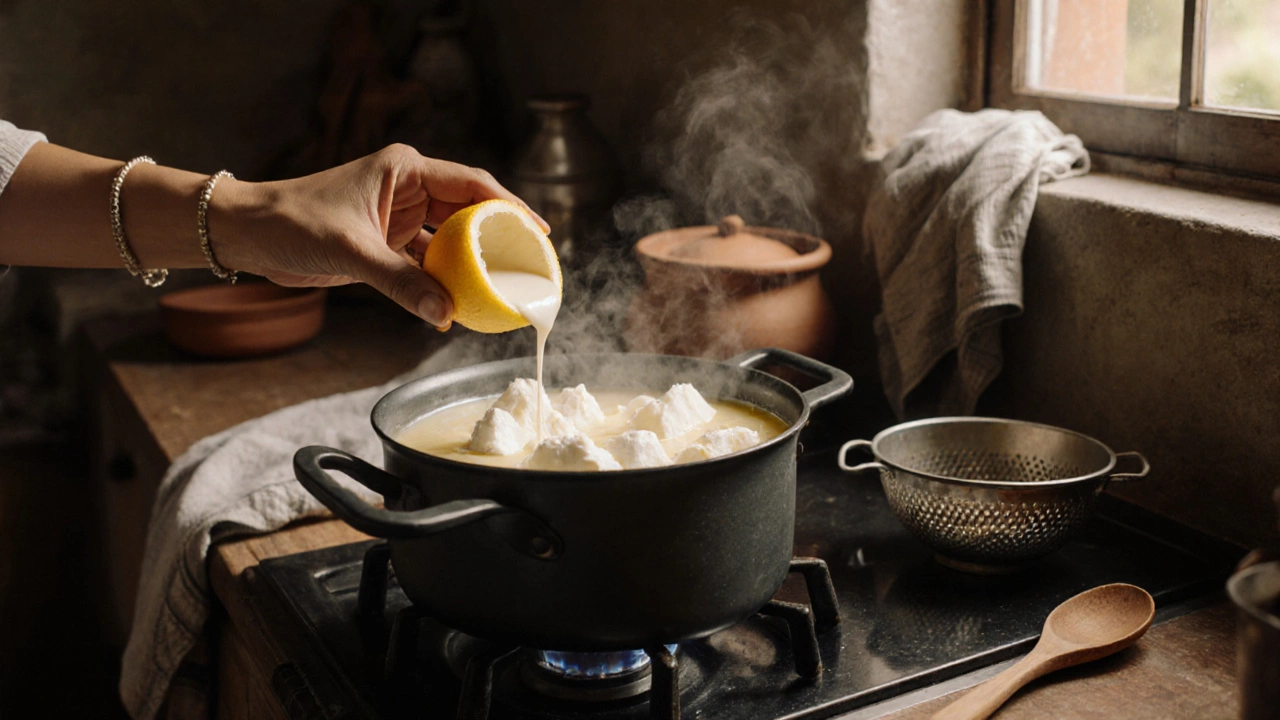
Heat is just as important as the ingredients. You need to bring the milk to a full boil before adding the acid. If the milk isn’t hot enough, the curds won’t separate cleanly. Once you add the acid, stir gently for 30 seconds, then turn off the heat. Let it sit. The curds will sink. The whey rises. That’s when you strain it through a cloth. Then you press it—light pressure for soft paneer, heavier for firm. The longer you press, the drier it gets. Most people skip the pressing step and end up with rubbery paneer. That’s why soaking it in warm water before cooking helps—it rehydrates the cheese and brings back its springiness.
People think paneer is hard to make. It’s not. But getting it right means understanding the relationship between milk quality, temperature, and acid. You’re not just making cheese—you’re controlling a simple chemical reaction. The proteins in milk (casein) clump together when acid hits them at high heat. That’s it. No magic. No special tools. Just a pot, a cloth, and a weight.
And that’s why so many of the posts here focus on paneer: because it’s the perfect example of how everyday Indian cooking relies on precise, repeatable steps. Whether you’re fixing rubbery paneer, figuring out how much milk you need, or learning why soaking it changes everything, the science is the same. You’ll find guides here that cut through the noise—no fluff, just what works.
Learn how to make fresh paneer from scratch using just milk and lemon juice. A simple, cost-effective method for perfect homemade Indian cheese every time.