How Much Milk Do You Need to Make Paneer at Home?
Learn exactly how much milk you need to make paneer at home, with detailed ratios, step‑by‑step instructions and tips for different milk types.
When you're making milk for paneer, the base ingredient that determines the texture, yield, and flavor of homemade Indian cheese. Also known as curdled milk, it's not just any milk—you need the right kind to get that soft, sliceable, non-rubbery paneer everyone loves. Store-bought paneer often turns out dry or chalky because it’s made from low-fat or ultra-pasteurized milk. But when you use the right milk at home, you get something richer, creamier, and far more flavorful than anything you’ll find in the grocery aisle.
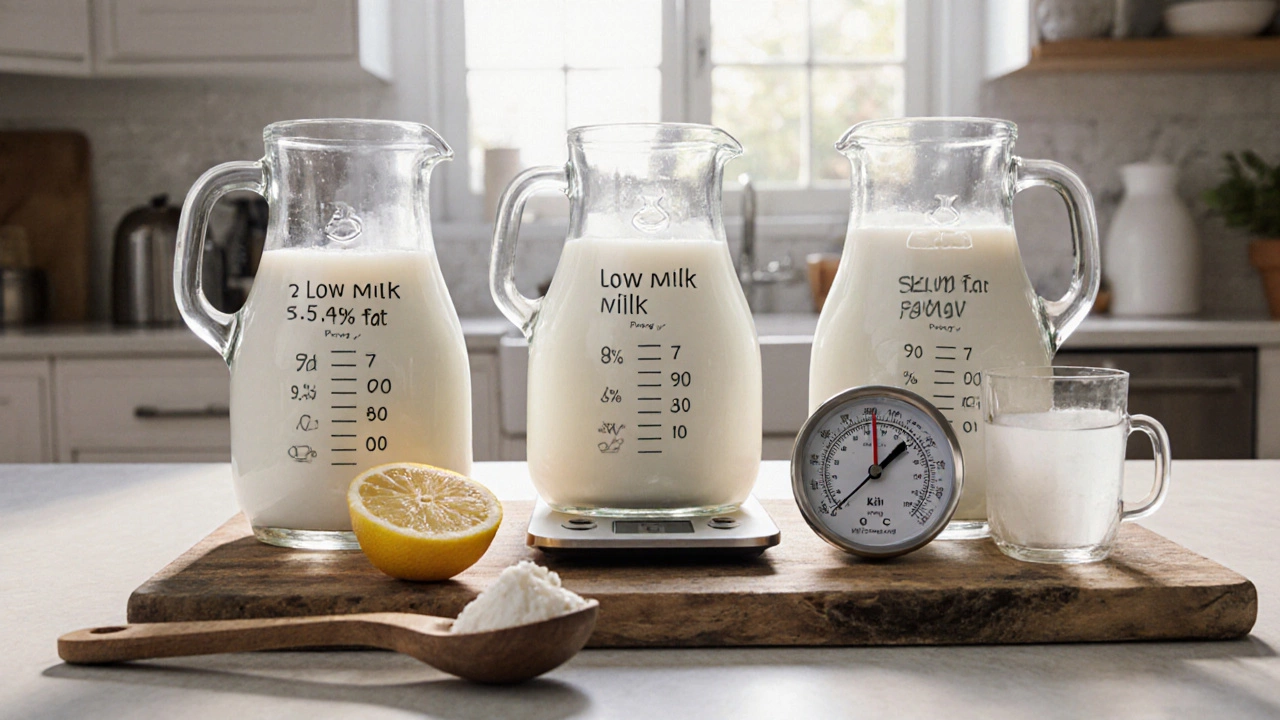
The key is full-fat whole milk, milk with at least 3.5% fat that hasn’t been ultra-pasteurized. Full cream milk is your best friend here. Avoid skim, 2%, or lactose-free milk—they won’t coagulate properly. Even organic milk can be a problem if it’s been ultra-pasteurized (look for the term on the label). The high heat destroys the proteins needed to form a solid curd. Fresh, unhomogenized milk from a local dairy is ideal, but if that’s not available, go for pasteurized (not ultra-pasteurized) whole milk from a trusted brand. The fat content is what gives paneer its richness, and the protein structure is what lets it hold together when pressed.
Temperature matters too. Heat the milk slowly to around 90°C (195°F), then add your acid—lemon juice, vinegar, or yogurt whey. Too fast, and you’ll get grainy curds. Too slow, and the milk might scorch. Once the curds separate cleanly from the whey, drain them in a muslin cloth and press lightly with a weight for 30 to 45 minutes. That’s it. No additives, no stabilizers, no mystery ingredients. Just milk, acid, and time.
You’ll find plenty of recipes online that say "any milk works," but those are the ones that leave you with crumbly, rubbery cheese. The truth is simple: if your milk doesn’t work well for paneer, your paneer won’t work well for your curry. That’s why the posts below cover everything from troubleshooting bad batches to why soaking paneer before cooking makes a difference. You’ll also see how the same milk choices affect other Indian dairy products, and why some home cooks swear by buffalo milk over cow milk. This isn’t just about making cheese—it’s about understanding the science behind one of India’s most loved ingredients.
Learn exactly how much milk you need to make paneer at home, with detailed ratios, step‑by‑step instructions and tips for different milk types.