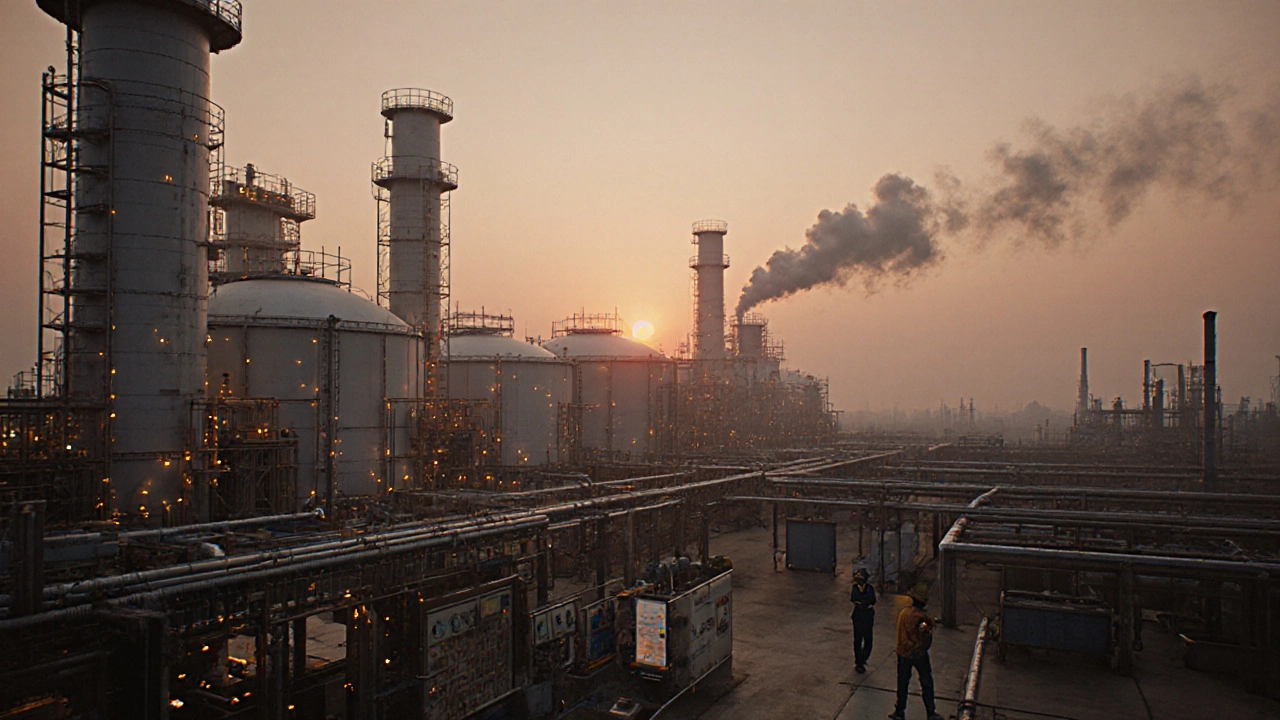
Industrial Chemicals India: What They Are and How They Power Food Manufacturing
When you think of industrial chemicals India, chemical substances used in large-scale production to alter, preserve, or process raw materials. Also known as process chemicals, they’re the unseen force behind shelf-stable curries, pasteurized milk, and crisp snack packs. These aren’t lab curiosities—they’re precise tools used under strict rules to make food safe, consistent, and long-lasting. In India’s booming food manufacturing sector, industrial chemicals aren’t optional—they’re essential for meeting demand without sacrificing quality.
They show up in ways you might not notice: food grade chemicals, substances approved for direct or indirect contact with food like citric acid in pickles or sodium benzoate in sauces. Then there are food processing chemicals, agents used during manufacturing to control texture, fermentation, or moisture—like calcium chloride to firm up paneer or enzymes to break down starch in batter. These aren’t random additives; they’re chosen based on international standards like FSSAI and Codex Alimentarius, and used in exact doses. Too much, and you risk contamination. Too little, and the product spoils or fails to meet texture goals.
India’s food factories rely on these chemicals not because they’re cheap, but because they’re reliable. A single batch of dosa batter might need a food-grade acidulant to control fermentation speed. A juice plant might use food-safe sanitizers to clean pipes between runs. Even the plastic packaging you see? That’s often made from polypropylene (PP), a Code 5 plastic known for heat resistance and food safety, which itself is produced using industrial chemical processes. These systems work because they’re standardized, monitored, and regulated—something India’s food industry has gotten better at over the last decade.
You won’t find these chemicals in your kitchen, but you’ll taste their results every time you eat packaged food. The real question isn’t whether they’re used—it’s whether they’re used correctly. That’s why the posts below dig into the real connections: how unit operations in food processing depend on chemical controls, how soaking times for dal are affected by pH levels, how paneer texture changes with calcium content, and why plastic codes matter when storing food. These aren’t isolated tips—they’re pieces of a larger system. What follows is a collection of practical, no-fluff insights from Indian food factories, labs, and kitchens—where industrial chemicals meet everyday meals.