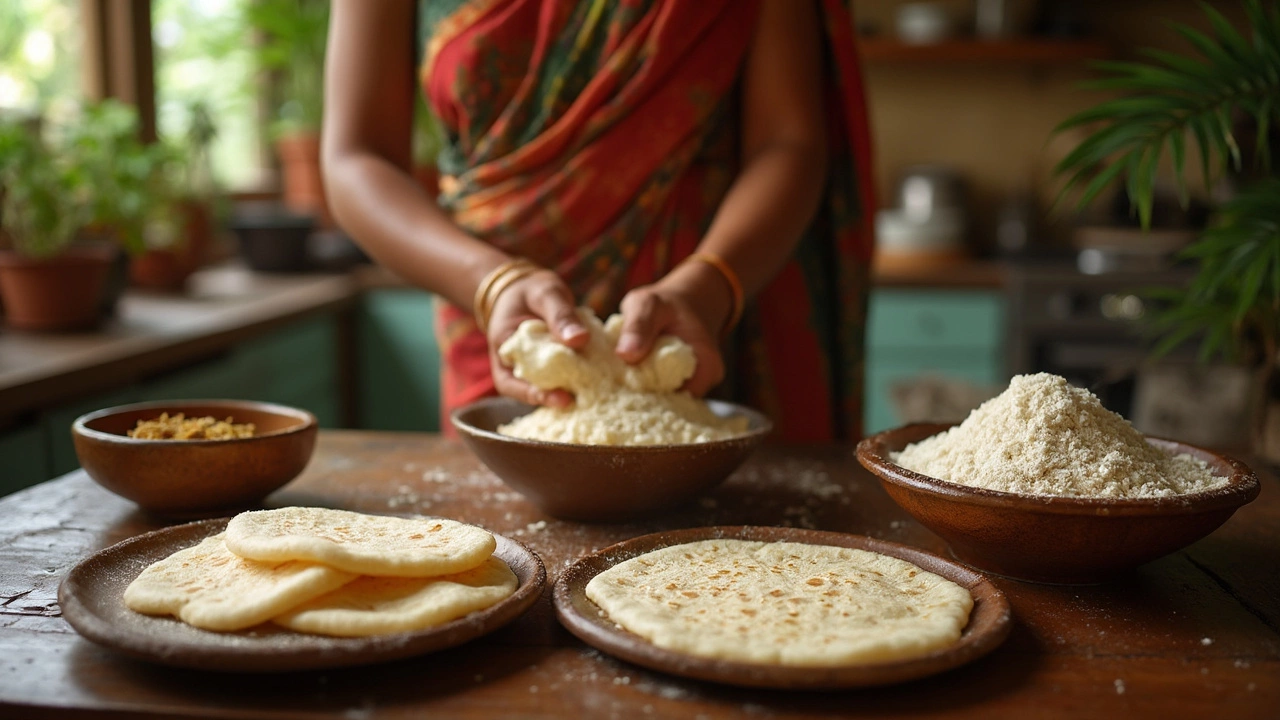
Dough Rising: How Fermentation Works in Indian Baking and Cooking
When you see dough rising, the process where gases produced by yeast or bacteria expand trapped air bubbles in flour mixtures, causing the dough to swell. Also known as fermentation, it’s what turns flat batter into light, airy dosas and dense dough into puffed rotis. This isn’t just chemistry—it’s culture. In India, dough rising happens in kitchens every morning, not in industrial labs. It’s the reason your idli batter puffs up overnight, why your naan blisters in the tandoor, and why skipping that 8-hour soak for urad dal turns your dosa into a crispy pancake instead of a cloud.
What makes dough rise isn’t always yeast. In many Indian recipes, it’s lactic acid bacteria doing the work. When you soak urad dal and rice for batter, wild microbes feed on starches and sugars, releasing carbon dioxide. That’s the same gas that makes sourdough rise in France—but here, it’s happening in a clay pot on your kitchen counter. Temperature matters. In winter, dough takes twice as long. In summer, it can over-ferment and turn sour before breakfast. That’s why experienced cooks adjust soaking times by season, not just by the clock. And here’s the twist: not all rising needs yeast at all. Roti doesn’t rise from gas—it puffs from steam trapped inside the dough when it hits the hot tawa. Add baking powder? You’ll ruin the texture. Authentic softness comes from technique, not chemicals.
Dough rising connects to everything from paneer texture to curry thickness. If your paneer is rubbery, it’s because the milk wasn’t curdled properly—same principle as under-fermented batter. If your curry is watery, it’s because the onions didn’t cook down long enough to build a thick base. These aren’t separate skills—they’re all part of the same food science. The posts below show you exactly how to control rising in dosa batter, why some Indian breads don’t need yeast, how soaking time affects fermentation, and what to do when your dough won’t rise. You’ll find real fixes, not theory. No fluff. Just what works in your kitchen, right now.