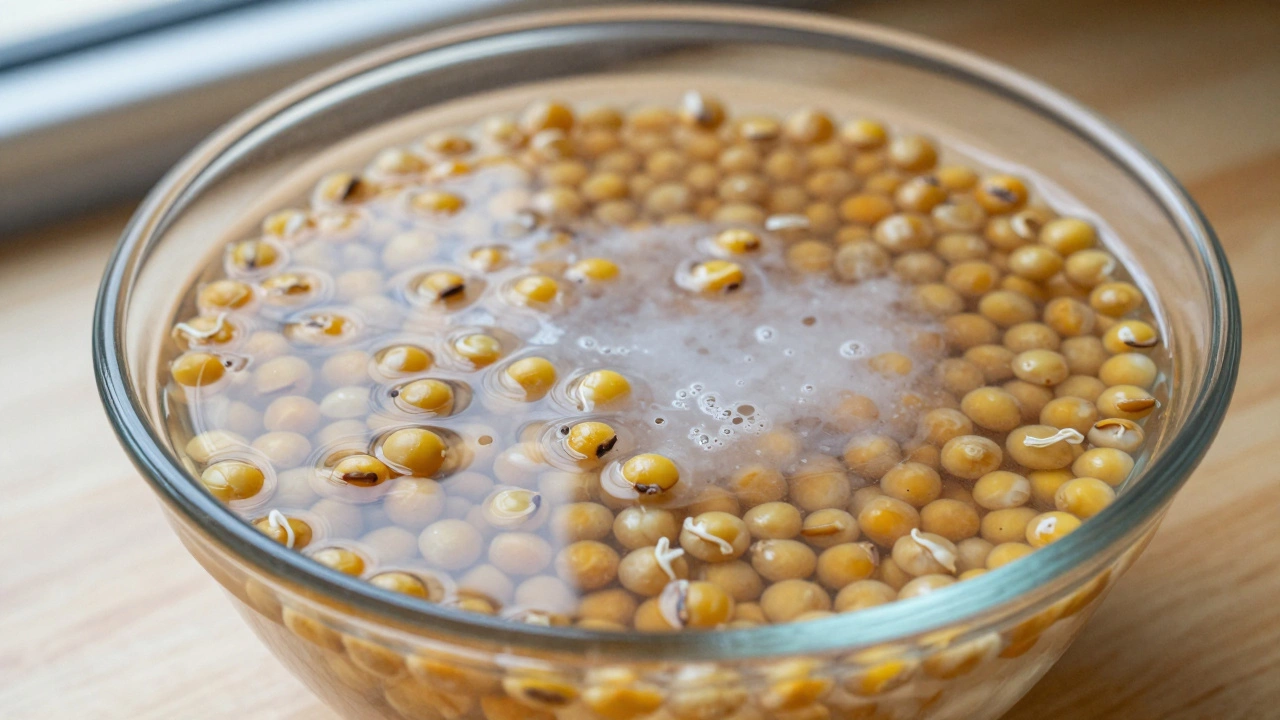
How Long to Soak Urad Dal for Perfect Dosa Batter
Soak urad dal for 6 to 8 hours for fluffy, crisp dosas. Too short and the batter won't ferment; too long and it turns slimy. Learn the right time, water tips, and seasonal fixes.
When you make a dosa fermentation, the natural process where rice and urad dal batter rises through wild yeast and lactic acid bacteria. Also known as natural leavening, it’s what turns a simple mix of grains into something light, tangy, and perfectly crisp. This isn’t magic—it’s microbiology. Every morning in homes across South India, batter sits covered in warm corners, slowly bubbling as microbes do their job. No starter cultures, no yeast packets—just time, warmth, and tradition.
What makes dosa batter, a mixture of soaked rice and black gram (urad dal), typically in a 3:1 or 4:1 ratio work isn’t just the ingredients. It’s the balance. Too much rice? The batter won’t rise well. Too little urad dal? You get flat, dense dosas. The fermented rice batter, the end result after 8–12 hours of microbial activity becomes airy because bacteria produce carbon dioxide, while lactic acid gives that signature sour note. Temperature matters. In winter, you might need to place the bowl near a heater. In summer, it can ferment in just six hours. If your batter smells like alcohol or doesn’t puff up at all, something’s off—maybe the water was too hot, or the lentils weren’t soaked long enough.
People often confuse idli dosa fermentation, the same process used for both idlis and dosas. They’re siblings, not twins. Idli batter needs more water and ferments to a lighter, fluffier state because it’s steamed. Dosa batter stays thicker and is spread thin on a hot griddle. Both rely on the same microbes, but the final texture depends on how you treat the batter after fermentation. That’s why you can’t use idli batter to make dosas without adjusting the consistency. And if you’ve ever tried to speed up fermentation with baking soda? It might puff up, but it won’t taste right. Real flavor comes from slow, natural breakdown.
What you find in the posts below isn’t just recipes. It’s the science behind why your dosa turns golden, why some batters crack when fried, and how to fix sour or flat results. You’ll see how traditional methods still beat modern shortcuts, why soaking time affects texture, and what to do when your kitchen is too cold. No fluff. Just what works in real kitchens across Tamil Nadu, Karnataka, and Kerala—and why it’s still the gold standard after centuries.
Soak urad dal for 6 to 8 hours for fluffy, crisp dosas. Too short and the batter won't ferment; too long and it turns slimy. Learn the right time, water tips, and seasonal fixes.