Why Do Hindus Not Eat Pork? Cultural, Religious, and Practical Reasons Explained
Hindu Dietary Practice Explorer
Select a region and lifestyle profile to see typical dietary practices regarding pork and meat within that context.
Dietary Analysis
Why?
Explanation goes here.
You walk into a traditional Indian household in Kerala or Bengal, and the menu is full of fish, chicken, and mutton. But you’ll rarely see pork on the table. Then you visit a home in Maharashtra or Gujarat, and the menu might be entirely vegetarian. So, why do many Hindus avoid pork? Is it a strict religious law written in stone, or is there something deeper going on?
The short answer is: it’s complicated. Unlike Islam or Judaism, which have clear dietary laws (halal and kosher) that explicitly forbid pork, Hinduism doesn’t have a single, unified rulebook for food. There is no verse in the Vedas or Upanishads that says, “Thou shalt not eat pork.” Instead, the avoidance of pork among Hindus is a mix of regional culture, caste traditions, practical history, and personal spiritual choices.
Key Takeaways
- Hinduism has no universal ban on pork; dietary habits vary wildly by region and community.
- In many parts of India, pigs are seen as scavengers, leading to a cultural association with impurity.
- Caste systems historically influenced food choices, with higher castes often avoiding meat associated with lower-status animals.
- Spiritual practices like Ahimsa (non-violence) lead many Hindus to avoid all meat, including pork.
- Regions like Kerala, Bengal, and Goa have strong non-vegetarian traditions that include pork.
The Myth of a Universal Hindu Diet
First, let’s clear up a big misconception. When people think of Hinduism, they often picture strict vegetarianism. While vegetarianism is highly respected and widely practiced, especially in North and West India, it is not mandatory for all Hindus. In fact, if you look at the entire subcontinent, a huge portion of the population eats meat.
The central entity here is Hindu Dietary Practices, which varies significantly based on geography, caste, and individual belief rather than a single centralized doctrine. This diversity means that while a Brahmin priest in Varanasi might never touch meat, a Hindu family in Mumbai might enjoy pork vindaloo on a Sunday.
So, when we ask why Hindus don’t eat pork, we’re really asking why *some* Hindus don’t eat pork. For others, it’s just another protein source. Understanding this split is crucial because it shows that Hindu identity isn’t monolithic. It’s a tapestry of local customs woven together by shared spiritual roots.
The Concept of Purity and Impurity
If there’s no religious ban, why the hesitation? The biggest factor is the concept of purity (Shaucha) and impurity (Asauca). In traditional Hindu society, certain animals are viewed through the lens of their behavior and habitat.
Pigs are omnivores and scavengers. They eat almost anything, including waste and carrion. In a culture that places high value on cleanliness-both physical and spiritual-this feeding habit makes the pig seem “unclean” to many. This isn’t just about hygiene; it’s about spiritual resonance. Hindus believe that what you eat affects your mind and spirit. Eating from an animal that consumes filth is thought to introduce negative energies into the body.
This view is closely tied to the Caste System, which historically dictated social status and dietary restrictions, associating certain foods with specific varnas. Historically, higher castes like Brahmins (priests) and Kshatriyas (warriors) adhered to stricter codes of purity. Since pigs were often raised by lower-caste communities who handled waste management, eating pork became socially stigmatized for those aspiring to maintain high ritual purity.
Regional Differences: Where Pork Is Common
To understand the nuance, you have to look at the map. India is vast, and its food culture reflects that diversity. In some states, pork is not just accepted; it’s celebrated.
| Region | Attitude Toward Pork | Popular Dishes |
|---|---|---|
| Kerala | Very Common | Pork Fry, Pork Roast |
| Bengal & Odisha | Common | Pork Curry, Chingri Malai Curry (often served alongside) |
| Goa | Very Common | Vindaloo, Sorpotel |
| North India (UP, Rajasthan) | Rare/Avoided | Mutton, Chicken, Vegetarian |
| West India (Gujarat, Maharashtra) | Mixed (Vegetarian dominant in Gujarat) | Chicken, Mutton, Fish |
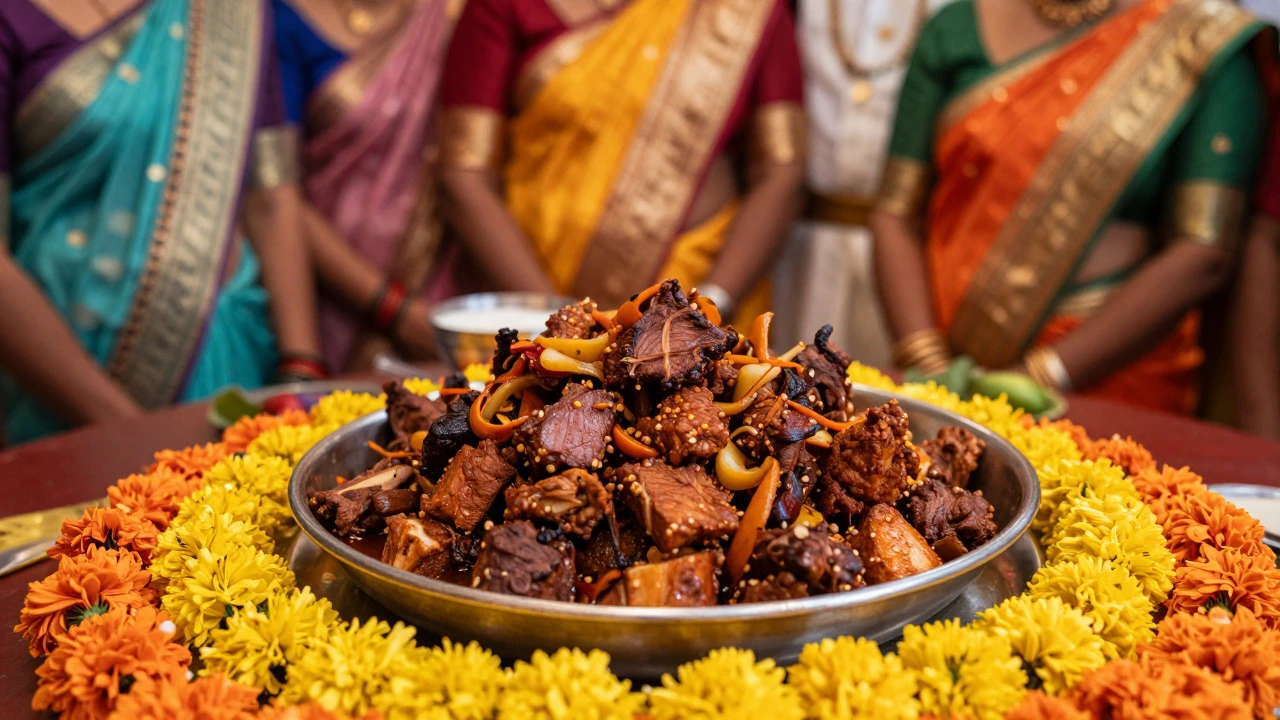
In Kerala, for example, Hindu families have eaten pork for centuries. It’s a staple at festivals and weddings. The same goes for Goa, where Portuguese influence introduced new cooking styles, but the acceptance of pork was already present among local Hindu communities. In these areas, the stigma of “impurity” is largely absent. The focus is on flavor, tradition, and community sharing.
This contrast highlights that Geographic Context plays a decisive role in determining whether a Hindu individual considers pork acceptable or taboo. You can’t generalize the experience of a Hindu in Kolkata with one in Jaipur.
Spiritual Beliefs: Ahimsa and Karma
Beyond culture and caste, there’s the spiritual layer. Many Hindus follow the principle of Ahimsa, or non-violence. This philosophy suggests that causing harm to any living being generates negative karma. If you’re trying to live a life of minimal harm, eating meat becomes a point of contention.
However, even among meat-eaters, there’s a hierarchy. Cows are sacred and generally protected. Chickens and goats are common. Pigs fall into a gray area. Because they aren’t considered sacred, they aren’t protected by law or widespread sentiment. But because they aren’t revered, they also lack the “respectful” status given to other meats. For someone practicing strict Ahimsa, all meat is avoided. For someone less strict, pork might still be skipped due to the earlier mentioned purity concerns.
This connects to Karma, which influences dietary choices by linking actions like killing animals to future spiritual consequences. A devout Hindu might avoid pork not because it’s forbidden, but because they want to keep their karma light. It’s a personal choice, not a communal mandate.
Historical and Colonial Influences
We can’t ignore history. During British colonial rule, interactions between different communities shaped food identities. Sometimes, rejecting pork was a way for Hindu groups to distinguish themselves from Muslim and Christian neighbors, reinforcing group identity. Other times, it was simply a matter of availability and economic class.
In rural areas, pigs were often kept by landless laborers or marginalized communities as a way to survive on scraps. As urbanization grew, middle-class Hindus began to distance themselves from these associations, adopting more “refined” diets that excluded pork. This social mobility aspect is subtle but powerful. Food became a marker of status.
Modern Trends and Changing Attitudes
Today, things are shifting. Younger generations in cities like Bangalore, Delhi, and Mumbai are more exposed to global cuisines. Pork chops, bacon, and sausages are available in supermarkets and restaurants. For many urban Hindus, the old taboos are fading. They might still respect the tradition at home, but they won’t turn down a pork burger when out with friends.
Also, the rise of veganism and health consciousness is changing the conversation. Some Hindus are giving up meat entirely for environmental or health reasons, making the pork debate irrelevant. Others are embracing it as part of a balanced diet, ignoring the purity myths.
Frequently Asked Questions
Is pork strictly forbidden in Hinduism?
No, there is no strict religious prohibition against eating pork in Hindu scriptures. Dietary habits vary by region, caste, and personal belief. While many Hindus avoid it due to cultural notions of purity, others, especially in South and East India, consume it regularly.
Why do some Hindus consider pork impure?
Pigs are scavengers and eat waste, which leads to a cultural association with impurity. In traditional Hindu society, maintaining ritual purity is important, and consuming food from animals seen as unclean is believed to negatively affect one's spiritual state.
Do all Hindus avoid meat?
No. While vegetarianism is common and respected, many Hindus eat meat. The type of meat consumed varies by region. Chicken, goat, and fish are widely eaten, while beef is often avoided due to the cow's sacred status.
Which Indian regions commonly eat pork?
Pork is commonly consumed in Kerala, Goa, Bengal, Odisha, and parts of Northeast India. In these areas, it is integrated into local cuisine and served during festivals and daily meals.
Does caste influence pork consumption?
Historically, yes. Higher castes often avoided pork due to associations with lower-caste occupations involving waste management. However, this distinction is weakening in modern urban settings where social boundaries are more fluid.
Is eating pork a sin in Hinduism?
No, eating pork is not considered a sin. Hinduism focuses more on intent and karma. If someone eats pork without malice or disrespect, it does not carry spiritual penalty, though some may choose to avoid it for personal purity reasons.
How does Ahimsa relate to pork consumption?
Ahimsa, or non-violence, encourages minimizing harm to all beings. Strict followers of Ahimsa avoid all meat, including pork. Those who practice it loosely may still avoid pork due to additional cultural purity concerns.
Are there Hindu festivals where pork is served?
Yes, particularly in South and East India. Festivals like Onam in Kerala or Durga Puja in Bengal may feature pork dishes depending on the family's traditions and regional customs.
Is pork halal for Hindus?
The term "halal" applies to Islamic dietary laws. Hindus do not follow halal guidelines. Whether a Hindu eats pork depends on personal, cultural, or regional preferences, not Islamic certification.
Can a Hindu eat pork and still be considered devout?
Yes. Devotion in Hinduism is measured by faith, rituals, and moral conduct, not just diet. Many devout Hindus eat pork, especially in regions where it is culturally accepted.