Who is America's Biggest Steel Company? Nucor vs. Cleveland-Cliffs
US Steel Giants Comparison Tool
Select a metric below to see which company leads in that specific category. Note that "Biggest" depends on whether you measure volume, profit, or stock value.
Select a Metric Above
Click one of the buttons to view the comparison between Nucor and Cleveland-Cliffs.
Nucor Strategy
Cleveland-Cliffs Strategy
You might think the biggest steel company in the US is a massive, smoke-belching giant with blast furnaces stretching as far as the eye can see. For decades, that was true. But if you look at the numbers today, the answer isn't what most people expect. The title of America's biggest steel company currently belongs to Nucor Corporation, which operates on a completely different model than its rivals.
This shift didn't happen overnight. It’s the result of a fundamental change in how steel is made in North America. While legacy companies struggled with high costs and outdated technology, Nucor embraced electric arc furnace (EAF) recycling. This approach turned them into the largest producer by volume and revenue in the United States. But here is the twist: another company, Cleveland-Cliffs, recently merged with major players to create a competitor that rivals Nucor in specific segments.
The Current Leader: Nucor Corporation
Nucor is an American steel manufacturer based in Charlotte, North Carolina. Founded in 1969, it started small but grew rapidly by focusing on efficiency and decentralized management. Unlike traditional integrated mills that mine iron ore, make coke, and run blast furnaces, Nucor primarily uses scrap metal melted in electric arc furnaces. This method requires less energy and allows for more flexible production schedules.
As of late 2025 and early 2026 data, Nucor consistently holds the top spot for total crude steel production capacity in the US, exceeding 34 million metric tons annually. Their strategy relies on having many smaller, regional plants rather than one or two mega-factories. This means they can ship steel faster to local construction sites and auto manufacturers, cutting down on logistics costs.
Why does this matter to you? If you are buying steel for a project, knowing who the big players are helps you understand market pricing. When Nucor raises prices, the whole market often follows. They set the tone because their EAF process is generally cheaper when scrap prices are low, forcing competitors to adjust their margins.
The Challenger: Cleveland-Cliffs
If Nucor is the king of recycled steel, Cleveland-Cliffs is the titan of virgin steel production. Headquartered in Cleveland, Ohio, this company transformed from a mining firm into a steelmaker through aggressive acquisitions. In recent years, Cleveland-Cliffs bought AK Steel and ArcelorMittal USA. These moves consolidated much of the remaining blast furnace capacity in the country under one roof.
Cleveland-Cliffs focuses on flat-rolled carbon steel, which is essential for cars, appliances, and pipelines. While Nucor dominates long products like beams and rebar used in buildings, Cleveland-Cliffs controls a huge chunk of the sheet steel market. By 2026, their combined capacity rivals Nucor’s, though their operational costs are higher due to the energy-intensive nature of blast furnaces.
Think of it this way: Nucor builds the skeleton of your house; Cleveland-Cliffs provides the body panels for your car. Both are giants, but they play in different lanes. However, both are vying for the title of "biggest" depending on whether you measure by tonnage, revenue, or market capitalization.
How We Measure "Biggest"
Determining the largest steel company isn't just about looking at one number. Analysts use three main metrics, and the winner changes depending on which one you pick.
- Crude Steel Production Capacity: This measures how much steel a company can produce in a year. Nucor typically leads here due to its vast network of mini-mills.
- Revenue: Revenue depends on price per ton. Sometimes, if steel prices spike, a company selling premium automotive steel might out-earn a volume leader like Nucor.
- Market Capitalization: This reflects investor confidence. Stock values fluctuate daily. In periods of economic uncertainty, investors often prefer Nucor’s stable dividend history over riskier bets.
For most practical purposes, when people ask for the "biggest," they mean production volume. By that standard, Nucor remains the undisputed leader in the US. But don't underestimate Cleveland-Cliffs' influence on supply chains, especially in the Midwest.
Nucor vs. Cleveland-Cliffs: A Quick Comparison
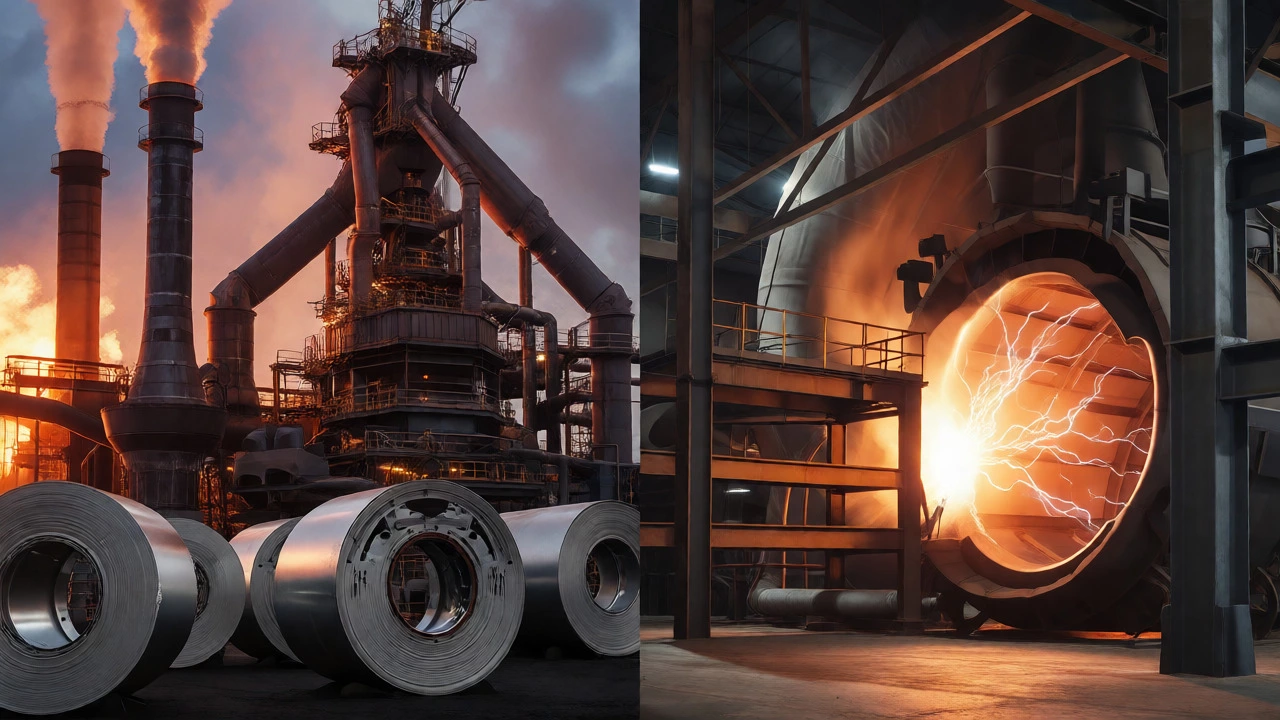
To help you visualize the differences, here is a breakdown of the two leading US steelmakers. Note that figures reflect approximate 2025-2026 estimates.
| Feature | Nucor Corporation | Cleveland-Cliffs Inc. |
|---|---|---|
| Primary Method | Electric Arc Furnace (EAF) | Blast Furnace / Basic Oxygen Furnace (BF/BOF) |
| Main Products | Beams, Rebar, Plate, Sheet | Flat-Rolled Carbon Steel, Hot-Dipped Galvanized |
| Headquarters | Charlotte, NC | Cleveland, OH |
| Estimated Annual Capacity | ~34 Million Metric Tons | ~30+ Million Metric Tons (post-acquisitions) |
| Key Advantage | Low cost, flexibility, sustainability | Vertical integration (owns mines), scale in auto steel |
Notice the difference in methods. Nucor’s EAF approach recycles scrap, making it greener and more adaptable to demand swings. Cleveland-Cliffs’ BF/BOF method produces higher-quality surface finishes needed for visible car parts but requires expensive raw materials like iron ore pellets, which they also mine themselves.
Why the US Steel Industry Changed
Thirty years ago, US Steel and Bethlehem Steel were the names everyone knew. Today, those brands are either gone or absorbed. What happened? Global competition and technology shifts killed the old model.
Chinese steelmakers flooded the global market with cheap product. To survive, US companies had to cut costs. Nucor did this by decentralizing power. Plant managers at Nucor have authority to make hiring and purchasing decisions without waiting for corporate approval. This speed saves money. Traditional integrated mills, burdened by bureaucracy and union contracts tied to older models, couldn't keep up.
Additionally, environmental regulations played a role. Electric arc furnaces emit significantly less CO2 than blast furnaces. As automakers and builders push for lower carbon footprints, Nucor’s "greener" steel becomes more attractive to buyers willing to pay a slight premium for sustainable sourcing.
Other Notable Players in the Market
While Nucor and Cleveland-Cliffs dominate, other companies hold significant sway in niche markets.
- Steel Dynamics: Based in Fort Wayne, Indiana, this company is the third-largest domestic producer. Like Nucor, they focus on EAF production and have expanded into aluminum recycling, diversifying their risk.
- US Steel: Once the symbol of American industrial might, US Steel has faced financial struggles and ownership rumors. In 2024 and 2025, there were intense discussions about potential acquisitions by Japanese firms like Nippon Steel, highlighting how global capital views US assets.
- Gerdau Ameristeel: A subsidiary of Brazil’s Gerdau Group, they are strong in the Southeastern US, particularly in rebar and merchant bar products.
These companies ensure that no single entity has a monopoly. Competition keeps prices relatively competitive, though trade tariffs and import quotas still heavily influence the landscape.
What This Means for Buyers and Investors
If you work in construction or manufacturing, understanding these dynamics helps you plan purchases. Nucor’s dominance in long products means supply for building frames is usually robust. If you need specialized automotive steel, Cleveland-Cliffs’ control over that segment gives them leverage during shortages.
For investors, Nucor offers stability. They have increased dividends for nearly 50 consecutive years. Cleveland-Cliffs offers growth potential through consolidation but comes with higher cyclical risk. Steel is a commodity business-prices swing wildly based on global demand and interest rates.
Keep an eye on infrastructure spending. Large government projects drive demand for beams and rebar, directly benefiting Nucor. Meanwhile, EV production trends impact Cleveland-Cliffs, as new car designs require different types of lightweight, high-strength steel.
Frequently Asked Questions
Is Nucor really bigger than US Steel?
Yes, by almost every modern metric. Nucor produces more steel annually, generates more revenue, and has a larger market capitalization than US Steel. US Steel has lost significant ground since the mid-20th century due to inefficiencies and lack of modernization compared to Nucor’s agile mini-mill model.
Does Cleveland-Cliffs own US Steel?
No, Cleveland-Cliffs attempted to acquire US Steel in 2024 but faced regulatory hurdles and opposition. As of 2026, they remain separate entities. Cleveland-Cliffs owns former AK Steel and ArcelorMittal USA facilities, while US Steel retains its own independent operations, though its future ownership structure remains a topic of industry discussion.
Why do some people say Nucor is not a "real" steelmaker?
This is an outdated view. Critics historically argued that melting scrap in electric arc furnaces wasn't "primary" steelmaking like using iron ore in blast furnaces. However, Nucor now produces enough high-quality steel for everything from skyscrapers to automobiles. The distinction between "virgin" and "recycled" steel matters less as quality parity improves and sustainability becomes a priority.
Which company makes the most steel globally?
Globally, China Baowu Steel Group is the largest producer. In the US context, however, Nucor is the leader. International comparisons show that Chinese state-owned enterprises dwarf American companies in sheer volume, but US firms compete on technology, labor standards, and domestic supply chain security.
How does the location of a steel plant affect its competitiveness?
Proximity to customers reduces shipping costs. Nucor builds plants near population centers to serve construction markets quickly. Cleveland-Cliffs plants are often located near Great Lakes ports to facilitate importing iron ore and coal, or exporting finished goods. Logistics efficiency is a key factor in why certain regions dominate specific steel segments.