What is the Indian word for sweet? Understanding Indian sweets and their names
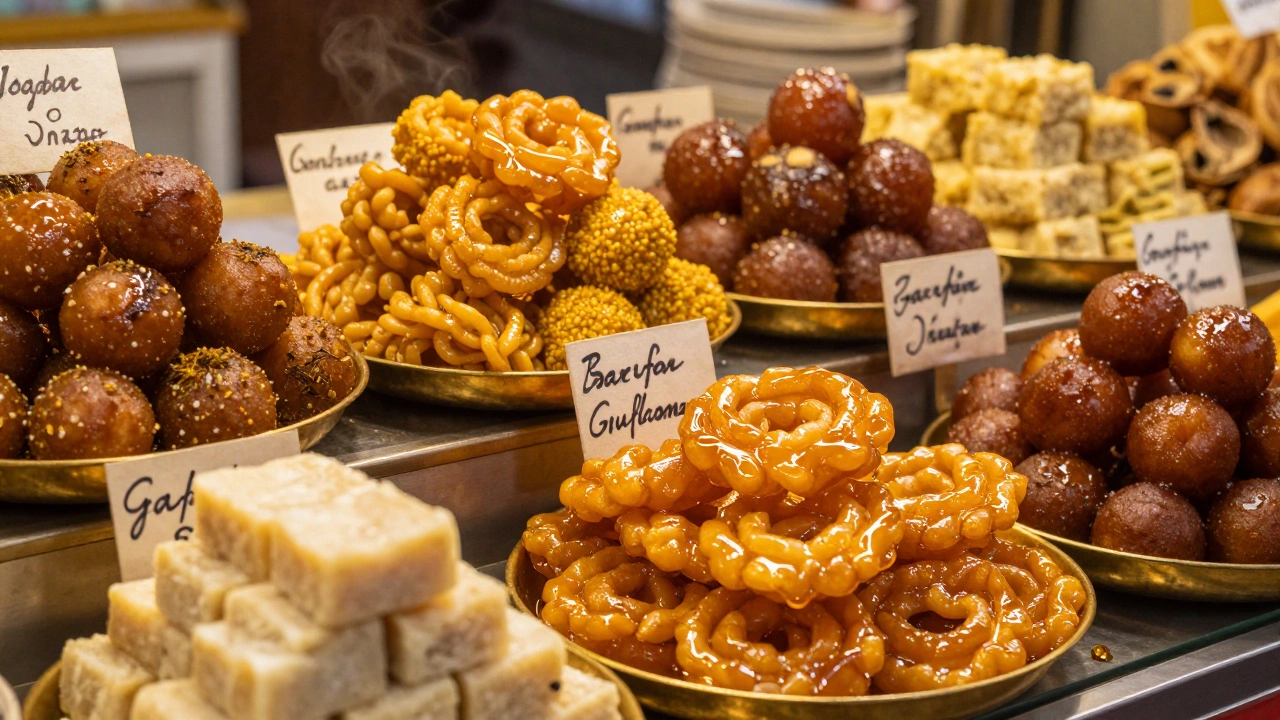
When you walk into an Indian grocery store or see a plate of colorful sweets at a wedding, you might wonder: what’s the Indian word for sweet? The answer is simple - mithai. But there’s more to it than one word. Mithai isn’t just a translation. It’s a whole culture, a tradition, a daily ritual in many Indian homes. You can’t understand Indian sweets without knowing what mithai means - and how deeply it’s woven into life.
Mithai: More Than Just a Word
Mithai (मिठाई) comes from the Hindi word mitha, meaning sweet. But in India, mithai isn’t just sugar and syrup. It’s a category of confections that includes everything from sticky ladoos to crunchy jalebis, from creamy barfis to syrup-soaked gulab jamun. Each region has its own version. In the north, you’ll find gajar ka halwa made with grated carrots and ghee. In the south, it’s payasam - rice cooked in milk and cardamom. In the west, shrikhand blends strained yogurt with saffron and sugar. These aren’t just desserts. They’re offerings at temples, gifts during Diwali, and centerpieces at baby showers.
People don’t say "I want dessert." They say, "Let’s have some mithai." It’s the word you hear in homes, markets, and festivals. Even non-Hindi speakers across India use it. If you ask someone in Chennai or Kolkata what they’re eating, they’ll say "mithai," not "dessert."
Why There’s No Single Translation
You might think "sweet" is a simple word, but in India, language is layered. Hindi is just one of 22 officially recognized languages. Each has its own term for sweet treats. In Tamil, it’s mishtai. In Bengali, it’s misti. In Marathi, it’s sheera or mithai. But even within Hindi, the word changes based on the treat. A laddu is called a laddu. A jalebi is a jalebi. No one says "I’m eating a sweet." They say, "I’m eating a jalebi."
This is why "mithai" works as the umbrella term. It’s the catch-all word for any sweet made with sugar, milk, flour, or nuts. It’s not about the ingredient - it’s about the context. Mithai is what you serve when you’re happy. It’s what you offer when you’re sorry. It’s what you eat when you’re celebrating. A child gets a laddu after finishing homework. A bride gets a plate of barfi at her mehndi. A neighbor brings you kaju katli when your mother is sick.
The Science Behind the Sweetness
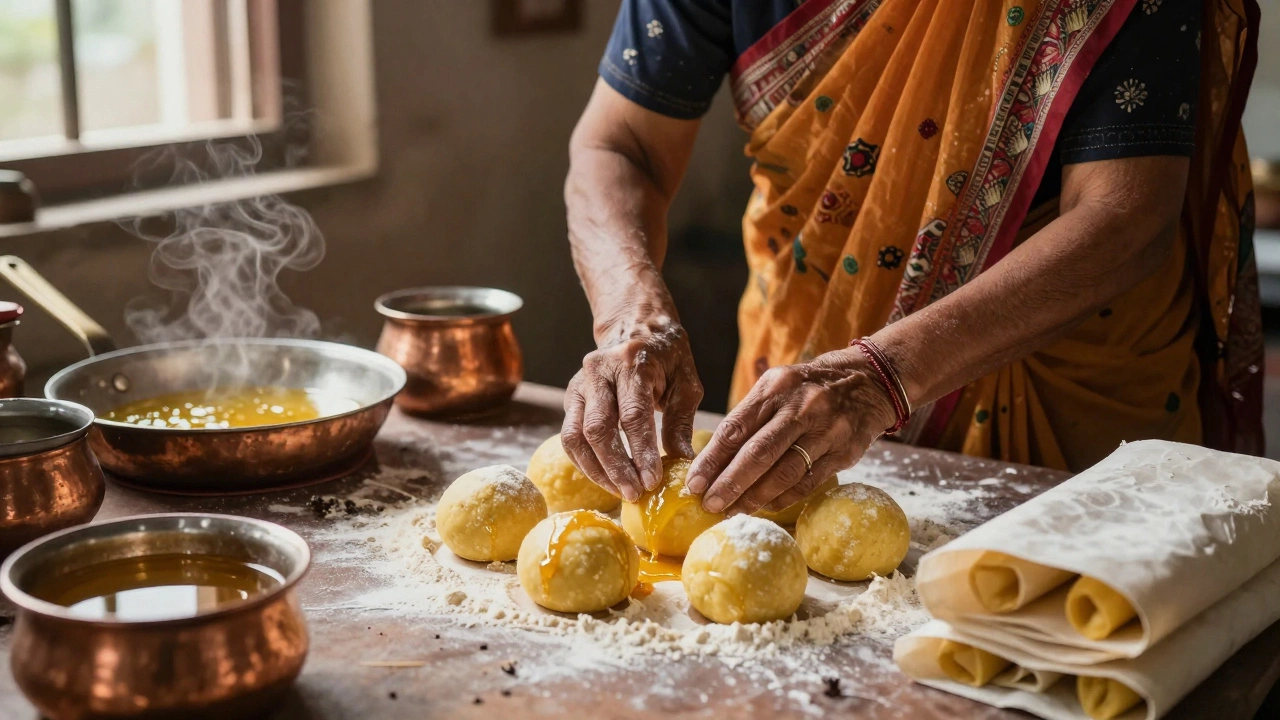
Indian sweets aren’t just sugar. They’re made with ingredients that change texture, flavor, and shelf life. Milk solids - called khoya or mawa - are boiled down for hours until thick and creamy. That’s what gives barfi its dense, melt-in-your-mouth feel. Jalebis are fried in hot oil, then soaked in sugar syrup so they stay soft for days. In contrast, western candies harden quickly. Indian mithai is designed to last, to be shared, to be eaten slowly.
Many sweets use ghee (clarified butter) instead of oil. Ghee adds richness and helps the sweets stay fresh longer. Cardamom, saffron, and rose water aren’t just flavorings - they’re cultural markers. A piece of kaju katli with real saffron isn’t just expensive. It’s a sign of care. A family might spend hours making a single batch of rasgulla because it’s tradition, not just taste.
How Mithai Fits Into Daily Life
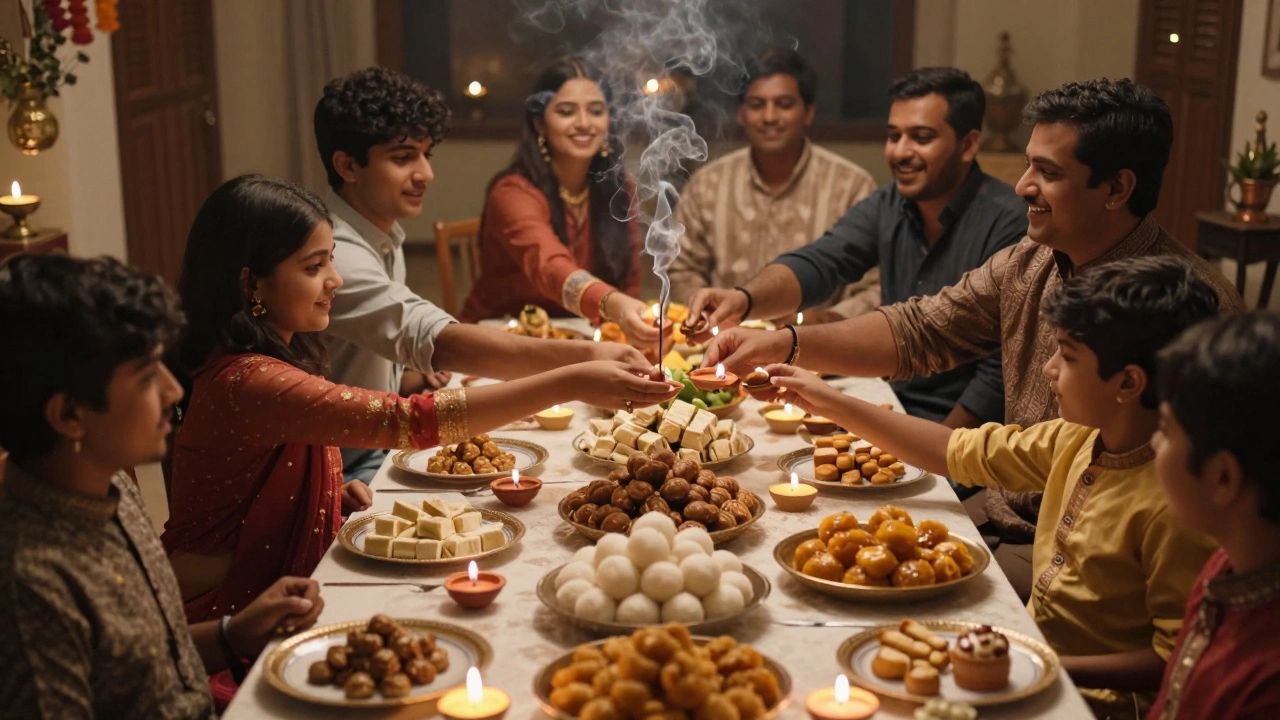
Most Indian households don’t have a dessert course after dinner. Instead, mithai appears at special moments. Diwali? You’ll find a dozen types of mithai on the table. Eid? Sweet halwa is served with savory dishes. A newborn’s first meal? A tiny piece of sugar-coated almond. Even birthdays in India often start with a plate of mithai, not cake.
Street vendors sell mithai from carts. In cities like Varanasi, Jaipur, or Lucknow, you’ll find shops that have been making the same laddu recipe for over 100 years. The sugar syrup is made the same way. The nuts are roasted the same way. The wrappers? Still handmade paper. These aren’t businesses - they’re legacies.
Common Types of Mithai and Their Names
- Ladoo - round, ball-shaped sweets made from flour, sugar, and ghee. Popular varieties include besan ladoo (gram flour) and coconut ladoo.
- Jalebi - orange, spiral-shaped fried batter soaked in syrup. Eaten hot, often with rabri (thickened milk).
- Barfi - dense, square-shaped fudge made from milk solids, sugar, and flavorings like pistachio or coconut.
- Gulab Jamun - deep-fried milk dumplings soaked in sugar syrup, often flavored with cardamom.
- Rasgulla - soft, spongy cheese balls cooked in light syrup, popular in eastern India.
- Kaju Katli - diamond-shaped cashew fudge, often served at weddings.
- Halwa - a pudding-like sweet made from semolina, carrots, or pumpkin, cooked with ghee and nuts.
Each of these has regional variations. A besan ladoo in Rajasthan might use jaggery instead of sugar. A rasgulla in Odisha is softer than the one in West Bengal. You can’t find one "true" version - that’s the point.
Why You Can’t Replace Mithai With "Dessert"
If you say "Indian dessert," you miss the soul of it. Dessert implies a final course, something light, maybe chilled. Mithai is warm, rich, and meant to be shared. It’s not about finishing a meal. It’s about marking a moment. You don’t eat mithai because you’re full. You eat it because you’re grateful.
Even in diaspora communities - like in Birmingham, Toronto, or Dubai - mithai is the first thing made when someone returns home. A grandmother might spend a whole day making ladoos for her grandson’s birthday. No one asks if it’s worth the effort. The answer is always yes.
Where to Find Authentic Mithai Outside India
Outside India, finding real mithai can be tricky. Supermarket versions often use vegetable oil, artificial flavors, and preservatives. The real thing uses fresh milk, ghee, and natural spices. Look for Indian grocery stores with a dedicated mithai counter. Ask for the shop that makes it fresh daily. Avoid anything that looks shiny or plastic-wrapped - that’s not homemade.
Many Indian families in the UK make mithai at home. You’ll find recipes passed down for generations - often written in handwritten notebooks with smudges from sugar and butter. If you know someone from India, ask them to teach you. Making your first laddu might take three tries. But when you get it right, you’ll understand why mithai isn’t just a word. It’s a feeling.
What is the Indian word for sweet?
The most common Indian word for sweet is "mithai." It refers to a wide range of traditional sweets made from milk, sugar, flour, nuts, and spices. While "mitha" means sweet in Hindi, "mithai" is the term used for the sweets themselves.
Is "mithai" used across all of India?
Yes, "mithai" is understood and used throughout India, even in regions where other languages are spoken. While local words exist - like "misti" in Bengali or "mishtai" in Tamil - "mithai" has become the universal term, especially in markets, shops, and media. It’s the go-to word for any traditional Indian sweet.
Are Indian sweets only made for festivals?
No. While mithai is especially popular during Diwali, Eid, and weddings, it’s also eaten regularly. Many families have a weekly tradition of making one type of sweet - like a Sunday barfi or a Tuesday rasgulla. It’s part of daily life, not just special occasions.
Can I substitute mithai with Western desserts?
Not really. Western desserts like cake or ice cream serve a different purpose. Mithai is dense, rich, and often made with milk solids and ghee. It’s designed to be shared, stored, and savored slowly. You can’t replace a gulab jamun with a brownie - they’re made for different moments.
Why do Indian sweets use so much sugar and ghee?
Sugar and ghee aren’t just for taste - they’re preservation tools. In hot climates, sugar syrup helps sweets stay fresh for days. Ghee adds flavor and prevents spoilage. Before refrigerators, these ingredients were essential. Today, they’re kept because they define the texture and tradition of mithai.