What Is the English Word for Chutney? Simple Answer with Real-World Use
Chutney Recipe Builder
Create Your Chutney
Your Chutney Recipe
Chutney originated in India and is now a global condiment. Its unique blend of sweet, sour, and spicy flavors elevates many dishes.
When you hear the word chutney, what comes to mind? Maybe a jar of spicy mango sauce, or a side dish that turns a plain samosa into something unforgettable. But if you’re asking, "What is the English word for chutney?" - the answer is simple: there isn’t one. Chutney isn’t translated. It’s adopted.
That’s right. Chutney is one of those words that crossed borders, kept its name, and became part of everyday English. You won’t find an English synonym that carries the same meaning, texture, or cultural weight. You can’t call it "salsa," "relish," or "preserve" and expect the same reaction. People in London, Toronto, or Sydney don’t say "mango salsa" when they’re craving that sweet-tart kick with their curry. They say chutney.
Where Does Chutney Come From?
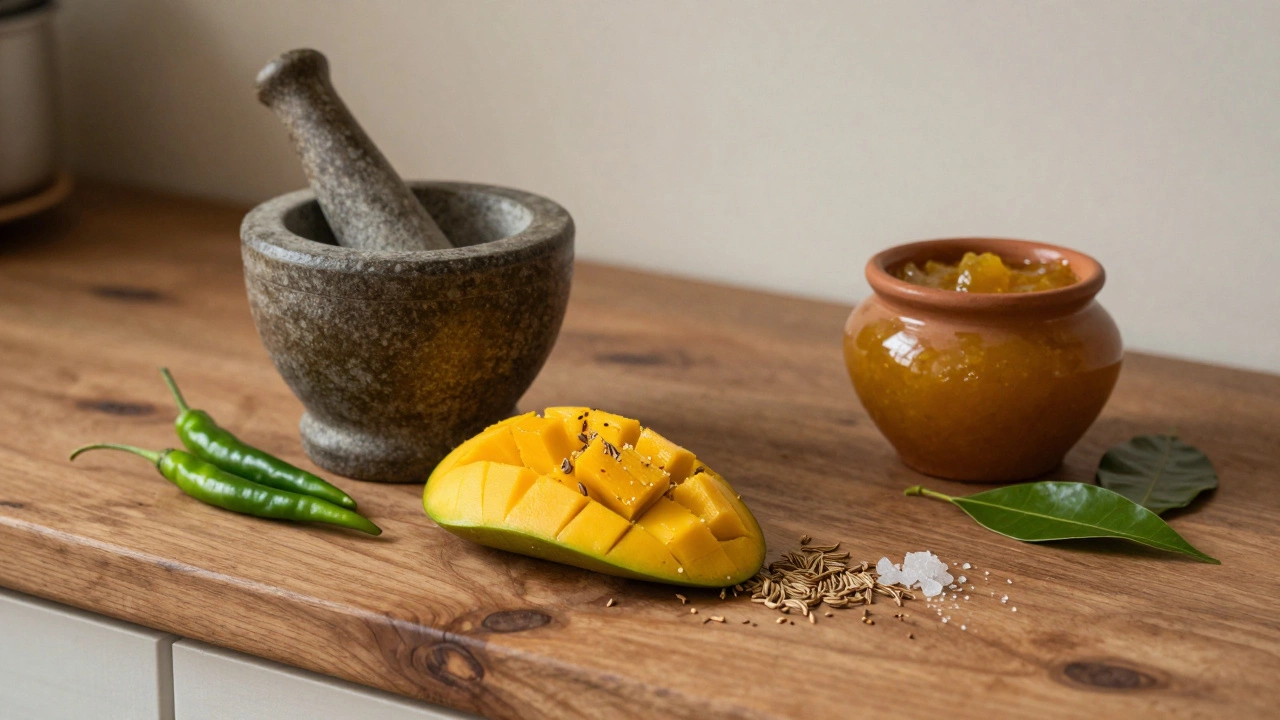
Chutney started in India, long before it showed up in British supermarkets. The word itself comes from the Sanskrit word "chatni," which means "to crush" - and that’s exactly what traditional chutney is: crushed ingredients, blended with spices, vinegar, or sugar. It’s not a sauce you spoon on top. It’s a condiment you mix in, layer with, or taste on its own.
Early versions were made with tamarind, coconut, mint, or even raw mango. No two regions made it the same way. In South India, you’d find a spicy coconut chutney with curry leaves and dried red chilies. In the North, it was more likely to be sweet, slow-cooked apple or date chutney with cardamom and cinnamon. The British didn’t just copy it - they adapted it. After colonial times, they added sugar, vinegar, and even pickled vegetables to make it last longer. That’s how you got the classic British-style tomato chutney you find in pubs today.
Why Doesn’t English Have a Word for It?
English has borrowed words from all over the world - sushi, taco, kimchi, falafel. But here’s the thing: chutney doesn’t fit neatly into any existing category. Is it a jam? No, it’s not sweet enough. Is it a relish? Relish is usually crunchy and vinegary, like pickle. Is it a sauce? Sauces are smoother, usually meant to coat food, not sit beside it.
Chutney is all three - and none of them. It’s thick enough to spread, tangy enough to cut through fat, and complex enough to change the whole flavor of a meal. A spoonful of tamarind chutney on a samosa isn’t just an add-on - it’s the soul of the dish. That’s why English speakers didn’t replace it. They kept it.
Even the Oxford English Dictionary lists "chutney" as a standalone term, defined as: "A pungent condiment of Indian origin, made from fruit, vegetables, or herbs, usually spiced and preserved with vinegar or sugar."
What Does Chutney Look Like Today?
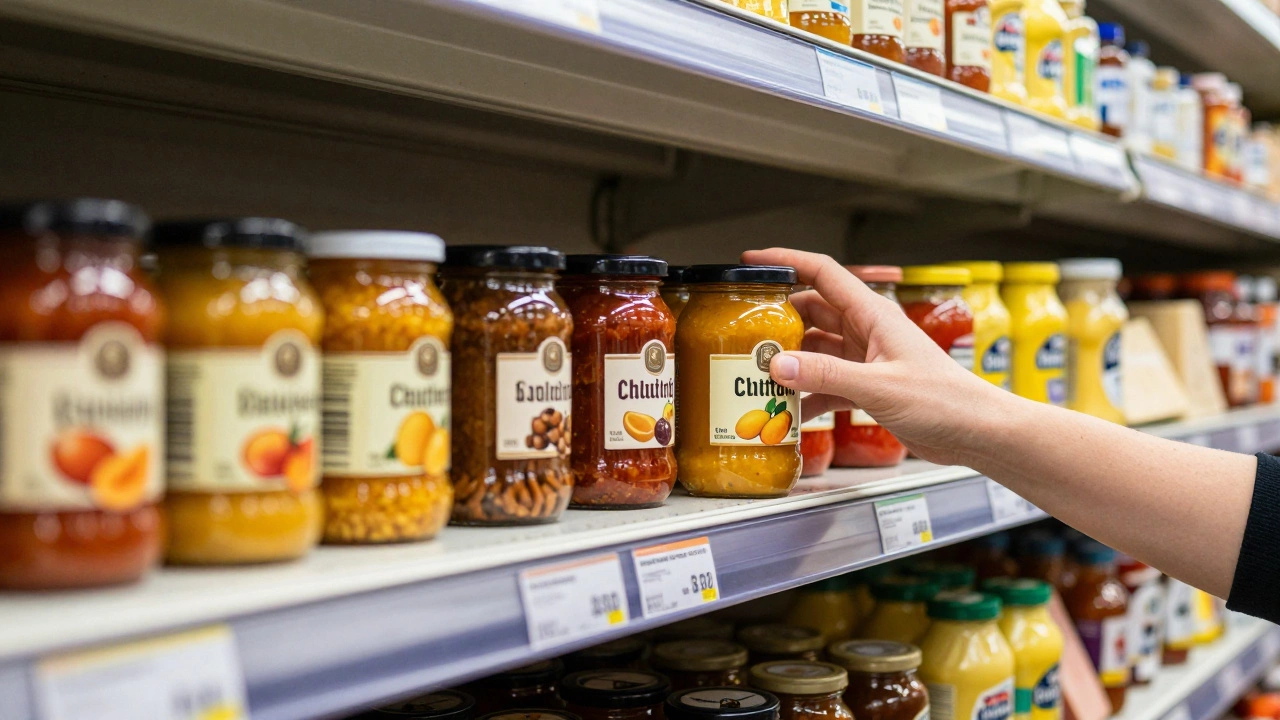
Today, chutney isn’t just Indian. It’s global. In Birmingham, where I live, you’ll find a jar of mango chutney next to the English mustard on supermarket shelves. You’ll see it on cheese boards, in sandwiches, and even as a glaze for roasted duck. In the U.S., you can buy pear chutney with ginger at Whole Foods. In Australia, they make beetroot chutney with star anise. In France, chefs use tamarind chutney to balance rich duck confit.
But the core hasn’t changed. It’s still made by crushing ingredients. Still balanced between sweet, sour, and spicy. Still meant to elevate, not overpower. The most popular types you’ll find in UK shops are:
- Mango chutney - sweet, tangy, with a hint of chili
- Tamarind chutney - deep, sour, often used in street food
- Coconut chutney - creamy, mild, common in South Indian meals
- Tomato chutney - British-style, cooked slow with vinegar and brown sugar
- Pineapple chutney - fruity, with cinnamon and cloves
Some brands add dried fruit, nuts, or even rose petals. But the best ones? They’re made in small batches. You can smell the cardamom before you open the jar.
How Is Chutney Used?
Chutney isn’t just for curries. Try it on:
- Plain yogurt or cottage cheese
- Grilled cheese sandwiches
- Roasted vegetables
- Meat pies or sausages
- As a glaze for chicken or pork
- With crackers and aged cheddar
It’s not a side. It’s a flavor bridge. A single spoonful can turn a dull meal into something memorable. That’s why people don’t just buy chutney - they collect it. I know a woman in Birmingham who has over 30 jars in her pantry. "I don’t know what I’d do without my tamarind," she told me. "It’s the only thing that makes my dal taste like home."

Can You Make Chutney at Home?
Yes - and it’s easier than you think. You don’t need fancy tools. A blender, a pot, and 20 minutes are all you need. Here’s the basic idea:
- Choose your base - mango, tomato, apple, or even beetroot
- Add sugar (for sweetness) and vinegar (for tang)
- Throw in spices: mustard seeds, cumin, chili, ginger
- Simmer until thick - no water, no rush
- Pack into clean jars and seal
It keeps for months in the fridge. And once you make your first batch, you’ll wonder why you ever bought it in a jar.
Final Thought: Chutney Is a Word That Stuck
There’s no English word for chutney because chutney doesn’t need one. It’s not a translation. It’s a tradition. A flavor that traveled, adapted, and stayed true. The next time you open a jar of chutney, remember - you’re not just eating a condiment. You’re tasting centuries of history, geography, and home.