What Is Considered a Small Manufacturing Company?
Small Manufacturing Size Calculator
Select Your Region
Your Classification
Why This Matters
Being classified as small manufacturing unlocks key advantages:
- Access to specialized funding programs
- Eligibility for tax incentives like R&D credits
- Reduced regulatory requirements
- Supply chain flexibility and niche market opportunities
Examples: Wolverhampton Precision Components (18 employees, £2.1M revenue) qualifies as small UK manufacturing. North East Tooling Ltd (65 employees, £12M revenue) is medium-sized under EU rules.
When you hear the phrase small manufacturing company, what comes to mind? Maybe a garage workshop with a few workers assembling parts, or a local factory making custom metal brackets? The truth is, there’s no single answer - but there are clear, widely accepted standards that define what counts as small in manufacturing. And those standards vary by country, industry, and even funding programs.
How the U.S. Defines Small Manufacturing Companies
In the United States, the Small Business Administration (SBA) sets the official benchmarks. For most manufacturing industries, a company is considered small if it has fewer than 500 employees. But that’s not the whole story. The SBA breaks manufacturing into more than 1,000 specific industries, each with its own size standard. For example:
- Automotive parts manufacturers: under 1,000 employees
- Food processing plants: under 1,000 employees
- Tool and die makers: under 500 employees
- Pharmaceutical and medicine manufacturing: under 1,500 employees
These numbers aren’t random. They’re based on industry-specific competition, capital needs, and typical supply chain structures. A company making custom medical devices might need more staff to handle regulatory compliance, while a shop that CNC-machines brackets for local contractors can run lean.
What About Europe and the UK?
In the European Union and the UK, the definition leans more toward revenue and balance sheet size than headcount. According to the EU’s official classification:
- Micro-enterprises: fewer than 10 employees and under €2 million in annual turnover
- Small enterprises: fewer than 50 employees and under €10 million in turnover
- Medium-sized enterprises: fewer than 250 employees and under €50 million in turnover
So in the UK, a small manufacturing company typically means under 50 workers and under £8.8 million in annual revenue (based on 2026 exchange rates). Many government grants, tax incentives, and training programs target businesses in this range. For example, a workshop in Birmingham making custom kitchen fittings with 22 employees and £4 million in sales qualifies as small under EU rules - and can access regional manufacturing grants that larger firms can’t.
Why Does the Size Matter?
It’s not just about labels. Being classified as a small manufacturer unlocks real advantages:
- Access to funding: Banks and government lenders often reserve low-interest loans for small manufacturers.
- Tax breaks: In the UK, small firms may qualify for Research & Development (R&D) tax credits even if they’re not tech companies - think of a metal fabricator improving a welding process.
- Regulatory relief: Environmental and workplace safety rules are often scaled down for small operations. For instance, a company with under 25 employees in the UK doesn’t need a full-time health and safety officer.
- Supply chain flexibility: Small manufacturers can pivot faster. If a client needs 500 custom parts by Friday, a 30-person shop can rearrange production overnight. A 2,000-person plant? Not so much.
On the flip side, small manufacturers often struggle with buying power. Ordering 10,000 sheets of aluminum? Big companies get bulk discounts. Small ones pay list price. That’s why many join industry co-ops or group purchasing networks to stretch their budgets.
Real-World Examples of Small Manufacturing
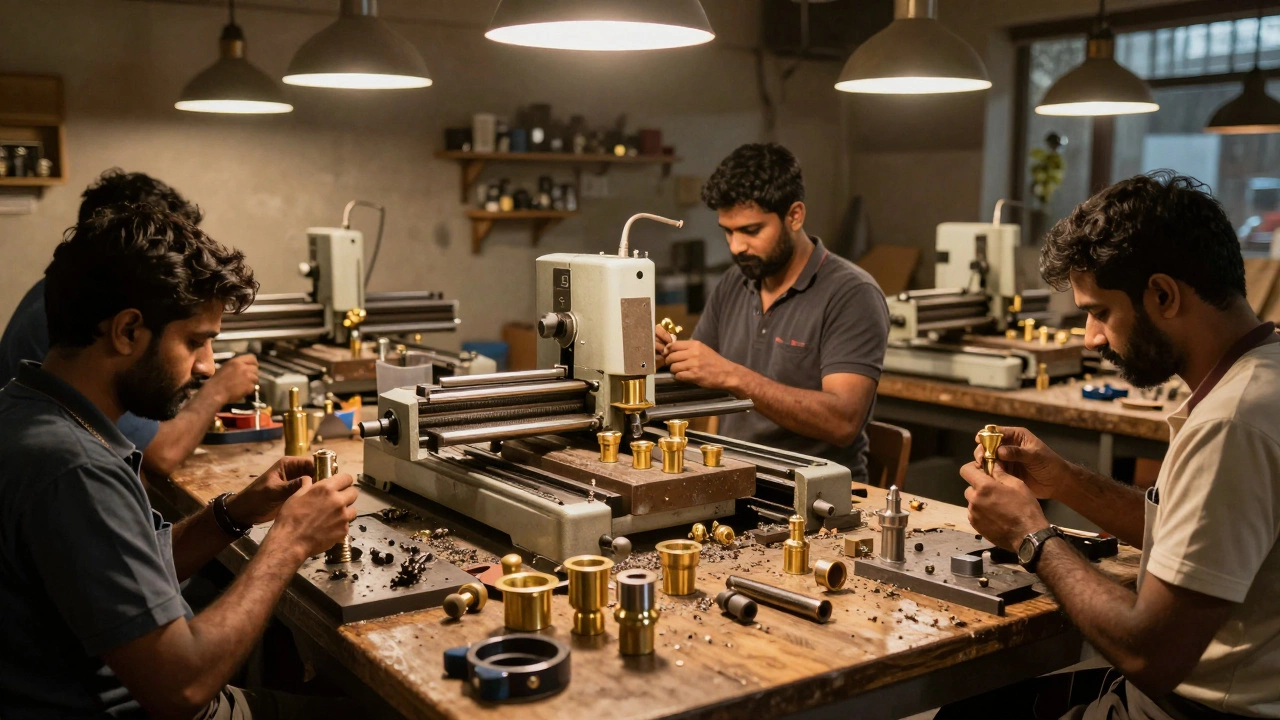
Take Wolverhampton Precision Components, a shop outside Birmingham. They make custom brass fittings for vintage car restorations. They have 18 employees, a £2.1 million annual turnover, and run two CNC machines. They’re small by every metric - and they thrive because they focus on niche, high-margin work.
Compare that to North East Tooling Ltd, which produces injection-molded plastic housings for medical devices. They have 65 employees and £12 million in revenue. Even though they’re still a family-run business, they’re now classified as medium-sized under EU rules. That means they lose access to certain grants but gain eligibility for export support programs.
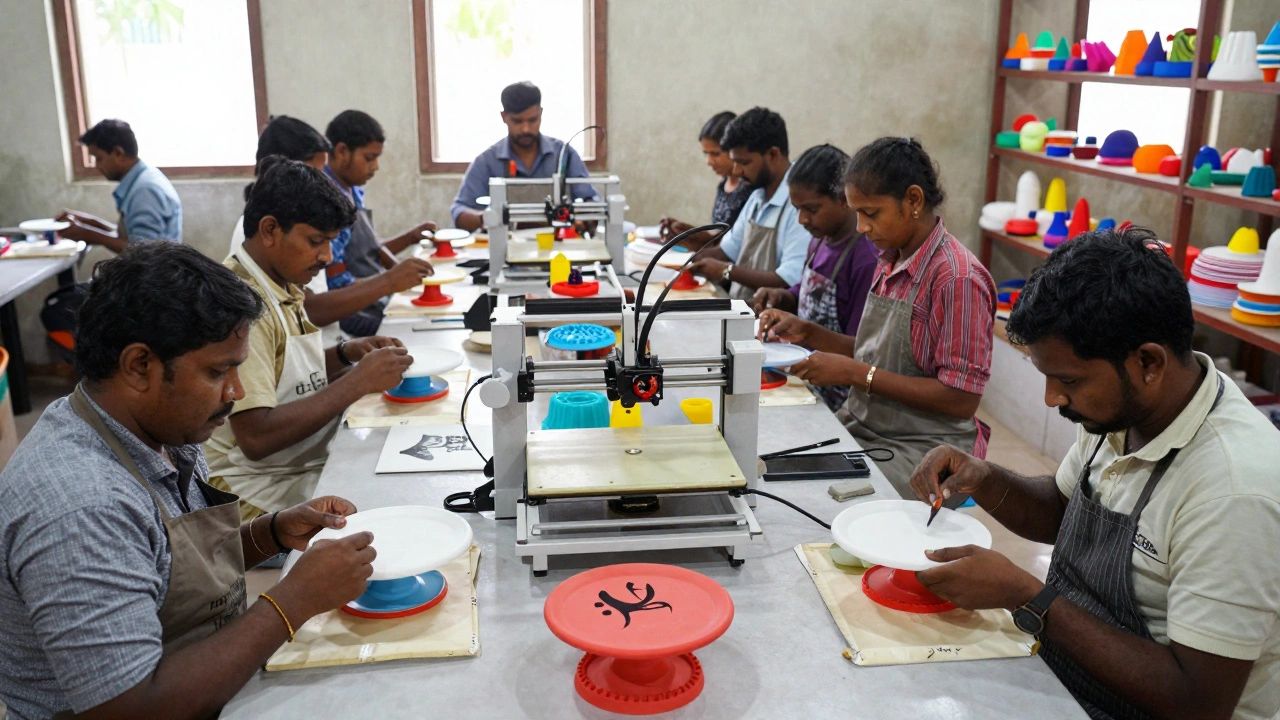
Another example: a bakery in Leeds that started making custom cake stands and serving trays in-house. They now have 12 employees, produce 8,000 units a year, and bring in £900,000 in sales. Is that manufacturing? Absolutely. And under UK definitions, they’re a small business - eligible for enterprise support, training subsidies, and even local council grants for upgrading equipment.
What Small Manufacturers Actually Do
People think manufacturing means huge factories with assembly lines. But small manufacturers often do things like:
- Custom fabrication (metal, wood, plastic)
- Prototyping and small-batch production
- Assembly of components made elsewhere
- Re-manufacturing or refurbishing used parts
- Specialized packaging or labeling
Many operate under a “make-to-order” model - they don’t stock inventory. They build what’s ordered, when it’s ordered. This reduces waste and capital tied up in unsold goods. It also means they’re not competing with big brands on price - they’re competing on speed, customization, and reliability.
How to Know If Your Business Qualifies
If you’re running a manufacturing operation and wondering where you stand, here’s a quick checklist:
- Count your full-time equivalent employees (include part-timers as fractions)
- Check your last 12 months of turnover (revenue)
- Identify your NAICS or SIC code - this determines which size standard applies
- Compare against your country’s official thresholds (SBA for the U.S., GOV.UK for the UK, EU for Europe)
For UK manufacturers, you can use the UK government’s size calculator (available online) to input your numbers and get an official classification. It takes less than five minutes.
Common Misconceptions
Many assume that if you’re not making cars or electronics, you’re not really manufacturing. That’s wrong. A company that laser-etches custom signs on stainless steel? Manufacturing. A shop that assembles solar panel mounting brackets? Manufacturing. A family-run business that casts bronze door handles? Definitely manufacturing.
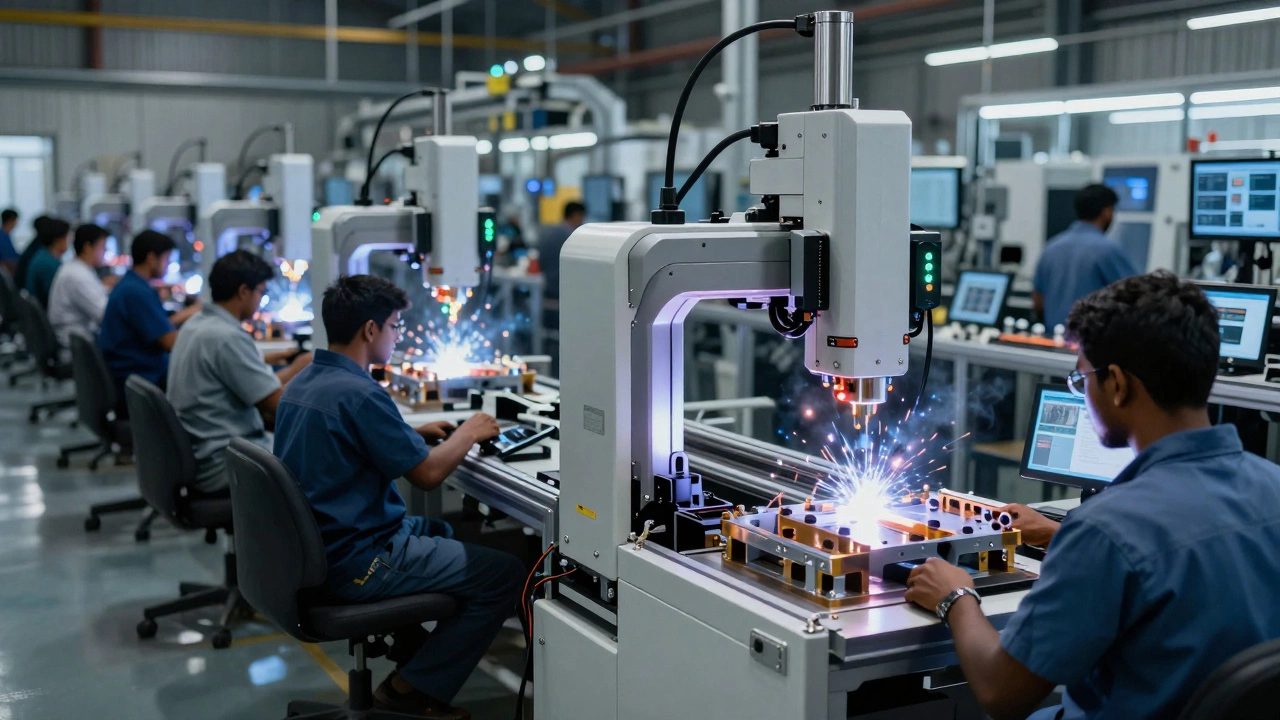
Another myth: small means outdated. Many small manufacturers use advanced tools - 3D printers, CNC routers, automated inspection systems - but on a smaller scale. One shop in Derby uses AI-powered vision systems to check weld quality on custom brackets. They have 14 employees. That’s not a startup. That’s a smart, modern small manufacturer.
What Happens When You Grow Out of "Small"?
There’s no shame in outgrowing the small business label. But it changes everything. Once you hit 250 employees in the EU (or 500 in the U.S.), you lose access to many grants and tax incentives. You also face stricter reporting rules, higher payroll taxes, and more complex compliance.
That’s why some small manufacturers intentionally cap their growth - not because they can’t scale, but because they value flexibility, customer relationships, and control over profit margins. Others use their "small" status as a marketing edge: "Handmade in Yorkshire," "Family-run since 1987," "Custom builds, not mass production."
Knowing your size isn’t just about rules - it’s about strategy.