What is a Unit Process in Food Manufacturing? Real-World Examples
Food Manufacturing Step Classifier
Classify a Production Step
Select the primary action occurring in your production line to see if it constitutes a chemical transformation (Unit Process) or a physical manipulation (Unit Operation).
Key Distinction
- Unit Operation:
Physical change. Moves heat, mass, or momentum. Identity remains the same. - Unit Process:
Chemical/Biological change. Identity shifts. Requires specific conditions (temp, pH, microbes).
You’ve probably heard the term unit process thrown around in engineering classes or factory floor meetings. It sounds technical, but it’s actually the building block of everything you eat. Without understanding these individual steps, you can’t scale a recipe from your kitchen to a global supply chain.
In food manufacturing, a unit process is a distinct step that changes the chemical or biological nature of an ingredient. Unlike physical steps-like chopping or mixing-that just move things around, unit processes transform them. Think about how milk becomes cheese or how wheat flour turns into bread. Those transformations are unit processes.
The Difference Between Unit Operations and Unit Processes
To really get what a unit process is, you first have to understand what it isn’t. In food engineering, we split production steps into two buckets: Unit Operations and Unit Processes.
Unit operations are physical changes. They don’t alter the chemical makeup of the food. You’re moving heat, mass, or momentum. Examples include pumping water, grinding nuts, filtering juice, or drying apples. The apple is still an apple; it’s just smaller or drier.
Unit processes are chemical or biological changes. The identity of the material shifts. Yeast eats sugar and creates alcohol (fermentation). Heat breaks down proteins and kills bacteria (pasteurization). Enzymes break down starch into simple sugars (hydrolysis).
Why does this distinction matter? Because you can design equipment for a unit operation once and use it for many products. A mixer works for cake batter and salad dressing alike. But a unit process requires specific conditions-exact temperatures, pH levels, or microbial strains-to work correctly. You can’t just “mix” fermentation; you have to control the biology.
Core Examples of Unit Processes in Food Manufacturing
Let’s look at the most common unit processes you’ll find in modern food plants. These are the heavy lifters that turn raw agricultural goods into shelf-stable products.
1. Fermentation
Fermentation is arguably the oldest unit process in human history. It involves using microorganisms-yeasts, bacteria, or molds-to convert carbohydrates into alcohol, acids, or gases.
- Example: Turning grape juice into wine. Yeast (Saccharomyces cerevisiae) consumes glucose and produces ethanol and carbon dioxide.
- Example: Making yogurt. Lactic acid bacteria convert lactose (milk sugar) into lactic acid, which thickens the milk and gives it that tangy taste.
In industrial settings, fermentation tanks are tightly controlled. Temperature, oxygen levels, and nutrient availability are monitored constantly. If the temperature spikes too high, you might kill the yeast. Too low, and the process stalls. This biological sensitivity is what makes it a unit process, not just a physical mix.
2. Thermal Processing (Pasteurization and Sterilization)
Heat doesn’t just cook food; it fundamentally alters its safety profile and sometimes its texture. Thermal processing uses heat to destroy pathogenic microorganisms and enzymes that cause spoilage.
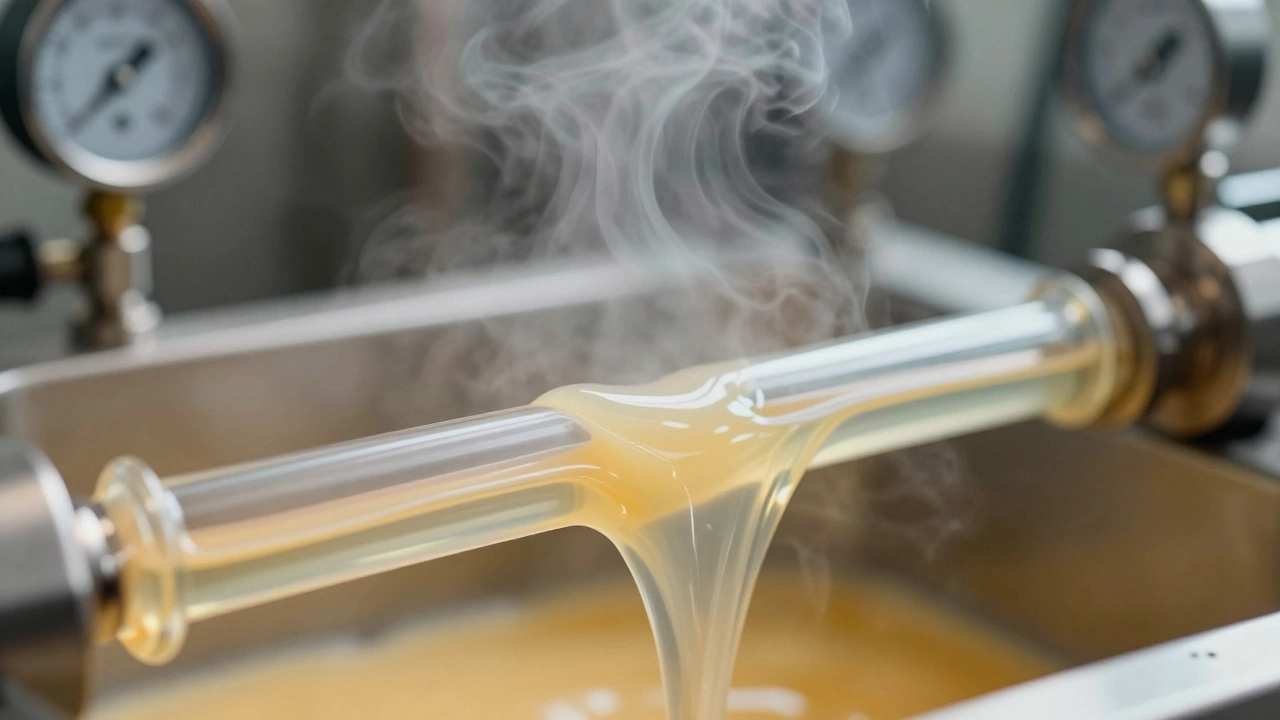
- Pasteurization: Heating liquids like milk or juice to a specific temperature (e.g., 72°C for 15 seconds) to kill harmful bacteria while preserving flavor. The protein structure denatures slightly, changing the mouthfeel.
- Sterilization (Canning): Heating sealed containers to above 100°C to destroy all viable microbes, including spores. This allows food to be stored at room temperature for years.
The key here is the chemical destruction of cell walls in bacteria and the deactivation of enzymes. It’s a non-reversible chemical change induced by heat.
3. Hydrolysis
Hydrolysis means breaking down large molecules using water. In food processing, this is often done with enzymes or acids to improve texture, sweetness, or digestibility.
- Enzymatic Hydrolysis: Adding protease enzymes to meat to make it tender. The enzyme cuts the peptide bonds in muscle fibers, turning tough connective tissue into softer components.
- Acid Hydrolysis: Breaking down corn starch into glucose syrup. Strong acids and heat cleave the long starch chains into simple sugars, creating a sweetener used in sodas and candies.
This process changes the molecular weight and functional properties of the ingredient. High-fructose corn syrup starts as corn starch, but after hydrolysis and isomerization, it’s chemically different.
4. Oxidation and Reduction
These chemical reactions involve the transfer of electrons. In food, oxidation is often the enemy (think rancid oils), but it can also be a desired process.
- Oxidation: Aging cheddar cheese. Over time, fats oxidize slowly, contributing to the sharp flavor profile. Controlled oxidation is also used in curing meats like salami.
- Reduction: Converting unsaturated fats into saturated fats through hydrogenation. While less common now due to health concerns, this process historically turned liquid vegetable oils into solid shortenings for baking.
Understanding redox potentials helps manufacturers control shelf life and flavor development without adding artificial preservatives.
5. Extraction via Solvents
While extraction can be physical, when solvents are used to selectively dissolve components based on their chemical affinity, it borders on a unit process.
- Coffee Decaffeination: Using methylene chloride or ethyl acetate to bind with caffeine molecules and pull them out of coffee beans. The solvent interacts specifically with the alkaloid structure of caffeine.
- Vanilla Extraction: Using ethanol to dissolve vanillin compounds from vanilla beans. The choice of solvent determines which flavor compounds are extracted.
The selectivity of the solvent for specific chemical compounds is what drives this process.
Why Unit Processes Matter for Your Business
If you’re running a food business, understanding unit processes isn’t just academic-it’s financial. Here’s why:
Quality Control: Physical errors are easy to spot. A broken piece of glass in a jar is obvious. Chemical errors are harder. Did the fermentation stop halfway? Is the pH off by 0.2 units? These unit process variables determine if your product tastes right and stays safe.
Scalability: You can’t scale a unit process linearly. Doubling the size of a fermenter doesn’t mean you double the yield. Heat transfer rates, oxygen diffusion, and mixing dynamics change. Understanding the chemistry helps you predict these non-linear scaling issues.
Regulatory Compliance: Agencies like the FDA or FSSAI regulate unit processes strictly. Pasteurization must meet specific time-temperature combinations. Fermentation must ensure no harmful pathogens survive. Knowing the science behind the process helps you document compliance effectively.
| Process Type | Primary Change | Key Input | Common Example |
|---|---|---|---|
| Fermentation | Biological conversion | Microorganisms | Yogurt, Beer, Bread |
| Thermal Processing | Microbial destruction | Heat | Pasteurized Milk, Canned Soup |
| Hydrolysis | Molecular breakdown | Enzymes/Acids/Water | Tenderized Meat, Glucose Syrup |
| Oxidation | Electron loss | Oxygen/Catalysts | Aged Cheese, Cured Meats |
Real-World Scenario: Making Tomato Ketchup
Let’s walk through ketchup production to see unit processes in action. This helps bridge the gap between theory and the factory floor.
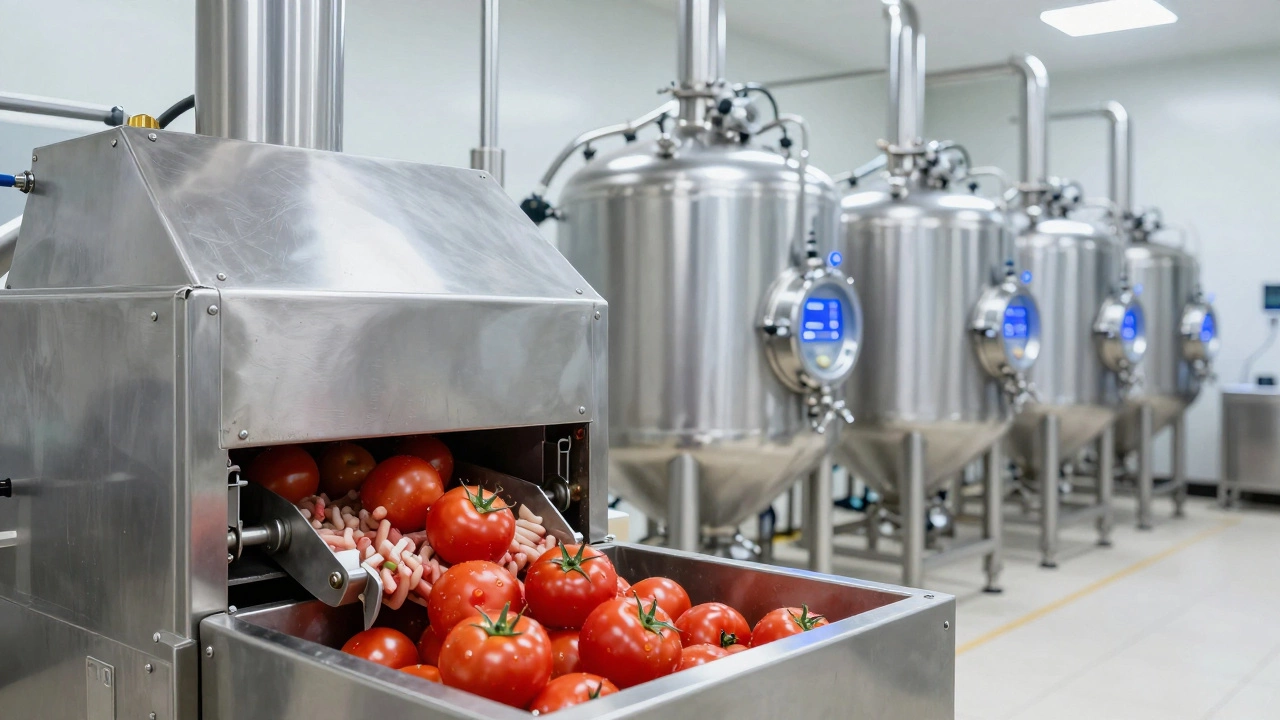
- Receiving & Washing: Tomatoes arrive. They are washed and sorted. This is a unit operation (physical cleaning).
- Crushing & Pulping: Tomatoes are crushed to separate skins and seeds. This is a unit operation (mechanical separation).
- Concentration: Water is evaporated from the pulp to thicken it. Evaporation is primarily a unit operation, but the intense heat begins to caramelize sugars, a minor unit process (chemical browning).
- Blending & Seasoning: Vinegar, sugar, salt, and spices are added. Mixing is a unit operation. However, the vinegar lowers the pH significantly. This acidification is a critical unit process because it creates an environment where pathogens cannot grow. The chemical balance of the final product is established here.
- Aseptic Filling: The ketchup is sterilized and filled into bottles. The sterilization step is a unit process (thermal death of microbes).
Notice how the physical steps dominate the early stages, but the safety and flavor rely heavily on the chemical unit processes later on.
Common Mistakes in Identifying Unit Processes
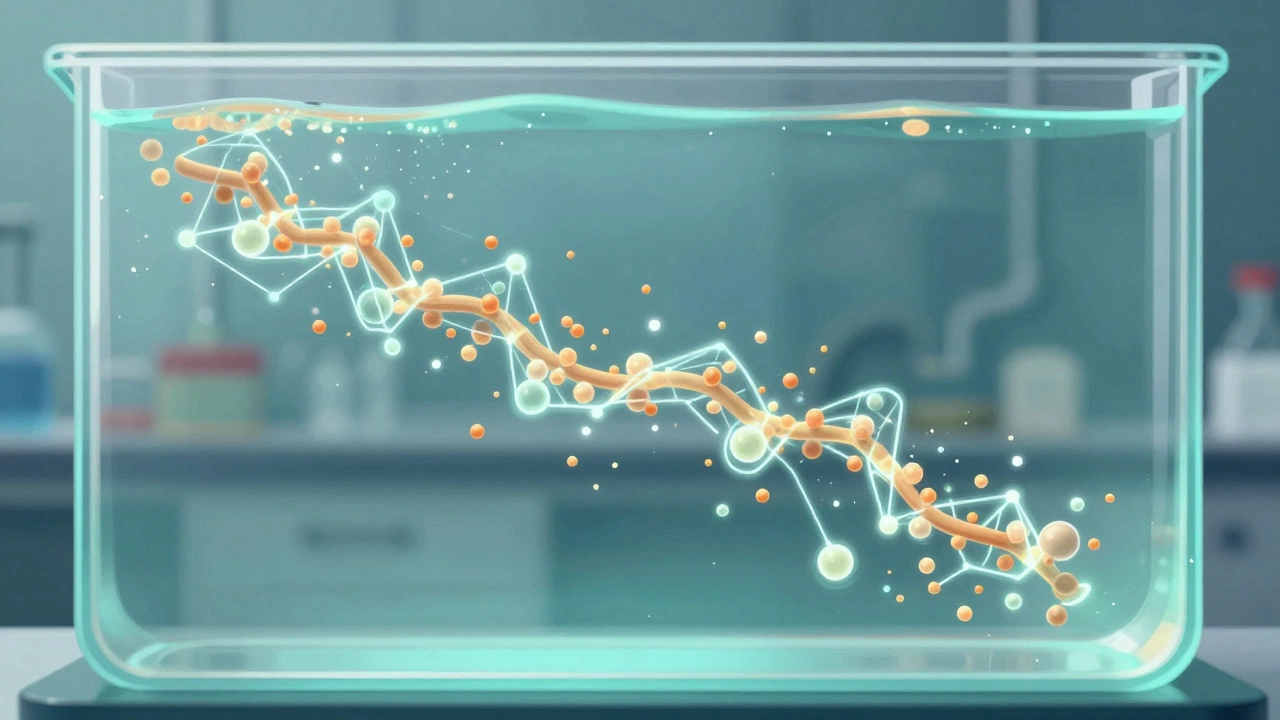
New engineers often confuse the tool with the process. Just because you’re using a heater doesn’t mean you’re doing a unit process. If you’re heating water to keep it warm for transport, that’s a physical hold. If you’re heating water to kill E. coli, that’s pasteurization (a unit process).
Another mistake is ignoring side reactions. When you ferment beer, you want alcohol. But you also produce esters and higher alcohols that affect flavor. A true understanding of the unit process accounts for all chemical outputs, not just the primary one.
Finally, don’t overlook the role of water activity. Many unit processes depend on controlling how much water is available for chemical reactions. Reducing water activity can halt enzymatic browning or microbial growth, effectively pausing a unit process.
Final Thoughts on Mastering Unit Processes
Mastering unit processes gives you control over the soul of your product. You can tweak a physical step to save money, but you tweak a unit process to change the experience. Want a sharper cheese? Extend the fermentation time. Want a sweeter syrup? Increase the hydrolysis rate.
As food technology advances, new unit processes emerge. High-pressure processing (HPP) uses pressure instead of heat to inactivate microbes, preserving fresh flavors better than traditional thermal methods. Ultrasound-assisted extraction pulls more antioxidants from plants. Staying curious about these chemical and biological transformations will keep your products relevant and safe.
Is mixing considered a unit process?
No, mixing is generally considered a unit operation. It is a physical step that combines ingredients without changing their chemical or biological structure. Unless the mixing generates enough friction to cause significant heat-induced chemical changes, it remains physical.
What is the difference between pasteurization and sterilization?
Both are thermal unit processes, but they differ in intensity. Pasteurization uses lower temperatures to reduce microbial load to safe levels, requiring refrigeration. Sterilization uses higher temperatures to destroy all viable microorganisms, allowing for shelf-stable storage at room temperature.
Can evaporation be a unit process?
Primarily, evaporation is a unit operation (physical removal of water). However, if the concentration leads to chemical reactions like caramelization or Maillard browning, those secondary changes are unit processes. The primary intent defines the classification.
Why is pH control important in unit processes?
pH affects enzyme activity, microbial growth, and protein stability. In fermentation, the wrong pH can kill the culture. In preservation, low pH (acidity) inhibits botulinum spores. Controlling pH is often a critical part of managing a unit process for safety and quality.
What are some modern examples of unit processes?
Modern examples include High-Pressure Processing (HPP), which uses pressure to denature proteins and kill microbes without heat, and enzymatic modification, where specific enzymes are used to alter texture or sweetness profiles precisely. These offer alternatives to traditional thermal processes.