What is a CPU in a Restaurant? Understanding the Central Processing Unit of Food Service

Restaurant CPU Viability Calculator
Use this tool to determine if transitioning from individual kitchens to a Central Processing Unit (CPU) makes financial and operational sense for your business.
Financial Impact Estimate
**Based on estimated $500k initial setup cost for a mid-sized CPU.
Strategic Recommendation
You walk into a busy bistro. The front-of-house staff are smiling, the decor is chic, and the menu looks fantastic. But behind those swinging doors lies a different kind of engine room. When industry insiders talk about the CPU in a restaurant, they aren't talking about the silicon chip inside your laptop. They are referring to the Central Production Unit, also known as a Central Kitchen or Commissary Kitchen. This facility acts as the brain and heart of multi-location food businesses, handling everything from bulk ingredient prep to final assembly before products hit the storefronts.
If you have ever wondered why chain restaurants taste exactly the same whether you are in Birmingham or Bristol, the answer usually sits in a large industrial building on the outskirts of town. A Central Processing Unit is not just a big kitchen; it is a manufacturing plant disguised as a culinary space. It allows brands to scale without losing consistency. For owners and operators, understanding this model is critical because it changes how you buy ingredients, hire staff, and manage logistics.
The Core Function: Why Restaurants Need a Central Hub
Think of a standard restaurant kitchen as a retail store that also manufactures its own goods. Now imagine trying to open fifty of those stores across the country. Each one would need its own specialized chefs, unique supply chains, and quality control teams. That is a nightmare for profit margins. Enter the CPU. By consolidating production, a brand can decouple the labor-intensive parts of cooking from the customer-facing experience.
The primary job of a Central Processing Unit is to transform raw commodities into semi-finished or fully finished meals under strict quality controls. This shifts the complexity away from individual outlets. Instead of every line cook chopping onions or simmering sauces from scratch, the CPU does it once, in massive batches, using standardized recipes. The local kitchens then focus on heating, assembling, and serving. This reduces training time at the storefront level and minimizes waste, as bulk purchasing drives down costs significantly.
How a Commercial Kitchen Differs from a CPU
It is easy to confuse a high-volume restaurant kitchen with a CPU, but the operational goals are distinct. A traditional kitchen prioritizes speed and freshness for immediate consumption. A CPU prioritizes throughput, shelf-life management, and uniformity. The equipment reflects this difference. While a restaurant might rely on six-burner ranges and fryers, a CPU utilizes steam kettles, vacuum sealers, blast chillers, and automated portioning machines.
| Feature | Traditional Restaurant Kitchen | Central Processing Unit (CPU) |
|---|---|---|
| Primary Goal | Serve customers immediately | Produce inventory for distribution |
| Labor Skill Level | Highly skilled chefs required | Process-oriented operators |
| Equipment Focus | Ranges, grills, fryers | Kettles, mixers, packaging lines |
| Quality Control | Taste check per dish | Batch testing and lab analysis |
| Supply Chain | Daily deliveries from local vendors | Bulk weekly/monthly contracts |
The shift in equipment isn't just about size; it's about process control. In a CPU, temperature logs are taken every fifteen minutes. pH levels are tested for acidity. Metal detectors scan packaged goods. These are industrial standards borrowed from food manufacturing companies like Unilever or Nestlé, applied to fresh food preparation.
Key Components Inside a Restaurant CPU
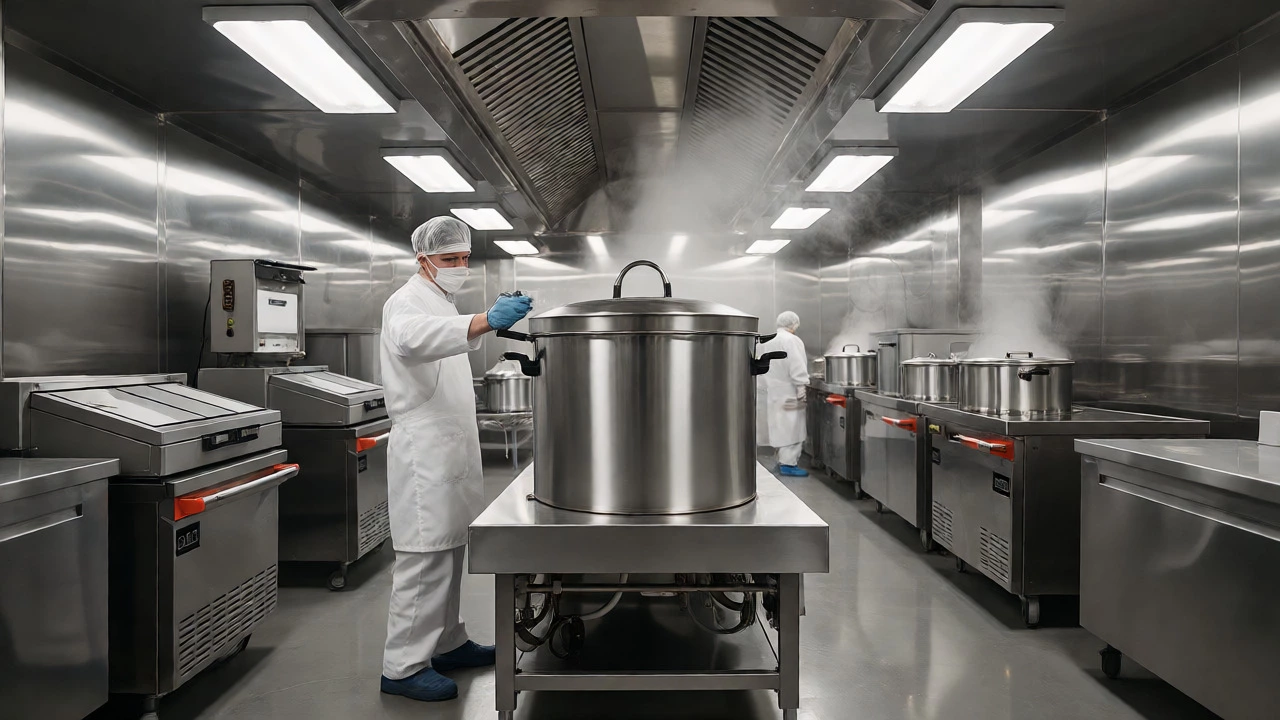
A functioning CPU operates like an assembly line. You cannot just throw pots and pans into a warehouse and call it a production unit. Specific zones must be designed to prevent cross-contamination and ensure efficiency. Most CPUs follow a linear flow: receiving, storage, preparation, cooking, cooling, packaging, and dispatch.
- Receiving Dock: This is where raw materials arrive. Unlike a small kitchen, a CPU has dedicated cold-chain verification protocols. Every pallet of vegetables or meat is weighed, inspected, and logged before entering the cool rooms.
- Preparation Zone: Here, industrial peeling machines, vegetable slicers, and marinating drums do the heavy lifting. If a recipe calls for 500kg of diced carrots, a machine handles it in minutes, ensuring every piece is identical.
- Cooking Hall: Steam jacketed kettles replace stovetops. These vessels use indirect heat to cook large volumes evenly without scorching. For baked goods, tunnel ovens move trays through heated chambers continuously.
- Blast Chilling: This is the secret weapon of modern CPUs. Hot food is rapidly cooled to safe temperatures to inhibit bacterial growth. This step extends shelf life, allowing meals to be made days in advance without compromising safety.
- Packaging Line: Meals are placed into trays, sealed with modified atmosphere packaging (MAP), and labeled. MAP removes oxygen to keep salads crisp and meats fresh longer than vacuum sealing alone.
Each stage requires specific staffing structures. You will find less "creative" cooking and more adherence to Standard Operating Procedures (SOPs). Staff roles are often titled "Production Operators" rather than "Chefs," reflecting the manufacturing nature of the work.
Economic Benefits and Cost Structures
Why do brands invest millions in setting up a CPU? The math is compelling. Labor accounts for roughly 30-35% of revenue in typical full-service restaurants. By moving complex prep work to a centralized location, brands reduce the need for highly paid senior chefs in every outlet. Storefront staff can be trained in weeks rather than years, lowering turnover costs and wage bills.
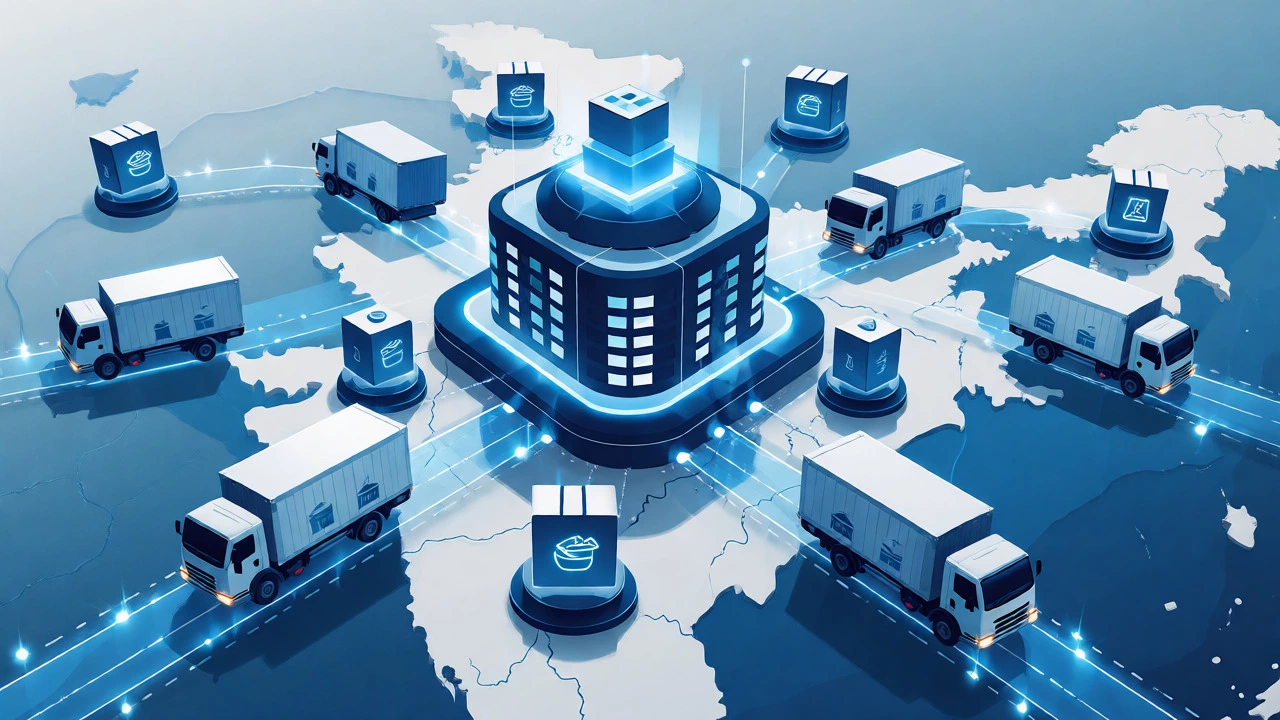
Furthermore, economies of scale apply heavily here. Buying potatoes by the tonne costs significantly less per kilogram than buying them by the sack. A CPU allows a brand to negotiate better rates with suppliers due to volume commitments. However, these savings come with new costs. Logistics become a major expense line item. Refrigerated trucks, fuel, and maintenance add up quickly. If a delivery truck breaks down, multiple restaurants lose their stock. Therefore, robust fleet management is part of the CPU equation.
Another financial factor is waste reduction. In decentralized kitchens, over-prepping leads to thrown-away food. In a CPU, production schedules are driven by data analytics. Sales forecasts determine exactly how many portions to make, reducing spoilage rates from an average of 4-8% down to under 2%.
Challenges and Risks of the CPU Model
Despite the efficiencies, the CPU model introduces vulnerabilities. The biggest risk is single-point failure. If the central kitchen closes due to a power outage, hygiene breach, or strike, all dependent locations suffer simultaneously. Unlike independent restaurants that can source locally during a crisis, a CPU-dependent chain may face empty shelves nationwide.
Quality perception is another hurdle. Some customers detect the "processed" taste of centrally prepared food, even if it is technically safer and more consistent. Freshness is subjective; while blast chilling preserves nutrients well, the texture of certain items like leafy greens or delicate fish can degrade slightly during transit and reheating. Brands must invest in R&D to create recipes that withstand the thermal shock of cooling and reheating.
Regulatory compliance is stricter for CPUs. Because they serve multiple jurisdictions, they must adhere to the highest common denominator of food safety laws. In the UK, this means rigorous HACCP (Hazard Analysis and Critical Control Points) plans. Audits are frequent and unannounced. One slip-up in temperature control can result in product recalls that damage brand reputation far beyond a single bad meal.
When Should a Business Adopt a CPU?
Not every restaurant needs a central kitchen. If you operate three sites within five miles of each other, a shared commissary might be overkill. However, once you exceed ten locations or plan rapid expansion into different regions, a CPU becomes viable. The tipping point often occurs when inconsistency between branches starts affecting customer loyalty.
Consider the type of cuisine. Italian pasta dishes or Indian curries scale well in a CPU because flavors often improve after resting. Conversely, Japanese sushi or French haute cuisine relies on last-minute artisanal touches that resist centralization. Fast-casual concepts, cloud kitchens, and franchise models benefit most from this infrastructure.
To implement successfully, start with a pilot phase. Produce core items like sauces, bases, and pre-cut vegetables centrally while keeping final cooking local. Measure the impact on speed of service and food cost percentages. If metrics improve, gradually increase the percentage of ready-to-eat items produced off-site.
Is a CPU the same as a ghost kitchen?
No. A ghost kitchen is a delivery-only facility where meals are cooked specifically for online orders. A CPU (Central Processing Unit) is a production hub that supplies ingredients or finished meals to multiple physical restaurants or retail outlets. A ghost kitchen serves consumers directly; a CPU serves business units.
Does food from a CPU taste worse than freshly cooked food?
Not necessarily. Modern technologies like blast chilling and sous-vide cooking preserve flavor and texture effectively. In fact, CPU-produced food is often more consistent in taste than food from individual kitchens where chef skill varies. The main difference is usually perceived freshness rather than actual quality degradation.
What equipment is essential for a restaurant CPU?
Essential equipment includes steam-jacketed kettles for bulk cooking, blast chillers for rapid cooling, vacuum packagers or Modified Atmosphere Packaging (MAP) machines for preservation, and industrial dishwashing systems. Automated portioning scales are also critical for maintaining weight consistency across batches.
How does a CPU handle food safety regulations?
CPUs operate under strict HACCP plans. Key steps include monitoring critical control points such as cooking temperatures, cooling rates, and storage conditions. Regular swab tests for pathogens like Salmonella and Listeria are conducted. Traceability systems track every batch from supplier to final destination, enabling quick recalls if issues arise.
Can small restaurants share a CPU?
Yes, many independent restaurants use third-party commissary kitchens. These shared facilities allow smaller businesses to access professional-grade equipment and storage without the capital expenditure of building their own CPU. This is particularly popular among caterers, food trucks, and emerging brands.