What Do People Drink for Breakfast in India?

When you think of breakfast in India, you might picture dosas, idlis, or parathas-but what’s actually in the cup beside them? The drink matters just as much as the food. In India, breakfast isn’t just about filling up-it’s about starting the day with warmth, flavor, and ritual. Across cities and villages, from the Himalayas to Kerala, people reach for drinks that are simple, nourishing, and deeply rooted in daily life.
Chai: The National Morning Ritual
More than 80% of Indian households start the day with chai. Not the sweet, milky version you find in Western cafes, but a strong, spiced brew made with black tea, milk, sugar, and a mix of spices like cardamom, ginger, cinnamon, and cloves. It’s boiled, not steeped, which pulls out the tannins and gives it a bold, almost earthy taste. Street vendors called chaiwalas make it fresh every morning on small gas stoves, serving it in small clay cups called kulhads or disposable paper cups. It’s cheap, fast, and perfect for the morning rush.
Chai isn’t just a drink-it’s a social event. Office workers grab it before work. Students sip it while waiting for the bus. Factory workers take a break for a cup. In rural homes, it’s often the first thing offered to guests. The version you get depends on where you are: in Bengal, it’s stronger and less sweet; in Punjab, it’s creamier with more milk; in South India, they sometimes add tulsi (holy basil) for a herbal kick.
Lassi: The Yogurt-Based Refreshment
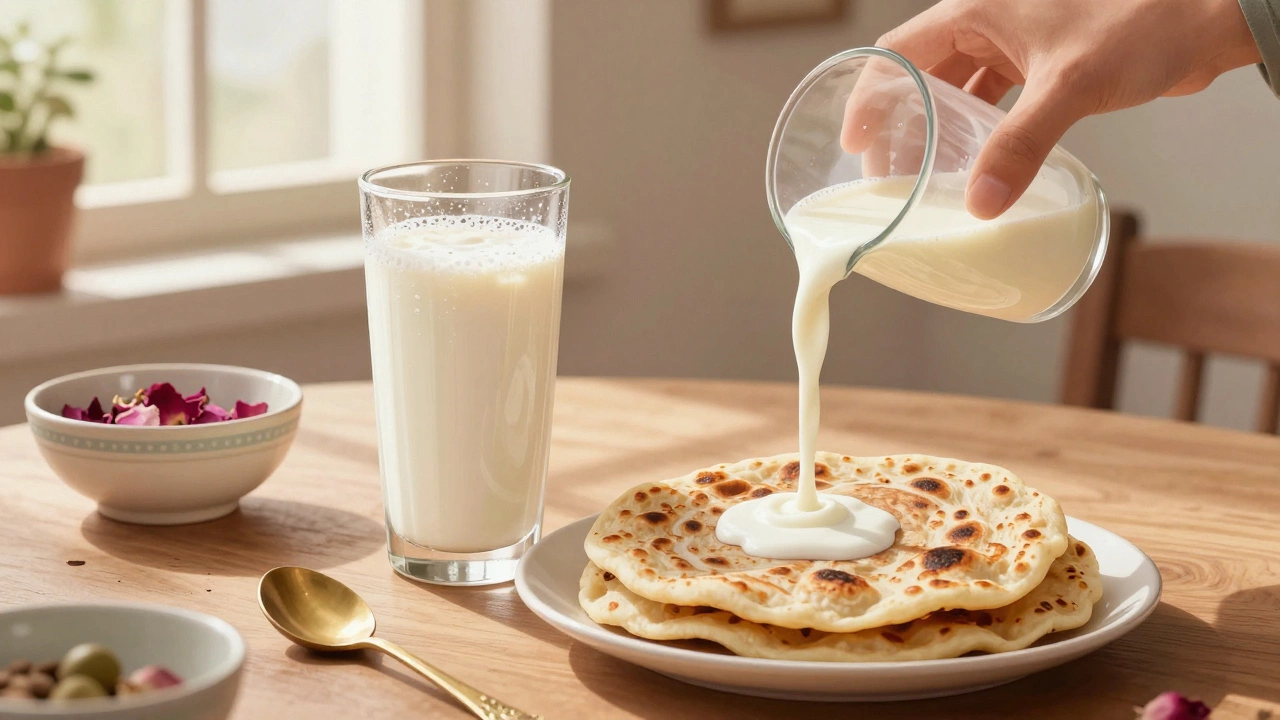
In northern India, especially Punjab and Haryana, lassi is the go-to breakfast drink. Made from blended yogurt, water, salt, and sometimes sugar or fruit, it’s thick, cooling, and satisfying. Sweet lassi with a splash of rose water or mango pulp is common in homes and roadside stalls. Salted lassi, often spiked with roasted cumin powder, is preferred by those who want something savory to balance spicy foods like parathas or puris.
Unlike chai, lassi doesn’t have caffeine. That makes it ideal for kids, elders, or anyone who avoids stimulants. In summer, it’s a lifesaver-cooling the body and replenishing electrolytes. Many families make it fresh every morning using homemade yogurt. You’ll find it served in tall glasses with a frothy top, sometimes garnished with a mint leaf or a drizzle of saffron.
Buttermilk: The Forgotten Superdrink
Buttermilk, or chaas, is the quiet hero of Indian breakfasts. It’s made by churning yogurt with water, salt, and spices like mint, cumin, or black pepper. It’s light, tangy, and packed with probiotics. In South India and parts of Maharashtra, it’s served chilled with a pinch of asafoetida for digestion. Farmers and laborers drink it because it’s hydrating and easy on the stomach after a long night’s sleep.
Unlike lassi, buttermilk is low in fat and calories. It’s often homemade, using leftover yogurt from the day before. In villages, it’s common to see women churning it by hand in clay pots. It’s not flashy, but it’s practical-and it’s been part of Ayurvedic traditions for centuries as a digestive aid and body coolant.
Filter Coffee: The South Indian Classic
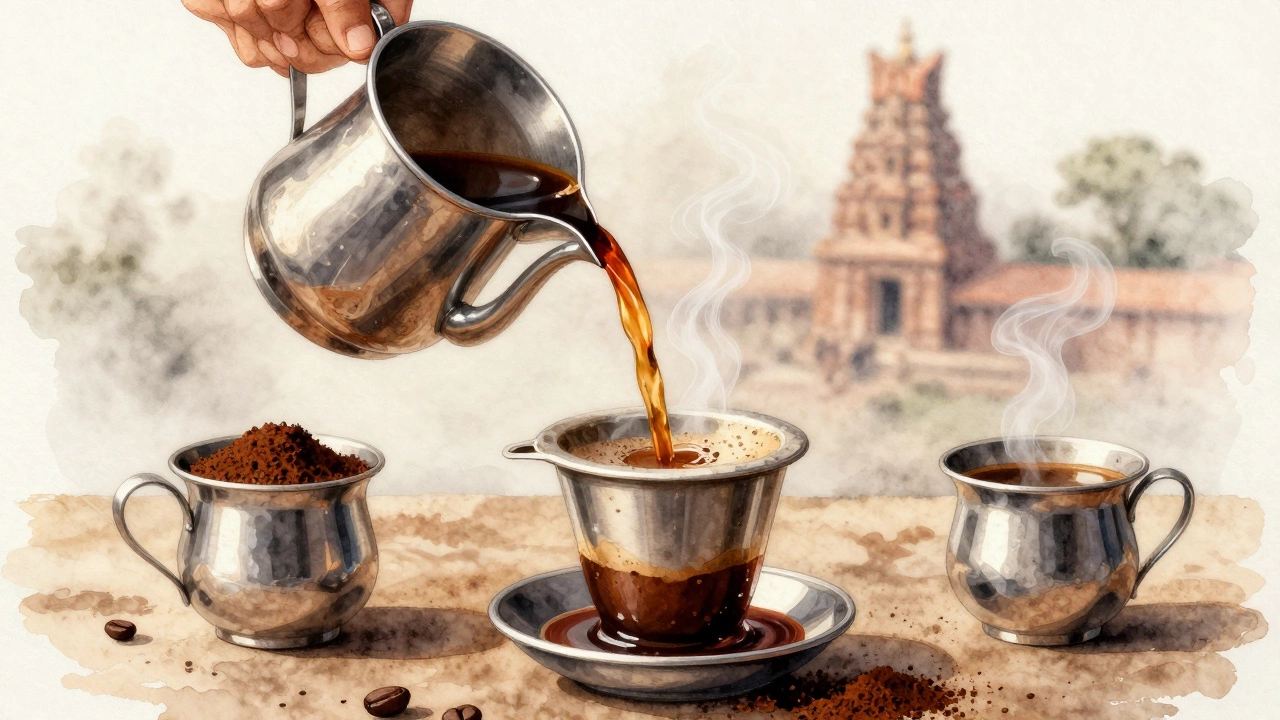
Down south, especially in Tamil Nadu, Karnataka, and Kerala, breakfast isn’t complete without filter coffee. It’s not espresso-style-it’s slow-brewed. Coarse-ground coffee, often mixed with chicory, is placed in a metal filter. Hot water drips through slowly, creating a strong decoction. That’s then mixed with hot milk and sugar in a tumbler and poured back and forth between two vessels to cool and froth it. The result? A creamy, aromatic drink that’s rich without being heavy.
It’s served in a stainless steel tumbler and dabara (a wide saucer), and the ritual of pouring it from a height is part of the experience. Many families brew a big batch in the morning and keep it warm on the stove. It’s often paired with idli or pongal. Unlike chai, filter coffee isn’t boiled with milk-it’s blended after brewing, which gives it a smoother texture.
Other Regional Drinks You Might Not Know
India’s diversity means breakfast drinks vary wildly by region. In Assam, people drink jaulai chai-a strong, smoky tea made with local Assamese tea leaves and sometimes a dash of lemon. In Gujarat, thandai (a cold milk drink with nuts, fennel, and rose water) is common during festivals, but some families drink it daily. In Odisha, panakam-a mix of jaggery, lemon, and ginger-is sipped as a digestive tonic.
In tribal areas of central India, people might drink herbal infusions made from neem leaves, moringa, or local grasses. These aren’t marketed as superfoods-they’re just what’s grown nearby and passed down through generations. In urban centers, younger people are starting to drink cold-pressed juices or green smoothies, but these are still exceptions, not norms.
Why These Drinks Work for Morning Meals
Indian breakfast drinks aren’t chosen by trend-they’re chosen by function. They’re designed to:
- Warm the body in cooler climates (chai, filter coffee)
- Cool the body in hot, humid weather (lassi, buttermilk)
- Boost digestion after overnight fasting (buttermilk, panakam)
- Provide quick energy without sugar crashes (natural sugars in milk, jaggery, fruit)
- Be made with ingredients that are locally grown and affordable
There’s no coffee culture like in Italy, no juice bars like in California. Instead, there’s a deep understanding of how food and drink interact with the body and the environment. These drinks are part of a system that’s lasted for hundreds of years-not because they’re trendy, but because they work.
What’s Changing in Modern Indian Breakfasts
In metro cities like Mumbai, Delhi, or Bangalore, you’ll see more people drinking bottled coconut water, oat milk lattes, or protein shakes. But these are usually for gym-goers, young professionals, or those with specific diets. Even then, most still keep a cup of chai nearby.
Fast food chains have tried to push coffee-based breakfasts, but they haven’t replaced chai. Why? Because chai costs less than ₹10 ($0.12), takes 2 minutes to make, and comes with a side of human connection. No espresso machine can replicate that.
The real shift isn’t in what people drink-it’s in how they consume it. More people are drinking chai at home now, using electric kettles and tea bags. But the flavors haven’t changed. The spices are still there. The ritual is still alive.
What You Can Learn from Indian Breakfast Drinks
If you’re looking for a quick, healthy, and satisfying morning drink, you don’t need fancy gadgets or imported ingredients. Try this: boil water with a teaspoon of black tea, a pinch of ginger, a crushed cardamom pod, and a splash of milk. Add sugar to taste. That’s it. No blender. No fridge. No 10-step recipe.
Indian breakfast drinks prove that simplicity works. They’re not about perfection-they’re about presence. You don’t need to drink them exactly like an Indian family does. But you can borrow their rhythm: slow down, use what’s nearby, and make it warm.
What is the most common breakfast drink in India?
Chai is the most common breakfast drink across India. Made with black tea, milk, sugar, and spices like cardamom and ginger, it’s served in homes, street stalls, offices, and factories. Over 80% of households drink it daily, making it the national morning ritual.
Is lassi a good breakfast drink?
Yes, lassi is an excellent breakfast drink, especially in northern India. Made from yogurt, water, and spices, it’s rich in probiotics, hydrating, and helps with digestion. Sweet lassi pairs well with fried foods like parathas, while salted lassi balances spicy meals. It’s naturally low in caffeine and safe for kids and elders.
Do Indians drink coffee for breakfast?
Yes, but mostly in South India. Filter coffee-made by slowly dripping ground coffee (often mixed with chicory) into hot milk-is the traditional morning drink in Tamil Nadu, Karnataka, and Kerala. It’s stronger than Western coffee and served in a tumbler and dabara. Outside the south, coffee is less common at breakfast than chai.
Is buttermilk healthy for breakfast?
Yes, buttermilk (chaas) is very healthy for breakfast. It’s low in fat, rich in probiotics, and helps improve digestion. Made from yogurt, water, salt, and spices like cumin or mint, it’s a natural coolant and is often consumed in hot climates. It’s also a traditional Ayurvedic remedy for bloating and acidity.
Why don’t Indians drink orange juice for breakfast?
Orange juice isn’t part of traditional Indian breakfasts because citrus fruits aren’t native to most parts of India, and the climate doesn’t favor large-scale orange farming. Also, Indian meals are often spicy or fried, and acidic drinks like orange juice can upset the stomach. Instead, people prefer drinks that soothe digestion, like buttermilk or lassi. Fresh fruit is eaten as a snack, not as a morning beverage.
Next Steps: Try One of These Drinks
If you’ve never tried an Indian breakfast drink, start with chai. It’s the easiest to make and the most widely accepted. Boil water, add tea leaves, a pinch of ginger, one crushed cardamom pod, a splash of milk, and sugar. Let it simmer for 3 minutes. Pour it into a cup. That’s it. No special tools needed.
Or try lassi: blend 1 cup of plain yogurt with ½ cup of water, a teaspoon of sugar, and a drop of rose water. Chill it for 10 minutes. Serve with a sprinkle of ground cardamom.
You don’t need to travel to India to taste its morning traditions. You just need a pot, a spoon, and a willingness to slow down for five minutes.