The Most Expensive Indian Sweets: Luxury Mithai and Rare Ingredients
Luxury Mithai Cost Estimator
Discover why luxury sweets are so expensive. Select the premium upgrades you want to add to a standard sweet box to see the estimated price jump.
Premium Upgrades
Compared to standard mithai
Included Luxury Elements:
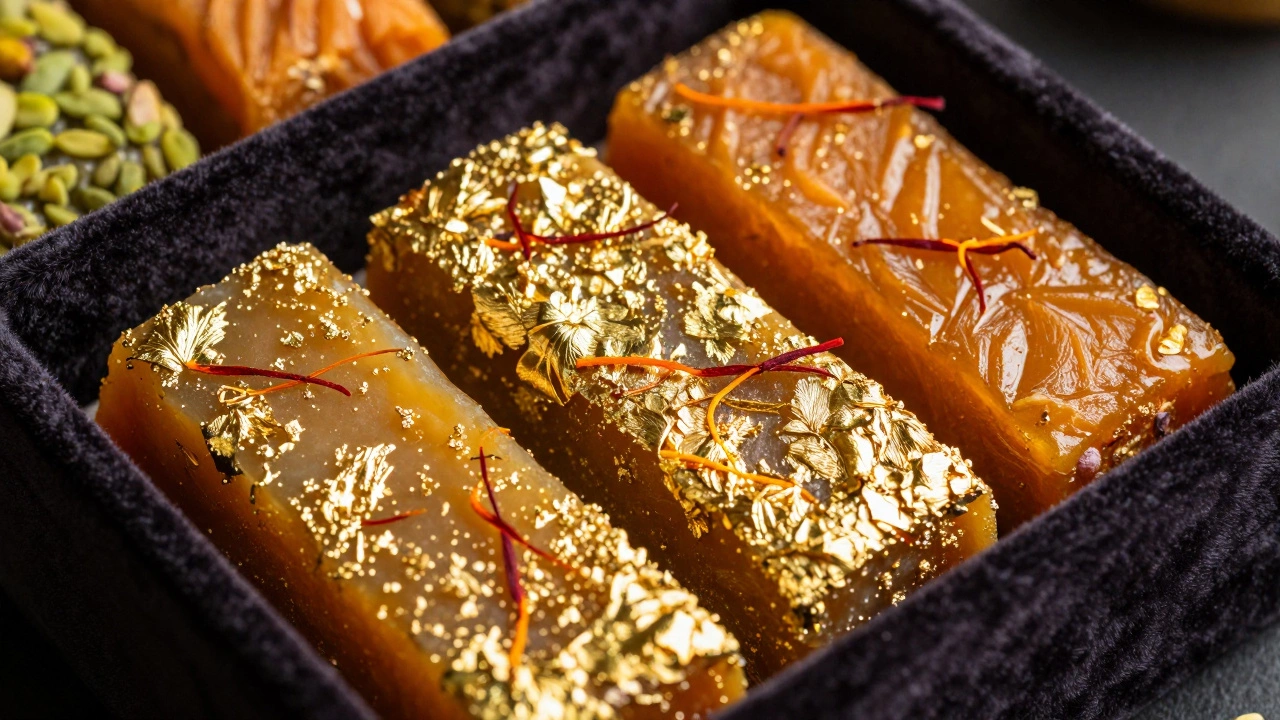
To understand what makes a sweet truly expensive, we have to look at the most expensive indian sweet variations found in boutique stores across Mumbai, Delhi, and Dubai. Usually, these aren't just single recipes but "designer" collections. The absolute peak of pricing often comes from sweets infused with 24-karat edible gold and the rarest grades of saffron.
Key Takeaways: The Price of Luxury Mithai
- The most expensive sweets use edible gold leaf (Varq) and Kashmiri Saffron.
- Labor-intensive processes, like hand-churning mawa for days, drive up the cost.
- Packaging and branding in "luxury boutiques" add a significant premium.
- Rare ingredients like Iranian pistachios and organic A2 Gir cow ghee are standard in high-end recipes.
The Gold Standard: Edible Gold and Saffron
When people ask which sweet is the most expensive, the answer usually involves Edible Gold a thin, tasteless leaf of 24-karat gold used for decoration in high-end culinary arts. Gold isn't there for the flavor-it's there for the status. But the real cost driver is often the Kashmiri Saffron the world's most expensive spice, harvested by hand from the Crocus sativus flower.
Take a look at a premium Kesar Pista Barfi. While a standard version is cheap, a luxury version uses "Grade A" saffron threads from Pampore. Since it takes about 75,000 saffron flowers to produce just one pound of spice, the cost per gram is staggering. When you combine this with gold leafing, a single piece can cost several dollars, and a curated gift box can run into hundreds.
But is gold the only thing? No. The quality of the fats matters. Luxury sweets swap standard vegetable oil or commercial ghee for A2 Gir Cow Ghee clarified butter made from the milk of indigenous Gir cows, prized for its nutritional value and aroma. This ghee is produced in small batches and costs significantly more than the mass-produced versions found in supermarkets.
The Labor of Love: Time-Intensive Confections
Price isn't just about what goes into the bowl, but how long it stays there. Consider the process of making a traditional Mawa a concentrated milk solid created by simmering milk on low heat for several hours until it thickens. In cheap sweets, this is often done with additives or shortcuts. In the most expensive versions, milk is slow-cooked in open vats for 10 to 12 hours, reducing it to a thick, creamy paste without burning.
This slow reduction creates a depth of flavor that cannot be replicated by machines. When a chef spends half a day just preparing the base for a Kaju Katli a cashew-based fudge flavored with sugar and often decorated with silver leaf, the labor cost is baked into the final price. The use of premium, jumbo-sized cashews from the coast of Ivory Coast or Vietnam instead of standard grade nuts also adds to the bill.
| Ingredient/Process | Standard Mithai | Luxury Mithai |
|---|---|---|
| Fat Source | Refined Oil/Commercial Ghee | A2 Gir Cow Ghee |
| Saffron Source | Artificial Coloring/Low-grade | Pure Kashmiri Mongra Saffron |
| Decoration | Plain or Sugar Dust | 24K Gold Leaf (Varq) |
| Preparation | Machine Processed | Hand-churned/Slow-cooked |
| Nut Quality | Standard Grade | Sourced Premium Jumbo Nuts |
Regional Heavyweights: Where the Money Goes
Depending on where you are in India, the "most expensive" sweet changes. In the North, you'll find the most opulent versions of Ras Malai soft cottage cheese patties soaked in thickened, sweetened milk flavored with saffron and cardamom. Imagine a version where the milk is reduced for 24 hours and infused with rare vanilla beans from Madagascar along with the saffron.
In the West, luxury versions of Kaju Pista a combination of cashew and pistachio nuts processed into a smooth, sweet fudge take the lead. The use of Iranian pistachios-known for their vibrant green color and richer oil content-makes these significantly more expensive than those using local varieties. These are often shaped into intricate 3D art, making them as much a sculpture as a dessert.
Then there are the "fusion" luxury sweets. Modern boutiques in cities like Mumbai are now creating truffle-style mithai. They might take a traditional Motichoor Laddu small pearl-like droplets of fried gram flour soaked in syrup and rolled into balls and coat it in a layer of Belgian chocolate, topped with a gold flake. This blends traditional Indian confectionery with European luxury, pushing the price point even higher.
Common Pitfalls: Spotting Real Luxury vs. Marketing
Not every expensive sweet is actually high-quality. Some brands charge a premium simply for a fancy box. If you are looking for true quality, check the ingredients. A truly expensive sweet should not have "artificial flavors" or "permitted colors" on the label. If it says "Kesar flavor" instead of "Kashmiri Saffron," you are paying for chemistry, not luxury.
Another sign of a genuine luxury sweet is the texture. Real slow-cooked mawa has a specific grainy but melting consistency. If the sweet feels too smooth or rubbery, it likely contains cornstarch or stabilizers, meaning the high price is just branding. Also, be wary of "gold-plated" sweets that use cheap foil instead of actual 24K edible gold. Real gold leaf is incredibly thin and disappears almost instantly on the tongue.
How to Make Your Own "Luxury" Version at Home
You don't need to spend hundreds of dollars to get that high-end taste. You can elevate a basic recipe by focusing on three key swaps. First, replace your store-bought ghee with a grass-fed, organic version. This changes the aromatic profile of the sweet immediately.
Second, invest in a small amount of real saffron. Instead of tossing the threads in, soak them in warm milk for at least two hours before adding them to your mix. This extracts the maximum color and flavor, allowing you to use less while getting a richer result. Finally, focus on the nuts. Roast your cashews and pistachios lightly in ghee before grinding them into a paste. This removes the "raw" taste and adds a professional, nutty depth.
What is the single most expensive ingredient in Indian sweets?
Kashmiri Saffron is generally the most expensive ingredient by weight. Because it is hand-harvested from the stigmas of a specific flower and requires thousands of blooms for a small amount of spice, its price is consistently astronomical compared to other ingredients.
Is the gold leaf on Indian sweets actually real gold?
In high-end luxury sweets, yes, it is 24-karat edible gold. It is processed to be biologically inert, meaning it doesn't have a taste and passes through the digestive system without being absorbed. However, cheaper versions may use silver leaf (Varq) or metallic food coloring.
Why are some sweets more expensive than others even if the ingredients are similar?
The difference usually comes down to the labor and the quality of the fats. Slow-reducing milk for 12 hours to make mawa is far more expensive than using milk powder and cream to simulate the texture. Additionally, using A2 Gir cow ghee instead of commercial ghee significantly raises the cost.
Which city in India is known for the most expensive luxury sweets?
Mumbai and Delhi are the hubs for luxury mithai. These cities have the highest concentration of boutique sweet shops that cater to high-net-worth individuals and create "designer" sweets with rare imports and gold leafing.
Can I find these expensive sweets in regular supermarkets?
Rarely. Most supermarkets sell mass-produced sweets with a longer shelf life, which requires preservatives and artificial stabilizers. The truly expensive, gold-leafed, and slow-cooked sweets are typically sold in specialized boutiques or high-end hotels to ensure freshness and quality.
Next Steps for Dessert Lovers
If you've developed a taste for high-end sweets, your next move is to explore the world of "Artisan Mithai." Instead of just looking for the most expensive item, look for shops that specialize in a single region's craft-like authentic Mysore Pak from Karnataka or authentic Ghevar from Rajasthan. The value there isn't in the gold, but in the heritage and the specific technique used by master halwais (sweet makers).
For those who want to experiment at home, start by trying a "fusion" approach. Pair a high-quality Indian sweet with a luxury accompaniment, like serving a saffron-infused Rasgulla with a side of fresh organic raspberries. It's a way to experience luxury without spending a fortune on a single box of gold-covered candy.