The 7 Flows of Manufacturing: A Guide to Optimizing Production Lines
Manufacturing Flow Optimization Calculator
Enter your current production metrics to calculate key performance indicators for the seven flows of manufacturing.
Flow Analysis Results
Picture this: you have a perfectly designed product, the best raw materials, and a skilled team. Yet, your factory floor feels like a traffic jam. Parts sit idle for days waiting for assembly. Finished goods pile up in corners because shipping is delayed. Money drains away not from bad products, but from bad movement.
This isn't just a hypothetical nightmare; it's the reality for many manufacturers who focus solely on output volume while ignoring the invisible currents that drive their business. In modern industrial engineering, we don't just talk about making things. We talk about moving them. Specifically, we look at the seven flows of manufacturing.
Understanding these seven distinct streams-Material, Information, Financial, Time, Value, Risk, and Energy-is the difference between a factory that survives and one that thrives. When these flows are synchronized, your operation runs like a Swiss watch. When they clash, chaos ensues. Let’s break down exactly what each flow is, why it matters, and how you can optimize them right now.
1. The Material Flow: Moving Physical Goods
This is the most obvious flow, yet often the least optimized. Material flow refers to the physical movement of raw materials, work-in-progress (WIP), and finished goods through your facility and supply chain.
Material Flow is the physical trajectory of items from supplier to customer, including storage, handling, and transportation within the production process. It dictates layout design and logistics costs.
Inefficient material flow looks like backtracking. Imagine a worker walking fifty meters to fetch a bolt, then another thirty to return it. That’s wasted motion. Lean manufacturing principles, popularized by the Toyota Production System, emphasize straight-line flow. The goal? Touch every part as few times as possible.
- Layout Strategy: Use U-shaped or cellular layouts to minimize travel distance between stations.
- Inventory Management: Implement Just-In-Time (JIT) delivery to reduce warehouse clutter and holding costs.
- Handling Equipment: Invest in conveyors or AGVs (Automated Guided Vehicles) if manual transport exceeds 10% of cycle time.
If your material flow is blocked, nothing else moves. Clear the path first.
2. The Information Flow: The Nervous System
You can’t move materials if you don’t know where they need to go. Information flow is the data exchange that triggers action. This includes purchase orders, design specs, quality reports, and real-time machine status updates.
In the past, this meant paper travelers and whiteboards. Today, it’s digital twins and IoT sensors. But technology alone doesn’t fix bad information flow. If your sales team promises a delivery date that production hasn’t seen, you have a disconnect.
The key here is synchronization. Information must flow faster than material. If a machine breaks down, the maintenance team needs to know instantly, not after the shift ends. Delays in information create "bullwhip effects," where small errors at the start of the chain become massive disruptions at the end.
To improve this:
- Integrate your ERP (Enterprise Resource Planning) with shop-floor MES (Manufacturing Execution Systems).
- Standardize data formats so machines and humans speak the same language.
- Establish clear feedback loops where frontline workers can flag issues immediately.
3. The Financial Flow: Cash Conversion Cycle
Manufacturing eats cash. You pay suppliers before you get paid by customers. Financial flow tracks the movement of money into and out of your business related to production activities.
Many owners obsess over profit margins but ignore cash flow velocity. A high-margin product that ties up capital for six months in inventory is worse than a lower-margin product that turns over weekly. Your financial flow should mirror your material flow. As materials leave the warehouse, invoices should trigger payments. As goods arrive, credits should be processed.
Optimization tip: Negotiate payment terms that align with your production cycles. If your lead time is 30 days, try to secure 45-day payment terms from customers and 60-day terms from suppliers. This creates a positive cash conversion cycle, meaning you’re using your supplier’s money to fund your growth.
4. The Time Flow: Lead Time Reduction
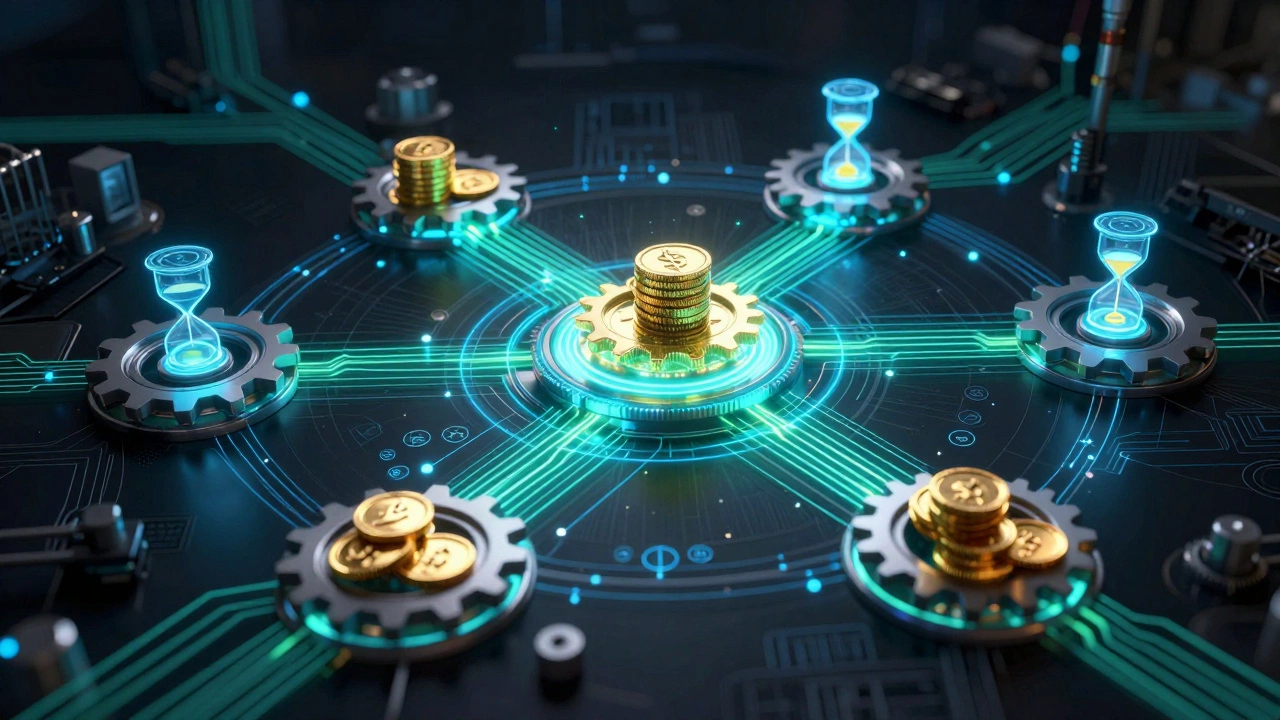
Time is the only resource you can’t replenish. In manufacturing, time flow refers to the elapsed time from order receipt to delivery. This is known as throughput time or lead time.
Most factories measure cycle time (how long it takes to make one unit) but ignore queue time (how long a unit waits). Often, a part spends 90% of its life waiting in line and only 10% being worked on. Reducing wait times is cheaper and faster than speeding up machines.
Visualize your time flow with a Value Stream Map. Identify bottlenecks where jobs pile up. Ask yourself: Why does this batch wait here? Is it waiting for inspection? For a tool change? For approval? Eliminate the wait, and you’ve effectively added capacity without buying new equipment.
5. The Value Flow: Customer-Centric Output
Not all activity adds value. Value flow focuses strictly on steps that transform the product in a way the customer is willing to pay for. Anything else is waste (Muda).
Consider packaging. If the customer receives the item in bulk and repackages it themselves, your detailed boxing process is non-value-added. Consider polishing a surface that will be hidden inside an assembly. Waste of labor and energy.
To map your value flow:
- List every step in your process.
- Ask: "Would the customer pay for this specific step?"
- If no, classify it as necessary non-value (compliance, safety) or pure waste.
- Aim to eliminate pure waste and streamline necessary non-value steps.
When you align your processes with true value creation, you stop working hard on things that don’t matter.
6. The Risk Flow: Managing Uncertainty
Risk flows through every decision. Supplier bankruptcy, geopolitical shifts, quality failures, and demand spikes all introduce volatility. Ignoring risk flow leads to catastrophic stops.
Effective risk management isn’t about avoiding risk-it’s about buffering against it strategically. Do you hold safety stock? Do you have dual sourcing for critical components? Is your software backed up?
In recent years, global supply chain disruptions have taught manufacturers a harsh lesson: efficiency without resilience is fragile. Balance your lean principles with strategic redundancy. For example, keep JIT for low-risk, commoditized parts, but maintain buffer stocks for single-source, high-criticality components.
7. The Energy Flow: Sustainability and Cost
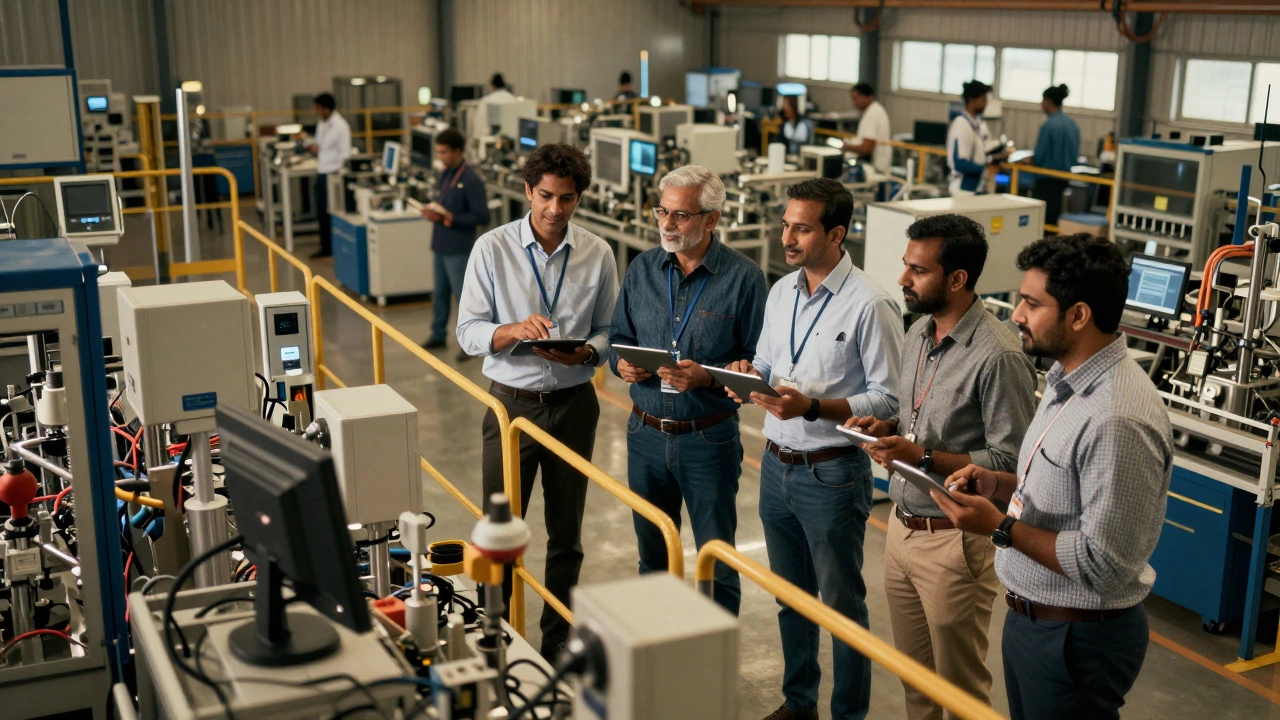
Often overlooked, energy flow encompasses electricity, fuel, heat, and even human effort. In 2026, with rising carbon taxes and sustainability mandates, energy efficiency is both an ethical and economic imperative.
Energy waste hides in compressed air leaks, idling motors, and poor insulation. Monitoring energy flow requires sub-metering-tracking usage at the machine level, not just the building level. You might find that one old compressor uses more power than three new CNC machines combined.
Optimizing energy flow reduces operational costs and improves your brand reputation. Customers increasingly prefer suppliers with green credentials. Plus, efficient energy use often correlates with well-maintained equipment, which ties back to reduced downtime.
| Flow Type | Key Metric | Primary Goal |
|---|---|---|
| Material | Travel Distance / Handling Touches | Minimize Movement |
| Information | Data Latency / Accuracy | Synchronize Decisions |
| Financial | Cash Conversion Cycle | Accelerate Cash Return |
| Time | Throughput Time / Queue Time | Reduce Wait Times |
| Value | Value-Added Ratio | Eliminate Waste |
| Risk | Supply Chain Resilience Score | Mitigate Disruption |
| Energy | KWh per Unit Produced | Lower Consumption & Cost |
Interconnectedness: The Domino Effect
These seven flows don’t exist in isolation. They interact constantly. A delay in information flow causes excess inventory in material flow, which ties up capital in financial flow, extending time flow, and increasing risk of obsolescence.
Successful manufacturers treat their operation as a system. Improving one flow often requires adjusting others. For instance, speeding up material flow might require faster information processing. Cutting energy costs might involve slower, more efficient machinery, impacting time flow. The art of manufacturing lies in balancing these tensions to achieve overall system optimization, not local maxima.
Practical Steps to Audit Your Flows
Ready to apply this? Start with a simple audit:
- Walk the Floor: Observe material movement. Where do items stop? Why?
- Trace an Order: Follow one customer order from quote to delivery. Note delays in information handoffs.
- Review Cash Statements: Calculate your days inventory outstanding vs. days sales outstanding.
- Map Value Streams: Identify non-value-added steps with your team.
- Assess Risks: List your top five supply chain vulnerabilities.
- Check Energy Bills: Correlate spikes with production schedules.
Small tweaks in any of these areas yield compounding returns. Don’t try to fix everything at once. Pick the weakest link-the flow causing the most pain-and strengthen it. Then move to the next.
What is the most important flow in manufacturing?
There is no single "most important" flow because they are interdependent. However, Information Flow is often considered the driver because it dictates the timing and direction of all other flows. Poor information leads to material bottlenecks, financial losses, and increased risk.
How do I measure my value flow?
Calculate the Value-Added Ratio. Divide the total time spent on value-added activities (those the customer pays for) by the total lead time. A ratio below 5% is common in traditional manufacturing, while lean facilities aim for 20-30% or higher.
Can small businesses afford to optimize all seven flows?
Yes. Optimization doesn’t always require expensive software. Simple visual management, standardized work instructions, and regular team huddles can significantly improve information and material flows with minimal cost.
What is the relationship between time flow and financial flow?
They are directly linked. Longer time flows (lead times) mean inventory sits longer, tying up capital. Reducing time flow accelerates the cash conversion cycle, freeing up money for reinvestment or debt reduction.
How does risk flow impact material flow?
High risk in supply chains often leads to hoarding materials (increasing material flow complexity and cost). Conversely, overly lean material flows increase vulnerability to disruptions. Balancing these requires strategic safety stocks for critical items.