The 6 Primary Types of Manufacturing: A Clear Guide
Manufacturing Method Selector
Answer the questions below to determine which of the six primary manufacturing models best fits your product or scenario.
Recommended Method:
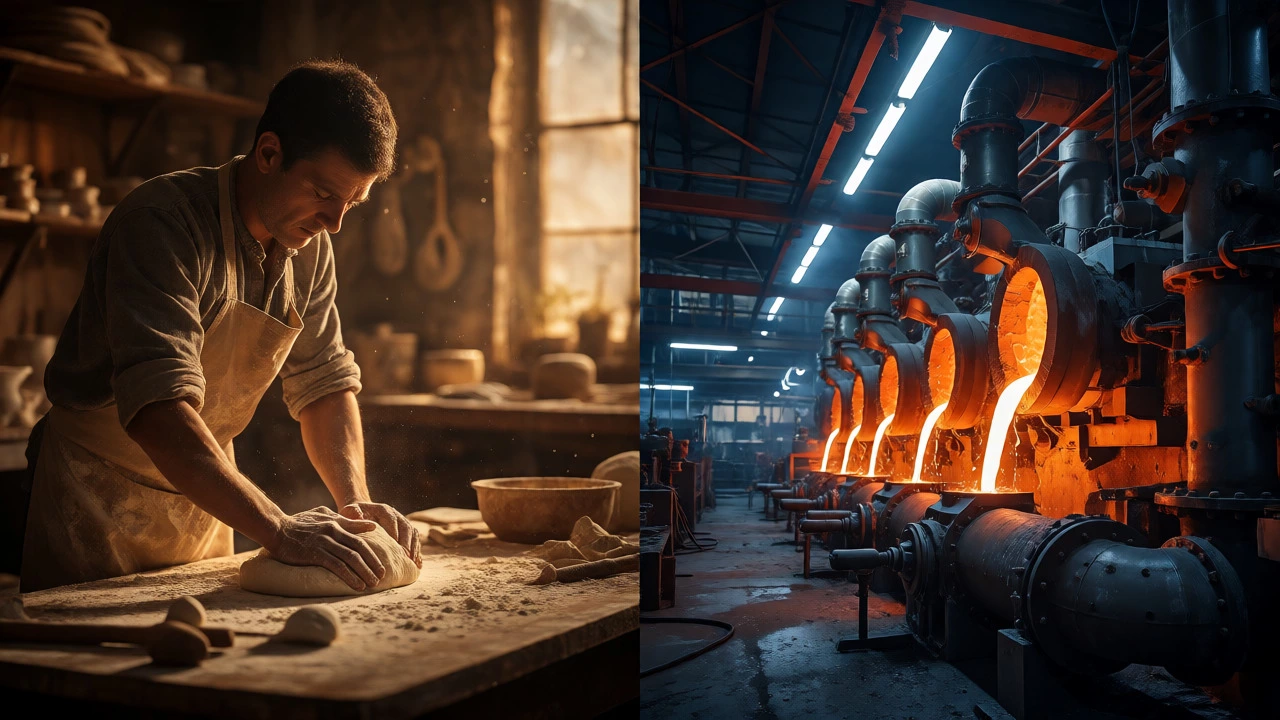
You walk into a bakery and see someone kneading dough by hand. Then you drive past a massive steel plant where molten metal flows in endless streams. Both are manufacturing, but they operate on completely different logic. One is slow, custom, and labor-intensive. The other is fast, standardized, and machine-driven. If you’re trying to start a business or just understand how products get made, knowing the difference between these methods saves you from picking the wrong machinery or hiring the wrong staff.
Most people think manufacturing is just "making stuff." It’s not. It’s about matching your production method to your product’s complexity, volume, and customization needs. Get this wrong, and you’ll either overpay for machines that sit idle or struggle to keep up with demand using manual tools. Let’s break down the six primary types of manufacturing so you can pick the right path for your goals.
What Exactly Is Manufacturing?
Manufacturing is the process of converting raw materials, components, or parts into finished goods that meet a customer's specifications. This isn't just assembly; it includes design, engineering, sourcing, and quality control. Whether you're making one-off prototypes or millions of identical screws, the core goal remains the same: add value through transformation.
But here’s the catch: there is no single best way to manufacture. A company making custom furniture doesn’t use the same line as a company bottling soda. Why? Because the variables change. Volume matters. Customization matters. Lead time matters. These factors dictate which of the six main categories you fall into.
The Six Primary Types of Manufacturing
Industry experts generally classify manufacturing into six distinct models. Each serves a specific purpose. Understanding them helps you align your resources correctly.
- Job Shop Manufacturing: High variety, low volume, high customization.
- Discrete Manufacturing: Distinct items that can be counted and repaired.
- Repetitive Manufacturing: Continuous production of similar items at a steady pace.
- Continuous Flow Manufacturing: Non-stop production of liquids, gases, or powders.
- Batch Process Manufacturing: Producing groups of products together before switching.
- 3D Printing (Additive Manufacturing): Building objects layer by layer from digital files.
1. Job Shop Manufacturing: The Artisan Approach
Think of a specialized machine shop that makes custom gears for a prototype car. Or a print shop handling small runs of wedding invitations. This is Job Shop Manufacturing. It is characterized by low-volume, high-variety production where each order is unique. You don’t have a standard product line. Every client brings a new problem to solve.
Why choose this? Flexibility. You can handle almost any request. But it’s expensive per unit because setup times are long. Workers need to be highly skilled generalists who can switch tasks constantly. If you’re launching a niche product with unpredictable demand, this model keeps your overhead low until you prove the market exists.
2. Discrete Manufacturing: Counting What You Make
If you can count the final product, it’s likely discrete manufacturing. Cars, smartphones, bicycles, toys-these are all discrete items. You assemble parts into a whole. If a phone breaks, you can often repair it by swapping a component.
This type splits further into three sub-categories based on volume and repeatability:
- Small Batch: Similar to job shops but with some repetition. Think boutique clothing lines.
- Large Batch: Making thousands of identical shirts before switching to pants.
- Mass Production: Assembly lines pumping out thousands of units daily, like Toyota cars.
The key here is part interchangeability. You rely on suppliers providing exact specs. If a screw doesn’t fit, the whole line stops. Quality control is critical because defects multiply quickly.
3. Repetitive Manufacturing: The Steady Stream
Repetitive manufacturing sounds like mass production, and it is, but with a twist. It focuses on producing the same or very similar products continuously without frequent changeovers. Electronics companies often use this. They might run a line for tablets for weeks, then pause briefly to adjust for a minor model update.
It’s faster than batch processing because you minimize setup time. However, it lacks flexibility. If consumer taste shifts suddenly, you’re stuck with inventory you can’t easily change. It requires precise forecasting. Overproduce, and you waste cash. Underproduce, and you lose sales.
4. Continuous Flow Manufacturing: Never Stop the Line
Imagine an oil refinery or a paper mill. Once the machine starts, it runs 24/7 for months. Stopping it costs millions in downtime and restart procedures. This is Continuous Flow Manufacturing. It is used for products that cannot be stored easily or require constant movement, such as chemicals, fuel, and electricity.
You don’t make individual units here. You produce volume by time. Efficiency is king. Automation is near-total. Human intervention is mostly for monitoring and maintenance. If you’re in commodities-steel, cement, plastic pellets-this is your world. Your competitive edge comes from minimizing waste and energy usage, not from product features.
5. Batch Process Manufacturing: Cooking in Bulk
Bakeries, pharmaceuticals, and food processors love batch manufacturing. You make a set quantity-a batch-of a product, clean the equipment, and then move to the next recipe. Unlike continuous flow, you stop and start. Unlike job shops, you repeat the same recipe multiple times.
This offers a middle ground. It allows for some customization between batches while maintaining efficiency within them. For example, a brewery might brew IPA today and Stout tomorrow. The tanks stay the same, but the ingredients change. Traceability is crucial here. If one batch has a defect, you recall only that batch, not everything produced last month.

6. 3D Printing (Additive Manufacturing): The New Frontier
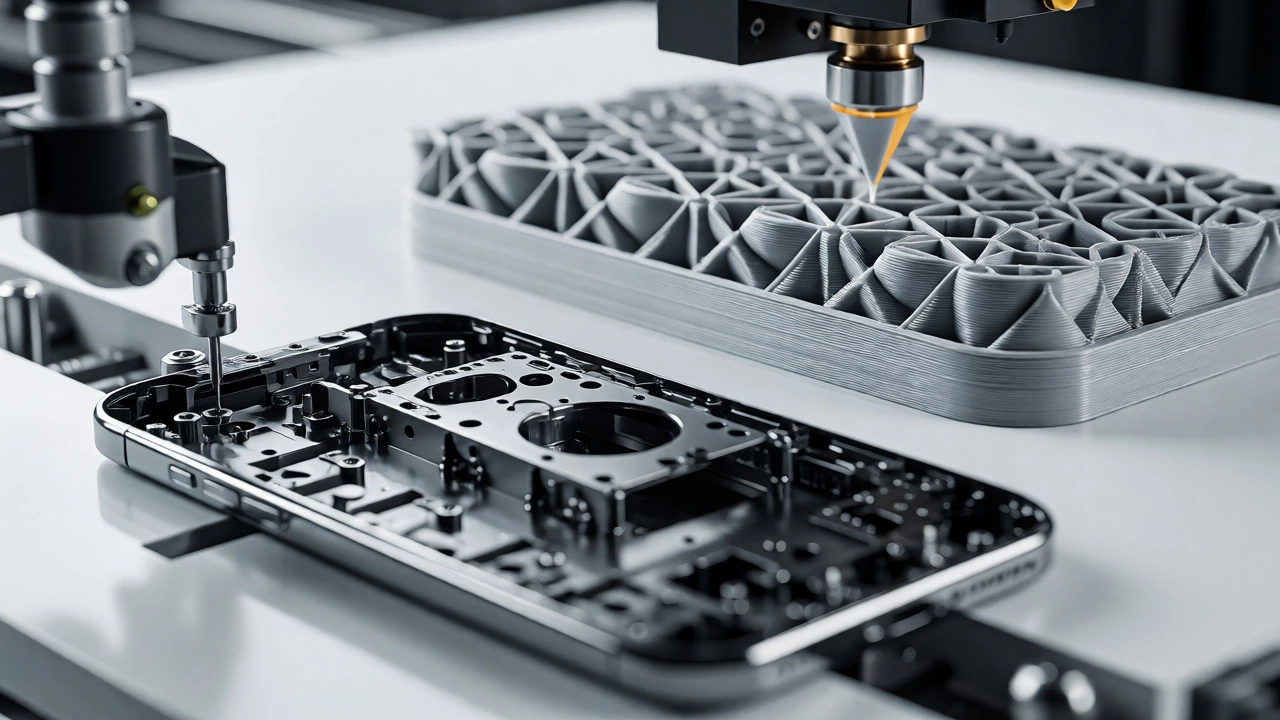
Traditional manufacturing subtracts material (cutting wood) or shapes it (molding plastic). Additive manufacturing builds objects layer by layer from a digital file. This is 3D Printing. It enables complex geometries that traditional methods cannot achieve, reducing material waste significantly.
Initially used for prototyping, it’s now used for final parts in aerospace and medical implants. It’s perfect for low-volume, high-complexity items. You don’t need molds or tooling. Just send the file. However, speed is still slower than injection molding for large volumes. Material options are also more limited compared to traditional methods.
Choosing the Right Model: A Quick Comparison
How do you decide? Look at your volume and customization needs. Here’s a simple breakdown to help you map your product to the right process.
| Attribute | Job Shop | Discrete | Repetitive | Continuous Flow | Batch Process | Additive |
|---|---|---|---|---|---|---|
| Volume | Low | Medium to High | High | Very High | Medium | Low |
| Variety | High | Low to Medium | Low | Very Low | Medium | High |
| Customization | High | Low | Very Low | None | Medium | High |
| Setup Time | Long | Short | Very Short | N/A (Always On) | Moderate | Minimal |
| Unit Cost | High | Medium | Low | Very Low | Medium | High (initially) |
Pitfalls to Avoid When Selecting Your Method
Many startups fail because they try to scale too fast. They jump straight to repetitive manufacturing when they should stay in job shop mode. Why? Because their product design isn’t finalized yet. Changing a mold costs thousands. Changing a CAD file for 3D printing costs pennies.
Another common mistake is ignoring supply chain constraints. Continuous flow requires reliable raw material delivery. If your supplier misses a shipment, your entire factory halts. In contrast, job shops can often source locally or work with what’s on hand.
Also, consider labor skills. Do you have access to engineers who can program CNC machines? Or do you have chemists who can manage batch recipes? The right method depends on your team’s expertise, not just your budget.
Real-World Examples to Clarify
Let’s say you want to sell handmade leather wallets. You cut, stitch, and finish each one individually. That’s job shop. Now, imagine you partner with a factory that produces 10,000 identical nylon wallets a month. That’s discrete manufacturing.
If you launch a new flavor of protein powder, you might mix 500kg batches weekly. That’s batch process. But if you’re selling bottled water, you’re likely filling bottles non-stop on a conveyor belt. That’s continuous flow.
Finally, if you’re creating custom hearing aids fitted to individual ear scans, you’re using additive manufacturing. Each unit is unique, built from digital data.
Is manufacturing always automated?
No. While automation increases efficiency, many types, especially job shops and artisanal discrete manufacturing, rely heavily on skilled human labor. The level of automation depends on volume and precision requirements.
Can a company use multiple manufacturing types?
Absolutely. Many large companies use hybrid models. For instance, an automotive company might use continuous flow for steel production, discrete manufacturing for engine assembly, and job shop techniques for custom interior trim options.
Which manufacturing type is cheapest?
Continuous flow and repetitive manufacturing typically offer the lowest cost per unit due to economies of scale. However, they require high upfront investment in infrastructure and consistent demand to be profitable.
How does customization affect manufacturing choice?
Higher customization pushes you toward job shop or additive manufacturing. As customization decreases and volume increases, you move toward discrete, repetitive, and finally continuous flow methods.
What is the role of government schemes in manufacturing types?
Government incentives often target specific sectors. For example, subsidies for green energy may favor continuous flow refineries, while grants for innovation might support additive manufacturing startups. Check local policies to see which types receive financial backing.