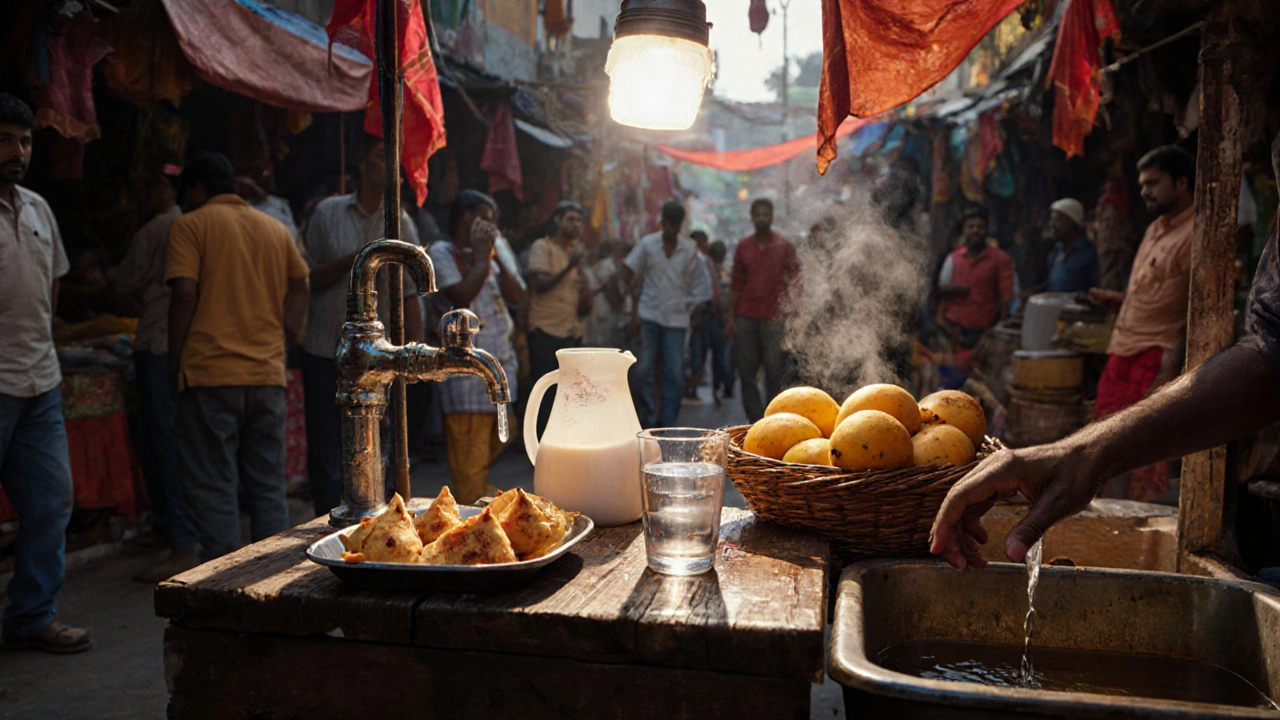
Top Foods to Avoid in India for Safe Travel
Learn which Indian foods and drinks pose health risks for travelers and how to enjoy safe meals with practical tips, checklists, and a quick risk table.
When you're traveling in India, travel food safety India, the practice of choosing and handling food in a way that prevents illness while on the move. Also known as food hygiene while traveling, it's not about avoiding local food—it's about knowing how to pick the right places and understand what makes food safe. Millions eat street food every day without issue, but a few simple mistakes can turn a great trip into a bad one. The key isn’t perfection—it’s awareness.
Food safety in India isn’t just about cleanliness—it’s about temperature, timing, and technique. food handling India, how vendors prepare, store, and serve food in markets, trains, and roadside stalls often follows rules passed down through generations, not health codes. Vendors who make dosa batter fresh every morning, fry samosas in oil that’s been heated repeatedly, or boil milk before using it are doing things that actually reduce risk. On the flip side, food left out in the sun for hours, water used for washing veggies that isn’t filtered, or ice made from tap water are red flags. You don’t need a lab to spot these—you just need to watch.
street food safety, the specific practices that make roadside meals safe to eat across Indian cities varies by region. In Delhi, you’ll see vendors using covered steel containers to keep food hot. In Mumbai, you’ll notice stalls that serve only what’s made that day. In Varanasi, chai is boiled for minutes—not just heated. These aren’t random habits; they’re survival tactics. The best travelers learn to read these cues: steam rising from food, vendors using gloves or tongs, no visible flies, and a high turnover of customers. If a stall is busy with locals, it’s usually a good sign.
Food safety isn’t just about what’s outside your hotel. Even hotel buffets can be risky if food sits out too long. food hygiene travel, the habits you adopt as a traveler to avoid contamination means asking for freshly cooked meals, skipping raw salads unless you’re sure the water was purified, and carrying hand sanitizer. Bottled water isn’t optional—it’s basic. And while it’s tempting to try every snack, don’t eat anything that’s been sitting out for more than two hours in hot weather.
You’ll find plenty of posts below that tie into this. From how paneer is made at home to why Indian restaurants make curry thick using slow-cooked bases, the same principles apply: heat, time, and freshness matter. Whether you’re eating biryani in Hyderabad or dosa in Chennai, the rules don’t change. Safe food isn’t fancy—it’s handled right. And now that you know what to look for, you can eat boldly, not fearfully, across India.
Learn which Indian foods and drinks pose health risks for travelers and how to enjoy safe meals with practical tips, checklists, and a quick risk table.