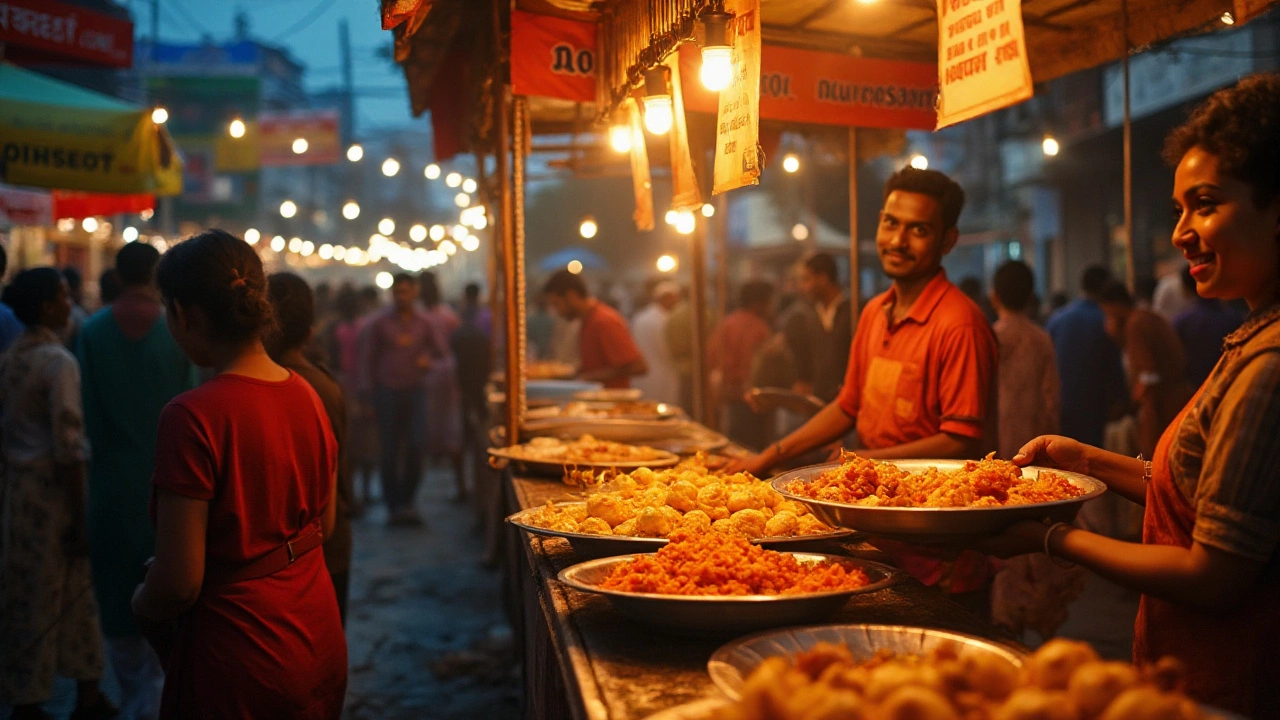
Street Delicacies: India's Most Loved Snacks and How They're Made
When you think of street delicacies, affordable, flavorful snacks sold by vendors on sidewalks and busy corners across India. Also known as Indian street food, they’re not just food—they’re culture, timing, and memory wrapped in a paper cone or banana leaf. You don’t need a fancy restaurant to taste the soul of India. A plate of hot, crisp dosa, a fermented rice and urad dal crepe cooked on a hot griddle with coconut chutney, or a steaming bowl of biryani, layered rice cooked with spiced meat and slow-steamed to perfection from a roadside dhaba, hits harder than any five-star meal. These aren’t occasional treats. They’re daily rituals. Millions start their day with poha or end it with jalebi, and every bite carries a story of technique passed down through generations.
What makes these snacks work isn’t just spice—it’s precision. The same urad dal, a black lentil essential for fluffy dosa batter and soft vadas that’s soaked for exactly 6 to 8 hours shows up in homes and street stalls alike. The paneer, fresh Indian cheese made by curdling milk with lemon juice you find in kebabs or curries at night markets? It’s the same paneer you can make at home with milk and a bit of patience. No additives. No preservatives. Just time, heat, and skill. Even the thick, rich curry sauce that clings to your fingers? It’s not cream or flour—it’s onions and tomatoes cooked down for over an hour, reduced to a deep, caramelized base. These aren’t secrets. They’re methods. And they’re the reason street delicacies outlast food trends.
Behind every crispy samosa, every smoky chaat, every melt-in-your-mouth jalebi is a chain of simple but exact steps—unit operations you’d find in a food factory, just scaled down to a cart. Pasteurizing milk for paneer, fermenting batter, drying spices, sealing steam for biryani—all of it follows the same logic as industrial food processing, but done by hand, in the open air, under the sun or streetlights. That’s what makes them special. You can’t automate the love, the timing, the feel of the dough. But you can learn it. And that’s what this collection is for. Below, you’ll find clear, no-fluff guides on how to make these dishes right—from soaking urad dal to fixing rubbery paneer, from building the perfect biryani layer to understanding why roti doesn’t need baking powder. No guesswork. Just what works.