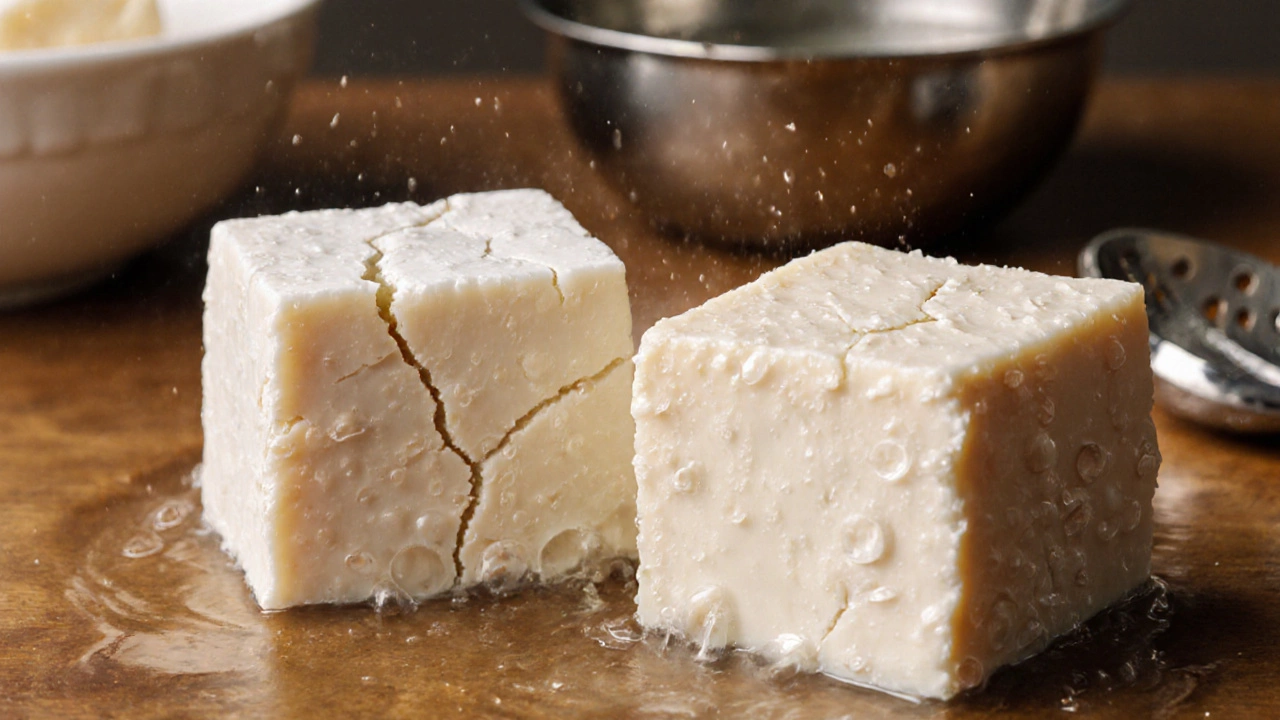
Why Do You Soak Paneer Before Cooking? The Simple Trick for Perfect Texture
Soaking paneer before cooking transforms it from rubbery to soft and flavorful. Learn why this simple step makes all the difference in curries, tikkas, and homemade dishes.
When you buy or make paneer, a fresh, non-melting Indian cheese made by curdling milk with acid. Also known as Indian cottage cheese, it’s the backbone of countless dishes—from palak paneer to paneer tikka. But if you skip soaking it, you risk ending up with dry, rubbery cheese that doesn’t absorb flavor.
Soaking paneer isn’t optional—it’s a simple step that transforms texture. Cold water pulls out excess acidity from the curdling process, softens the crumb, and lets the cheese soak up spices like a sponge. Most home cooks don’t realize that paneer straight from the mold can taste slightly sour or chalky. A 15- to 30-minute soak in cool water fixes that. For curries, you can even soak it in warm spiced water with a pinch of salt to build flavor from the inside out. Some restaurants soak paneer in milk for extra richness, but plain water works just fine for everyday cooking.
Think of soaking paneer like prepping rice before cooking—it’s not flashy, but it’s the difference between good and great. If you’re making paneer from scratch, you’ll already know how much milk you need to get the right yield. But even store-bought paneer benefits from this step. Skip it, and your paneer might crumble in the curry or stay hard after cooking. Soak it, and it becomes tender, juicy, and ready to carry bold flavors from tomatoes, cream, or spices.
The posts below cover everything you need to know about paneer—from how to make it at home with just milk and lemon juice, to the top mistakes that turn it rubbery, to how much milk you really need for a block. You’ll also find tips on using paneer in curries, snacks, and even desserts. Whether you’re a beginner or someone who’s made paneer a dozen times, there’s something here that’ll make your next dish better.
Soaking paneer before cooking transforms it from rubbery to soft and flavorful. Learn why this simple step makes all the difference in curries, tikkas, and homemade dishes.