Seasoning Oil: What It Is, How It’s Used in Indian Cooking, and Why It Matters
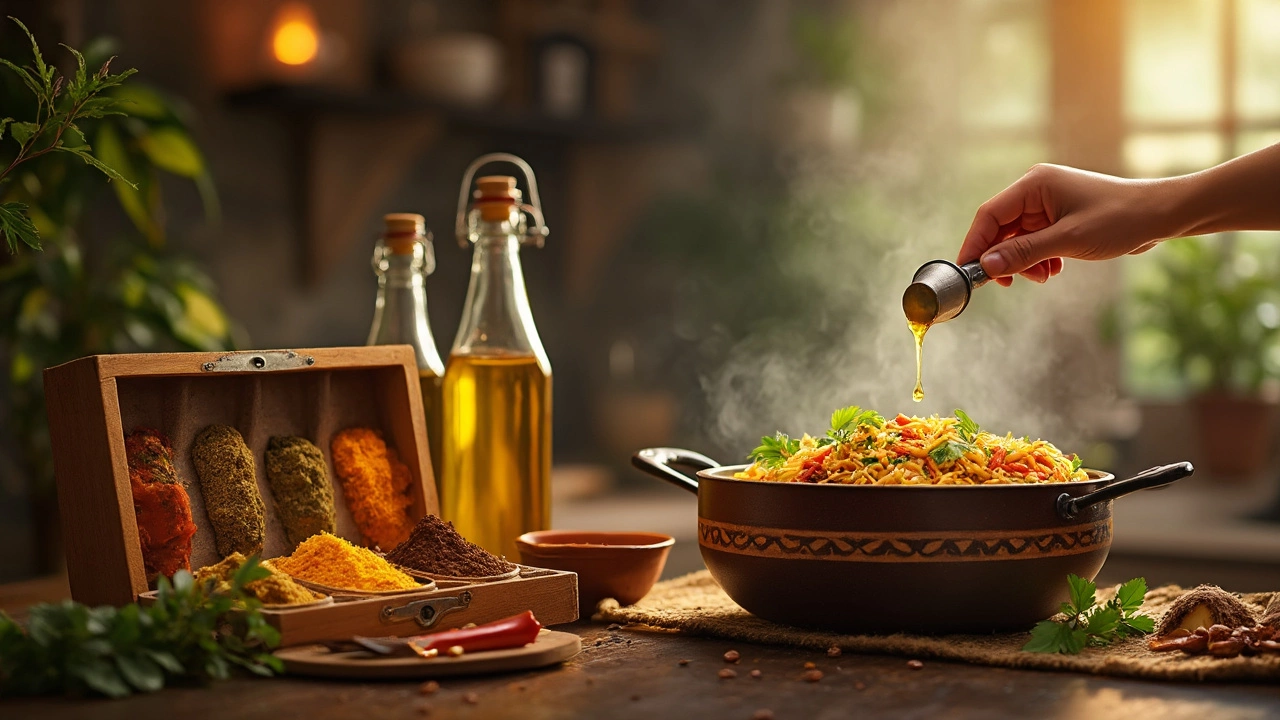
When you smell a pot of curry bubbling on the stove and your mouth waters before you even see it, you’re tasting seasoning oil, a base of oil infused with whole spices and aromatics that unlocks deep, layered flavor in Indian cooking. Also known as tadka or chaunk, it’s not just oil—it’s the first step in building taste, not the last. This isn’t about adding oil to food. It’s about turning oil into a flavor carrier that wakes up cumin, mustard seeds, dried chilies, garlic, and curry leaves long before anything else hits the pan.
Seasoning oil works because heat activates the essential oils trapped in whole spices. When you drop mustard seeds into hot mustard oil, they pop. When you toss asafoetida into ghee with curry leaves, the aroma explodes. This isn’t magic—it’s chemistry. The oil absorbs these volatile compounds and holds them, releasing them slowly into the dish. That’s why restaurant curries taste richer than home versions: they start with properly tempered oil. You can’t fake it with powdered spices stirred in at the end. The aromatics, whole spices and herbs used to infuse oil for flavor need time and heat to give up their secrets.
What you use matters. Mustard oil gives a sharp, pungent kick common in Bengali and Punjabi dishes. Coconut oil carries sweetness to South Indian curries. Sesame oil adds nuttiness to North Indian dals. Ghee, though technically clarified butter, acts the same way—its high smoke point and rich flavor make it the go-to for temple kitchens and home stoves alike. The spice infusion, the process of heating spices in oil to release their essential oils and flavors is the same whether you’re making a simple dal or a complex biryani. Skip this step, and you skip the soul of the dish.
Think of seasoning oil like the foundation of a house. You can build walls, add windows, paint the walls—but if the foundation is weak, everything else cracks. That’s why every post in this collection touches on it indirectly. Whether it’s how to make paneer taste better by adding a dash of infused oil, why restaurant curries are thicker and richer (they start with a strong tadka), or how to fix bland dosa batter by tempering the oil with urad dal’s natural oils—seasoning oil is the silent player behind every great Indian dish. You won’t find it on ingredient lists, but you’ll feel it in every bite.
Below, you’ll find real, practical posts that show exactly how seasoning oil is used—not just in theory, but in kitchens across India. From troubleshooting paneer texture to unlocking the secrets of biryani and fixing flatbread flavor, these aren’t recipes. They’re fixes. They’re shortcuts. They’re the kind of knowledge passed down between cooks, not written in cookbooks. If you’ve ever wondered why your food doesn’t taste like the ones at your favorite street stall, the answer starts with the oil in the pan.