Why Is My Chicken Still Pink After Cooking? Causes & Fixes
Find out why chicken can stay pink after long cooking, how to test safety with temperature, and practical tips to avoid the pink surprise.
When you cook chicken, the safe chicken temperature, the minimum internal heat level needed to kill harmful bacteria like Salmonella and Campylobacter isn't just a suggestion—it's the line between a great meal and a hospital visit. The U.S. Department of Agriculture and India’s FSSAI both agree: chicken must reach 74°C (165°F) throughout to be safe. No exceptions. Not 70°C. Not 72°C. Not "it looks done." If the thickest part of the breast, thigh, or wing hasn’t hit 74°C, it’s not safe to eat—even if it’s browned on the outside or the juices run clear.
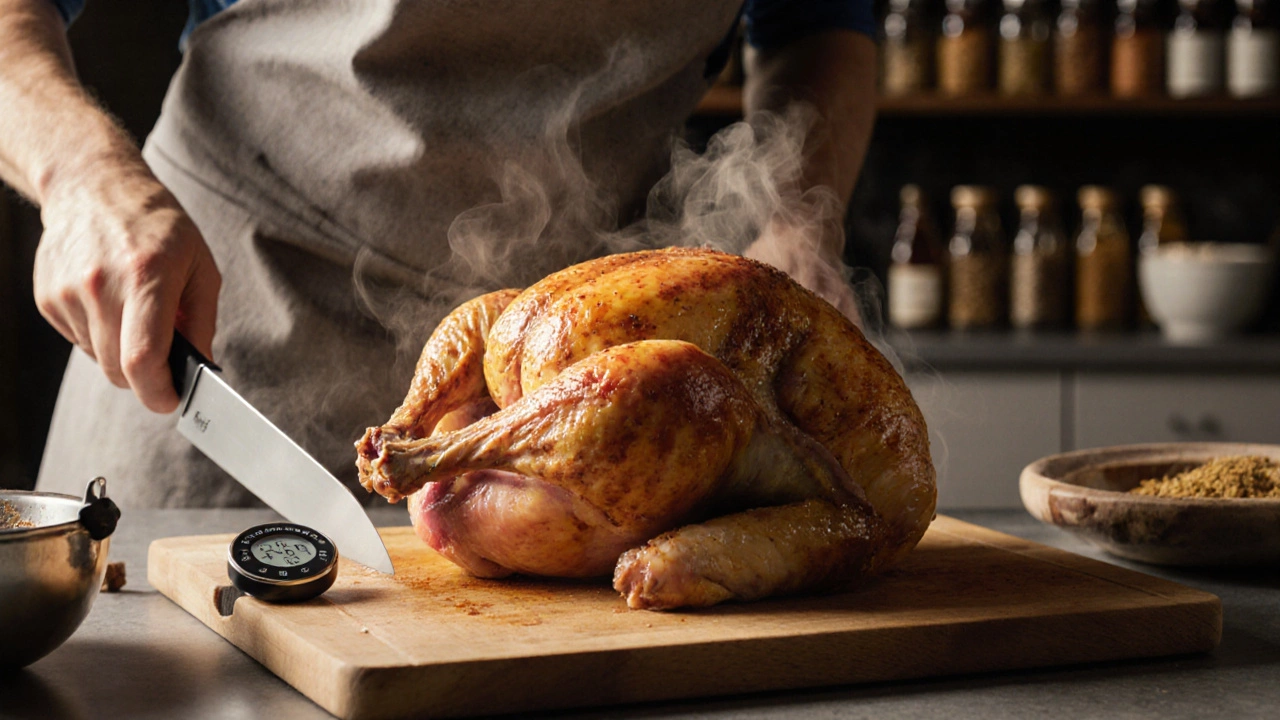
This isn’t about guesswork. It’s about measurement. A simple food thermometer, a device used to check the internal temperature of cooked meats and other foods is the only reliable tool. Don’t rely on timers, color, or texture. Those can lie. A chicken breast might look juicy at 70°C but still harbor dangerous bacteria. A drumstick might look dark at 72°C but be undercooked inside. The internal chicken temp, the actual heat level reached at the center of the meat during cooking is the only number that matters. And yes, it applies whether you’re grilling, roasting, frying, or slow-cooking. Even if you’re making chicken curry or tandoori chicken, the center must hit 74°C. Leftovers? Reheat them to the same temperature. Cold chicken salad? Make sure the chicken was cooked to 74°C before chilling.
Why does this matter so much in India? Because chicken is everywhere—from street-side tikkas to home-cooked curries. Millions eat it daily. And foodborne illness from undercooked poultry is one of the most common causes of stomach infections here. You don’t need fancy gear. You don’t need a professional kitchen. You just need a $5 digital thermometer and five seconds to check. That’s it. No more wondering. No more risks. Just clear, simple, safe results every time.
Below, you’ll find real guides that tie directly into this. From how to make perfect paneer without overcooking, to why restaurant curries stay thick and flavorful, to how food processing keeps meals safe from farm to table—these posts show you the practical side of cooking and manufacturing in India. No fluff. Just what works. And now, you know exactly what temperature to aim for before you even start.
Find out why chicken can stay pink after long cooking, how to test safety with temperature, and practical tips to avoid the pink surprise.