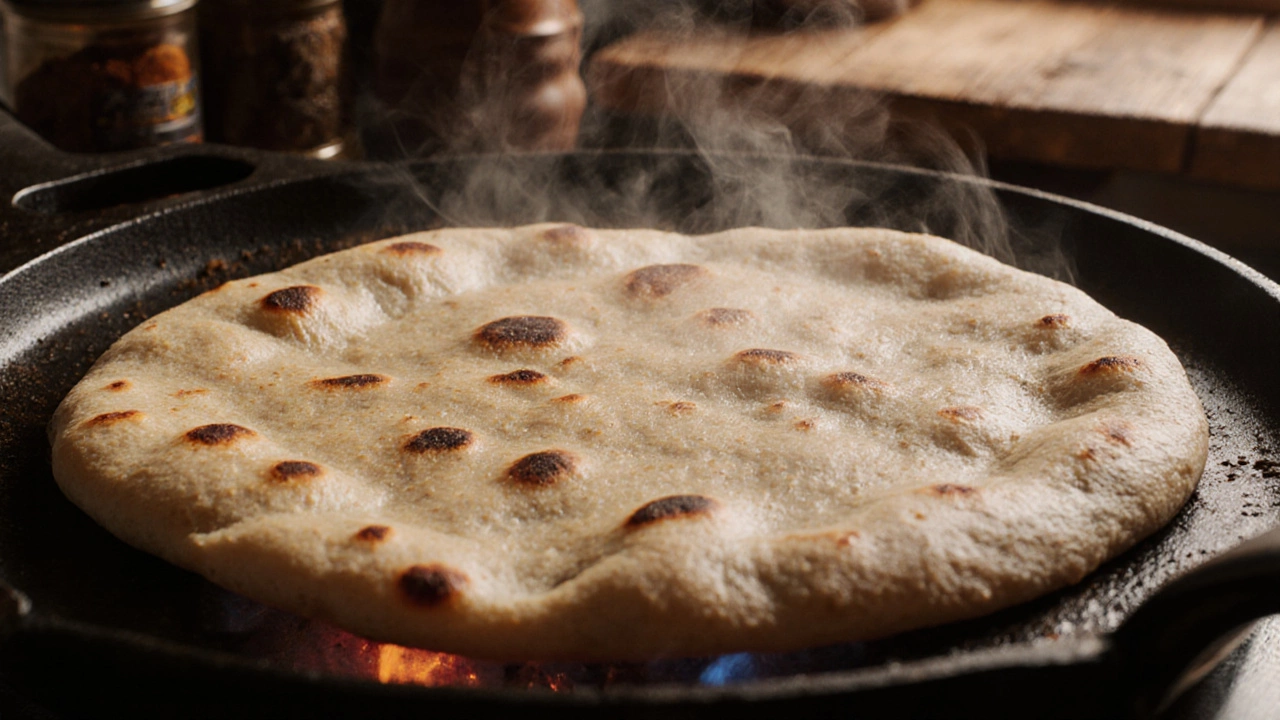
Roti Recipe: How to Make Perfect Indian Flatbread at Home
When you think of roti, a simple, unleavened flatbread made from whole wheat flour and water, central to meals across India. Also known as chapati, it’s not just food—it’s the foundation of countless daily meals, from spicy curries to lentil dals. Unlike store-bought versions that can be dry or rubbery, a real roti recipe is about touch, timing, and temperature. It doesn’t need yeast, baking powder, or oil. Just flour, water, a pinch of salt, and a hot griddle.
What makes roti different from other flatbreads? It’s the way the dough is kneaded—firm but not tight—and how it’s rolled thin without tearing. The magic happens on the tawa, where the roti puffs up like a balloon when the steam escapes. That puff? That’s the sign of perfect fermentation, even without yeast. It’s the same technique used in making dosa batter, a fermented rice and lentil batter used for crispy South Indian pancakes, but here, the goal is softness, not crispness. And just like with paneer, fresh Indian cheese made by curdling milk with lemon juice, the quality of the raw ingredient matters. Good whole wheat flour, freshly ground if possible, gives roti its nutty flavor and chew.
You don’t need a fancy machine. A rolling pin, a cast-iron tawa, and your hands are all it takes. The trick isn’t in the ingredients—it’s in the rhythm. Knead the dough for five minutes until it’s smooth. Let it rest. Roll it thin, but not paper-thin. Cook it on medium heat, flip when you see small bubbles, then press gently with a cloth to help it puff. If it doesn’t puff, the heat’s too low or the dough’s too dry. Simple fixes, real results.
People ask why roti still matters in a world of rice noodles and gluten-free breads. Because it’s fast. Because it’s cheap. Because it’s eaten with love, not just hunger. It’s the bread that holds together your dal, your sabzi, your pickle. It’s the bread your grandmother made, and now you’re making it too. The posts below show you exactly how to get it right—from dough consistency to heat control, from troubleshooting dry rotis to storing them fresh for days. No fluff. Just what works.