Paneer English Name: What to Call Indian Cottage Cheese
Discover the proper English name for paneer, how it differs from cottage cheese, and when to use each term in recipes, menus, and food labels.
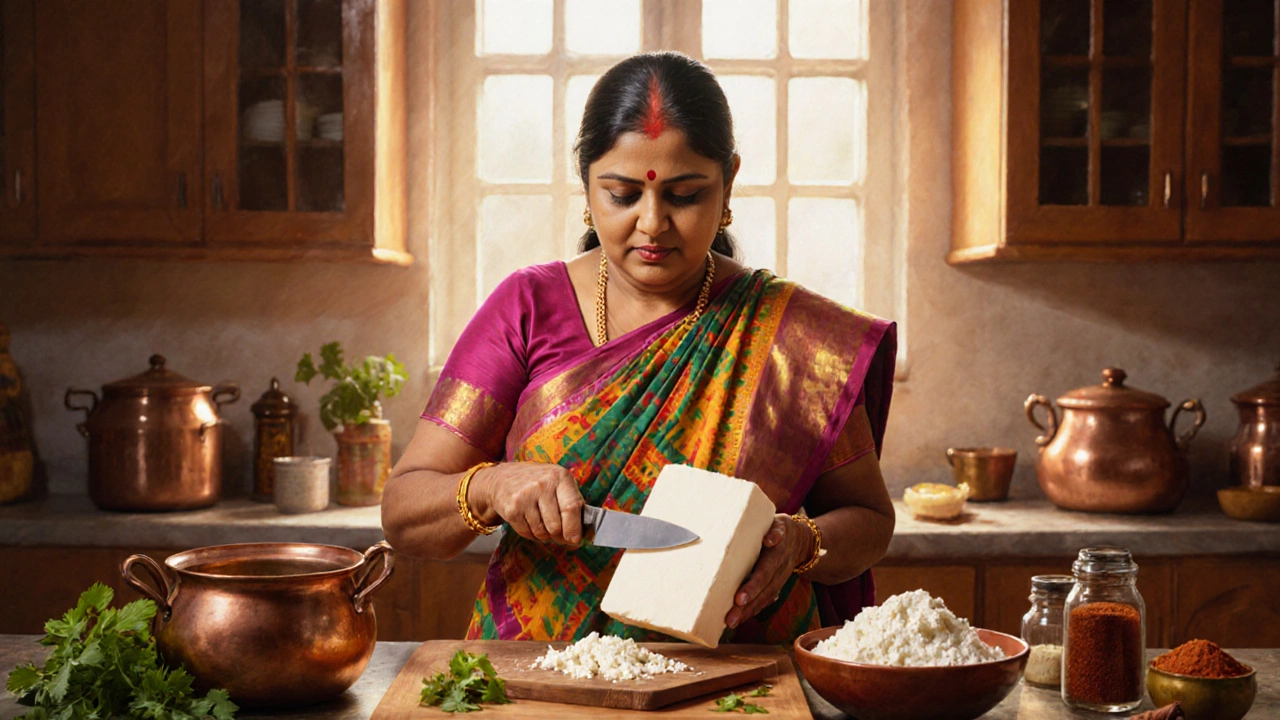
When you hear paneer, a fresh, unaged Indian cheese made by curdling milk with acid. Also known as Indian cottage cheese, it’s a staple in kitchens from Delhi to Detroit—not because it’s fancy, but because it’s simple, cheap, and holds up in curries, grills, and snacks. Unlike cheddar or mozzarella, paneer doesn’t melt. That’s not a flaw—it’s the point. Its firm texture lets it soak up spices without falling apart, which is why restaurants and home cooks alike rely on it for tikkas, palak paneer, and even street food snacks.
Understanding paneer means understanding how milk turns into solid food. It’s one of the most basic dairy manufacturing, the process of turning raw milk into edible products through controlled physical and chemical changes techniques. No rennet, no aging, no fancy equipment—just heat, acid (like lemon juice or vinegar), and time. This is the same method used in small-scale dairy units across India, where farmers and home producers make paneer daily using leftover milk. It’s a perfect example of how food manufacturing doesn’t always need big factories—just smart, repeatable steps. And if you’ve ever made paneer at home, you know the struggle: too much heat, and it turns crumbly; too little curdling, and you’re left with watery milk. That’s why so many posts here focus on the exact milk-to-paneer ratio, soaking times, and how to fix rubbery texture.
The word "paneer" doesn’t have a direct English translation. You can call it "Indian cheese," but that’s like calling sushi "Japanese rice." It misses the point. Paneer isn’t just cheese—it’s a cultural ingredient with a specific role in Indian cooking. It’s the protein backbone of vegetarian meals, the texture anchor in spicy sauces, and the blank canvas that absorbs flavors like no other dairy product. That’s why understanding paneer means understanding how Indian food works: balance, texture, and simplicity. You’ll find posts here that break down how much milk you need to make a block of paneer, why soaking it before cooking makes it tender, and the top mistakes that turn homemade paneer into a chewy disaster. All of it ties back to one truth: paneer isn’t complicated. But getting it right? That’s where the skill lives.
Whether you’re a home cook trying to replicate restaurant-style paneer or someone curious about how small dairy operations in India turn milk into shelf-stable protein, this collection gives you the real details—not theory, not fluff. You’ll learn what works, what doesn’t, and why.
Discover the proper English name for paneer, how it differs from cottage cheese, and when to use each term in recipes, menus, and food labels.