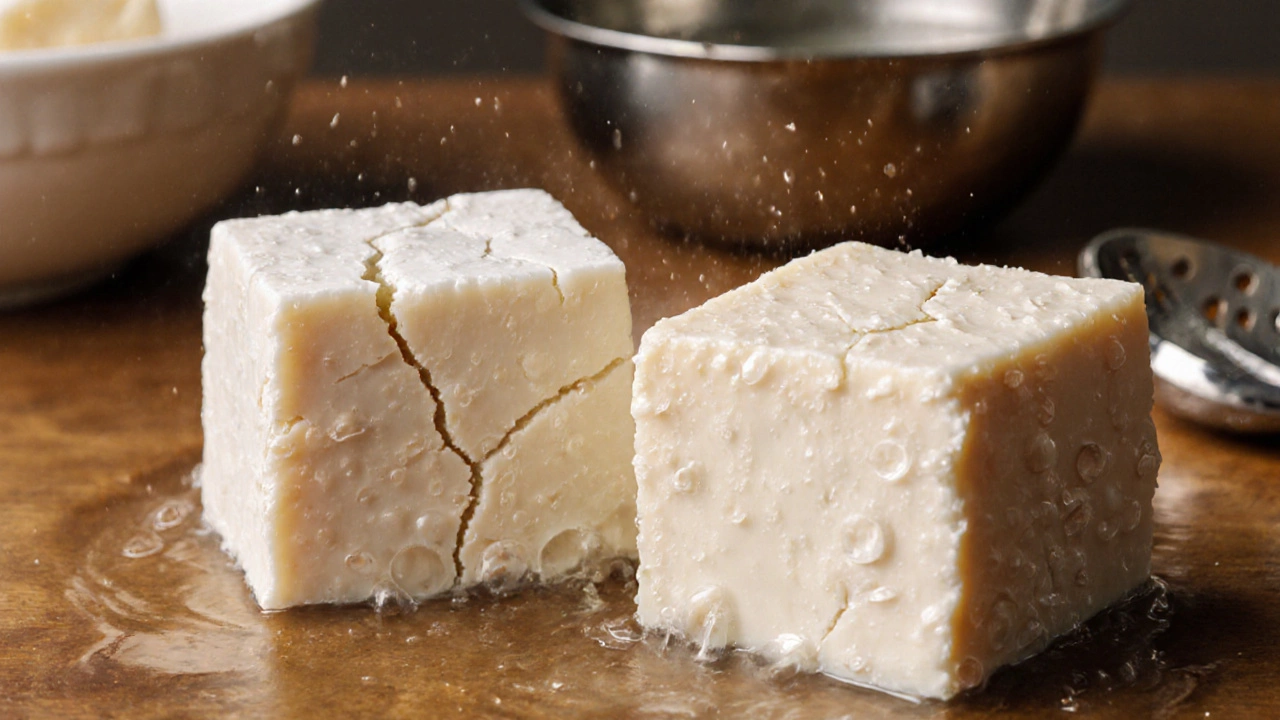
Why Do You Soak Paneer Before Cooking? The Simple Trick for Perfect Texture
Soaking paneer before cooking transforms it from rubbery to soft and flavorful. Learn why this simple step makes all the difference in curries, tikkas, and homemade dishes.
When you make paneer texture, the physical structure of fresh Indian cheese that determines how it holds up in curries, grills, or snacks. Also known as Indian cottage cheese, it’s not just about taste—it’s about how it behaves when you cook with it. Too soft, and it falls apart. Too hard, and it’s rubbery. The right paneer texture is firm enough to slice, yet tender enough to melt slightly in your mouth.
Getting this right depends on three things: the milk you use, how you curdle it, and how much you press it. Whole milk gives you the richest, most elastic paneer. Skim milk? You’ll get something dry and crumbly. The acid you add—lemon juice, vinegar, or yogurt—changes how the proteins bind. Too much acid, and the curds turn brittle. Too little, and they won’t set at all. Then comes pressing. You need weight, time, and a clean cloth. Skip pressing, and your paneer stays watery. Press too hard, and it becomes a chalky block. This isn’t magic. It’s physics and patience.
Related to paneer texture is paneer making, the full process of turning milk into fresh cheese using heat and acid. It’s the foundation. Then there’s homemade paneer, the version made without additives or stabilizers, relying only on milk and acid. And finally, Indian cheese, a broad category that includes paneer but also other regional fresh cheeses like chhena and paneer variants from Punjab or Bengal. These aren’t just names—they’re clues to why some recipes work and others don’t.
You’ll find posts here that show you exactly how much milk you need for the yield you want, how long to soak the curds in cold water to keep them springy, and why pressing with a heavy pot beats using fancy cheese presses. We’ve got the mistakes people make—like using ultra-pasteurized milk, or skipping the salt in the water bath—and how to fix them. No fluff. No theory. Just what actually changes the texture in your kitchen.
Whether you’re making paneer tikka, palak paneer, or just snacking on it with chaat, the texture is what makes it satisfying. Get it right, and it stays intact through frying, simmering, and stirring. Get it wrong, and you’re left with mush. This collection gives you the tools to fix it—once and for all.
Soaking paneer before cooking transforms it from rubbery to soft and flavorful. Learn why this simple step makes all the difference in curries, tikkas, and homemade dishes.