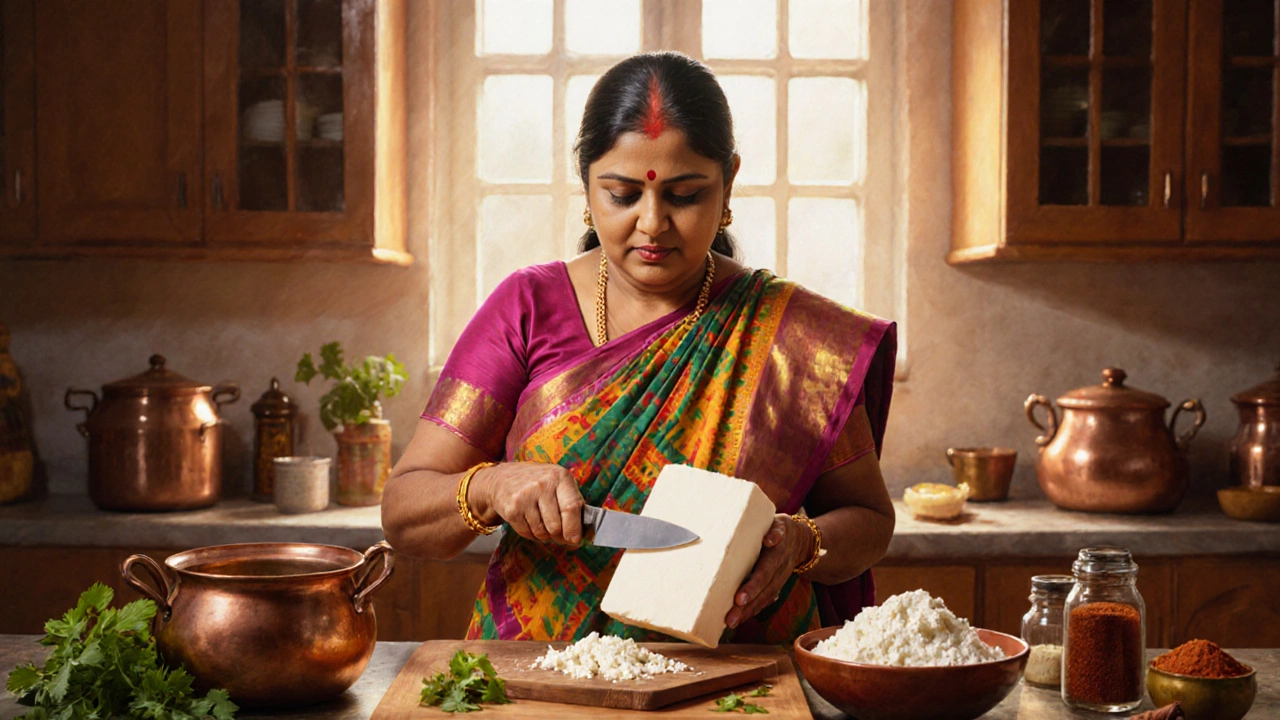
Paneer English Name: What to Call Indian Cottage Cheese
Discover the proper English name for paneer, how it differs from cottage cheese, and when to use each term in recipes, menus, and food labels.
When you see paneer, a fresh, non-melting cheese made by curdling milk with acid. Also known as Indian cheese, it's the backbone of hundreds of dishes from palak paneer to paneer tikka. Unlike cheddar or mozzarella, paneer doesn't melt when heated—it holds its shape, soaking up spices and sauce like a sponge. That’s why it’s not just a substitute for Western cheese; it’s its own thing, born from centuries of Indian kitchen wisdom.
People often ask, "What’s the English name for paneer?" The simple answer: there isn’t one. It’s not called "Indian cottage cheese" in India, and calling it that outside India misses the point. Cottage cheese is soft, wet, and often salty. Paneer is firm, dry, and unsalted. You can’t swap them in a curry and get the same result. If you’re making paneer at home, you need full-fat milk, lemon juice or vinegar, and patience. The ratio matters: about 1 liter of milk gives you roughly 200 grams of paneer. That’s why recipes like How Much Milk Do You Need to Make Paneer at Home? exist—because getting it right isn’t guesswork.
So why does this matter? Because if you treat paneer like any other cheese, you’ll end up with rubbery cubes in your curry. The real trick? Soaking it in warm water before cooking. That’s the secret behind Why Do You Soak Paneer Before Cooking? It’s not about flavor—it’s about texture. You’re not just making cheese. You’re crafting a protein that holds up to high heat, absorbs masalas, and stays tender. And if you’ve ever ruined a batch of homemade paneer, you know how easy it is to get it wrong. Common mistakes? Using low-fat milk, skipping the pressing, or cutting it too early. That’s why posts like Common Mistakes When Making Homemade Paneer exist—to save you from frustration.
Paneer isn’t just food. It’s a bridge between tradition and modern kitchens. Whether you’re making it from scratch or buying it at the store, understanding what it is—and what it isn’t—changes everything. You’ll stop treating it like a placeholder and start using it like the star ingredient it is.
Below, you’ll find real, tested guides on making paneer, fixing it when it goes wrong, and using it in ways you never thought possible. No fluff. Just what works.
Discover the proper English name for paneer, how it differs from cottage cheese, and when to use each term in recipes, menus, and food labels.