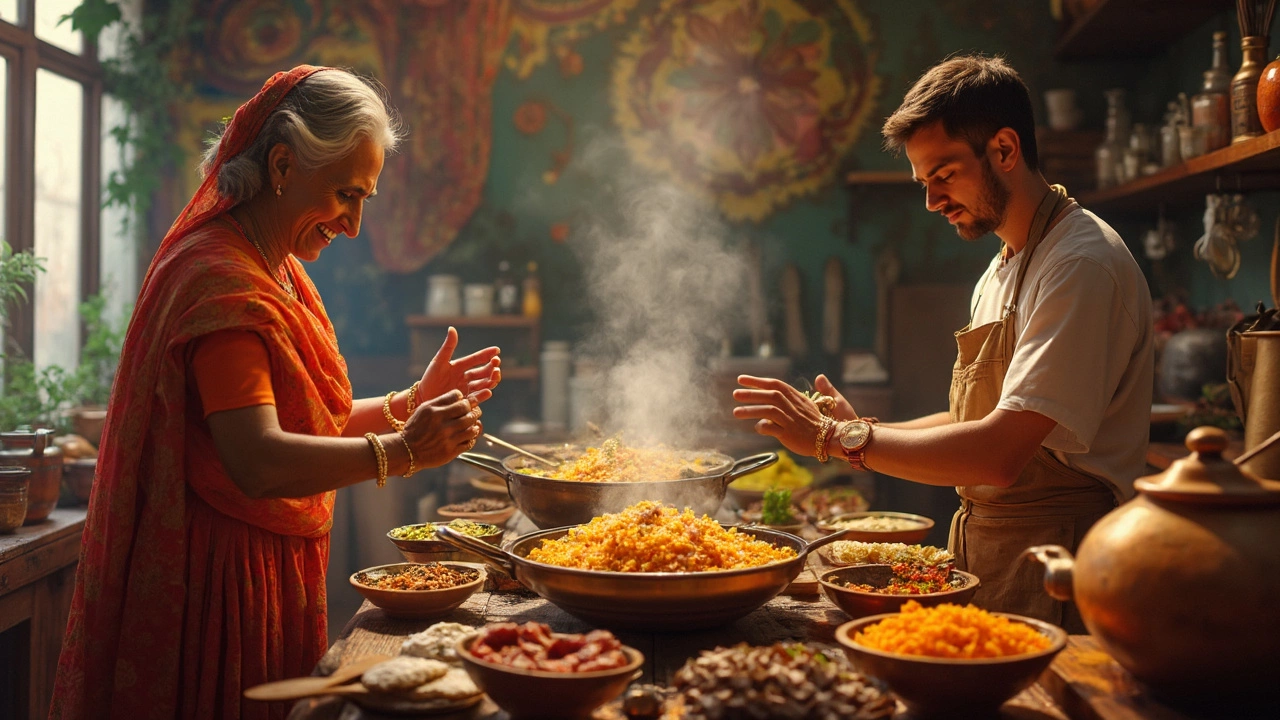
Pakistani Biryani: Authentic Recipe Secrets, Spices, and Cooking Techniques
When you think of Pakistani biryani, a fragrant, layered rice dish cooked with meat, spices, and saffron, often served at celebrations and family gatherings. It's a dish that carries the weight of tradition, but also the precision of technique. Unlike its Indian cousins, Pakistani biryani leans heavier on whole spices, slower cooking, and the signature dum method—where the pot is sealed and steamed to lock in every drop of flavor. It’s not just about heat; it’s about balance. The rice should be separate, not mushy. The meat should fall off the bone without falling apart. And the aroma? That’s what makes people stop what they’re doing and walk into the kitchen.
What sets Pakistani biryani apart? First, the biryani spices, a blend of whole spices like cardamom, cloves, cinnamon, bay leaves, and sometimes black stone flower (kala zeera). These aren’t ground into a paste—they’re fried in ghee or oil to release their oils, then layered into the dish. Second, the rice cooking technique, where basmati rice is parboiled just until 70% done, then layered with marinated meat and cooked on low heat under pressure. No stirring. No rushing. This is where patience becomes flavor. Many people think yogurt or cream makes it rich, but the real secret is slow-cooked onions, fried until caramelized and golden. They add sweetness, depth, and a texture that holds the whole dish together.
There’s also the matter of meat. Pakistani biryani often uses goat or lamb—cuts with more connective tissue that break down into tender, juicy strands. Chicken biryani exists, but it’s the exception, not the rule. And while Indian biryani might use tomatoes or even potatoes, Pakistani versions stick to the basics: meat, rice, spices, and a touch of saffron milk for color. No flour. No cream. No shortcuts.
If you’ve ever tried to make biryani and ended up with soggy rice or bland meat, you’re not alone. Most mistakes come from rushing the fry, skipping the soak, or using the wrong rice. But the posts below cut through the noise. You’ll find real, tested methods for getting the perfect rice texture, how to toast spices without burning them, why some cooks fry onions for over an hour, and how to layer the dish so every bite tastes like the first. This isn’t about following a recipe—it’s about understanding the system behind it. And that’s what turns good biryani into unforgettable biryani.