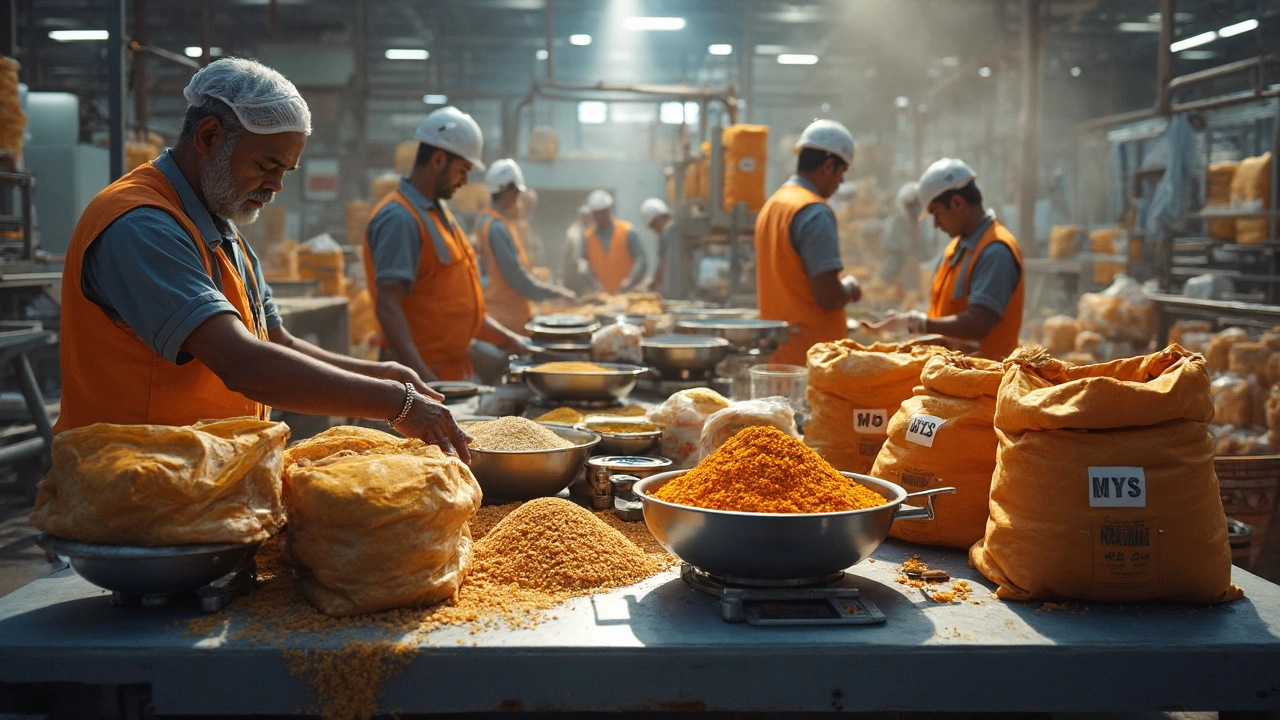
Measurement in Food Manufacturing: Accurate Units, Tools, and Why They Matter
When you think about measurement, the exact quantification of ingredients, time, temperature, and weight in food production. Also known as precision in food processing, it's the quiet backbone of every safe, tasty, and consistent product you buy or make at home. It’s not just about scooping cups of flour or guessing how long to soak urad dal. In Indian food manufacturing, measurement determines whether your paneer turns out rubbery or creamy, whether your dosa batter rises properly, or if your biryani layers cook evenly. Get this wrong, and even the best recipe fails.
Measurement isn’t just a step—it’s a system. In factories, it’s tied to unit operations, standardized physical steps like pasteurization, drying, or mixing that must be controlled with exact metrics. Also known as food engineering processes, these operations rely on precise temperature, time, and flow rates to ensure safety and shelf life. At home, it’s the same principle. Soaking urad dal for 6–8 hours isn’t a suggestion—it’s a measured window. Too little, and the batter won’t ferment. Too much, and it turns slimy. Making paneer? You need exactly 1 liter of full-fat milk to get about 200 grams of cheese. That ratio isn’t magic—it’s measurement. Even something as simple as roti puffing up depends on steam pressure, which comes from controlled heat and dough thickness—both measurable.
It’s not just about scales and timers. Measurement includes how you judge texture, color, and smell. Restaurant chefs don’t use thermometers for curry thickness—they know when the oil separates and the onions turn golden-brown. That’s sensory measurement. In food plants, they use pH meters, Brix refractometers, and moisture analyzers. But the goal is the same: consistency. Whether you’re running a small kitchen or a large factory, if your measurements drift, your product does too. That’s why the best Indian food manufacturers don’t guess—they record. They track water activity, pH levels, and batch weights. And that’s what you’ll find in the posts below: real, practical examples of how measurement shows up in everyday Indian cooking and manufacturing—from the exact milk-to-paneer ratio to why code 5 plastic is trusted for food containers because it withstands heat without leaching. No fluff. Just what works.