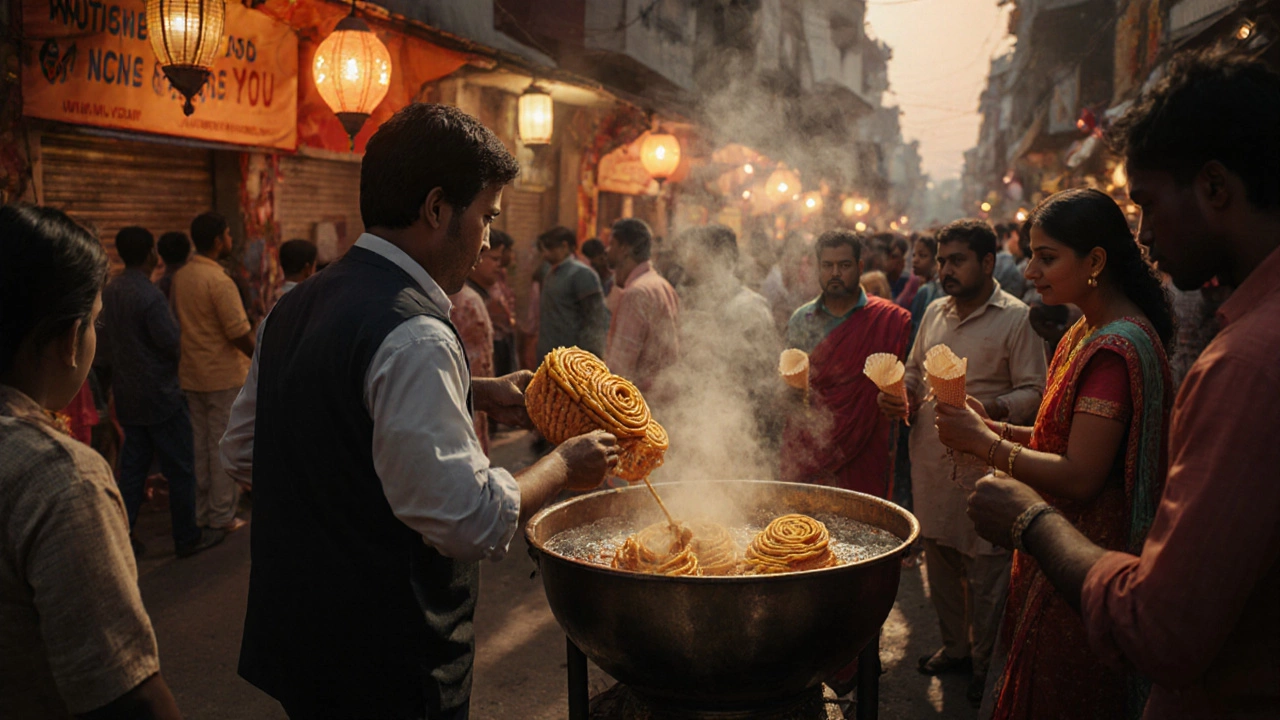
Jalebi: The Sweet Crunch of Indian Street Food and How It's Made
When you think of jalebi, a bright orange, spiral-shaped deep-fried dessert soaked in sugar syrup. Also known as jilapi, it's one of India's most beloved street snacks—crispy on the outside, tender inside, and dripping with sweet syrup that clings to your fingers. You’ll find it in every market, temple fair, and festival, often served hot with a dollop of thick yogurt or a scoop of ice cream. But jalebi isn’t just sugar and flour—it’s a balance of timing, temperature, and technique that turns simple ingredients into something magical.
What makes jalebi work is the batter. It’s made from fermented urad dal and all-purpose flour, left to rise like dosa batter, giving it that airy, lacy texture when fried. The syrup? It’s not just sugar water—it’s boiled to the right consistency, often flavored with cardamom or saffron, and poured hot over the fried coils. Too thin, and it runs off; too thick, and it hardens like candy. The fry has to be just right—golden, not browned, with no raw spots. This isn’t baking. It’s a dance between heat, timing, and skill. And that’s why homemade jalebi often tastes better than store-bought: you control every step, from the fermentation to the final dip.
People don’t just eat jalebi for the sweetness. They eat it for the memory—the sizzle of batter hitting hot oil, the smell of caramelizing sugar, the way it melts in your mouth after a long day. It’s tied to childhood, to Diwali, to roadside stalls that stay open late. And while you might find it in other countries under different names, the Indian version has its own rhythm. It’s not just a dessert—it’s a tradition fried in oil and soaked in history.
Below, you’ll find real guides on how to get the batter right, how to make syrup that doesn’t turn grainy, and how to fix common mistakes that turn jalebi into a soggy mess. No fluff. Just what works.