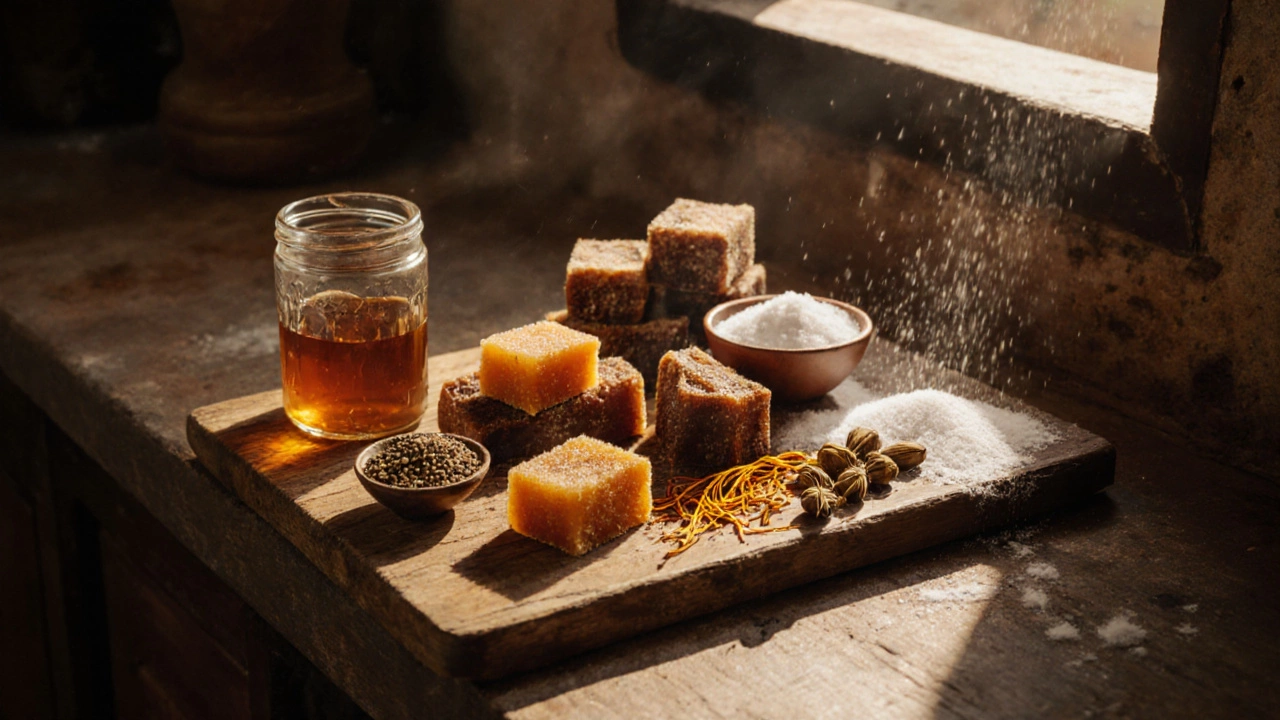
Why Indian Food Tastes Sweet: Ingredients, Techniques, and Regional Secrets
Explore why Indian cuisine tastes sweet, from jaggery and honey to cardamom and saffron, plus cooking tricks and regional twists that shape the signature flavor.
When you think of jaggery, an unrefined, non-centrifugal cane sugar made by boiling raw sugarcane juice or palm sap. Also known as gur, it's the sweet backbone of countless Indian dishes—from hot milk in winter to temple prasadam and village sweets. Unlike white sugar, jaggery keeps its molasses, minerals, and natural color, making it not just sweet, but rich in iron, potassium, and antioxidants. It’s not a fancy ingredient—it’s a daily one, used by millions in homes, street stalls, and small factories across Uttar Pradesh, Bihar, Tamil Nadu, and Maharashtra.
Jaggery doesn’t just replace sugar—it changes the flavor. In dosa batter, a bit of jaggery helps fermentation. In chutneys, it balances heat and tang. In curd rice, it adds warmth without cloying sweetness. You’ll find it in traditional Indian sweets, like laddoos, gur ki roti, and jalebi, where its deep caramel notes stand out. It’s also used in Ayurvedic remedies, mixed with ginger for colds or with sesame seeds for energy. The process is simple but labor-intensive: sugarcane is crushed, juice is boiled for hours in open pans, stirred constantly until thick, then poured into molds to cool. No chemicals. No bleaching. Just heat, time, and skill. That’s why jaggery from a small village unit often tastes better than mass-produced sugar—it carries the land, the season, and the hands that made it.
What you won’t find in supermarkets is the real story: how jaggery is tied to small farmers, seasonal harvests, and aging techniques passed down for generations. While big brands push refined sugar as "pure," jaggery remains the choice for those who care about taste, tradition, and nutrition. You’ll see it in the same posts that explain how to make paneer from scratch, how to ferment dosa batter, or why breakfast matters in Indian households—it’s all connected. Below, you’ll find real guides on how jaggery is used in cooking, how to pick the best kind, and why it’s still winning over processed sweeteners in homes across India.
Explore why Indian cuisine tastes sweet, from jaggery and honey to cardamom and saffron, plus cooking tricks and regional twists that shape the signature flavor.