Why Indian Food Tastes Sweet: Ingredients, Techniques, and Regional Secrets
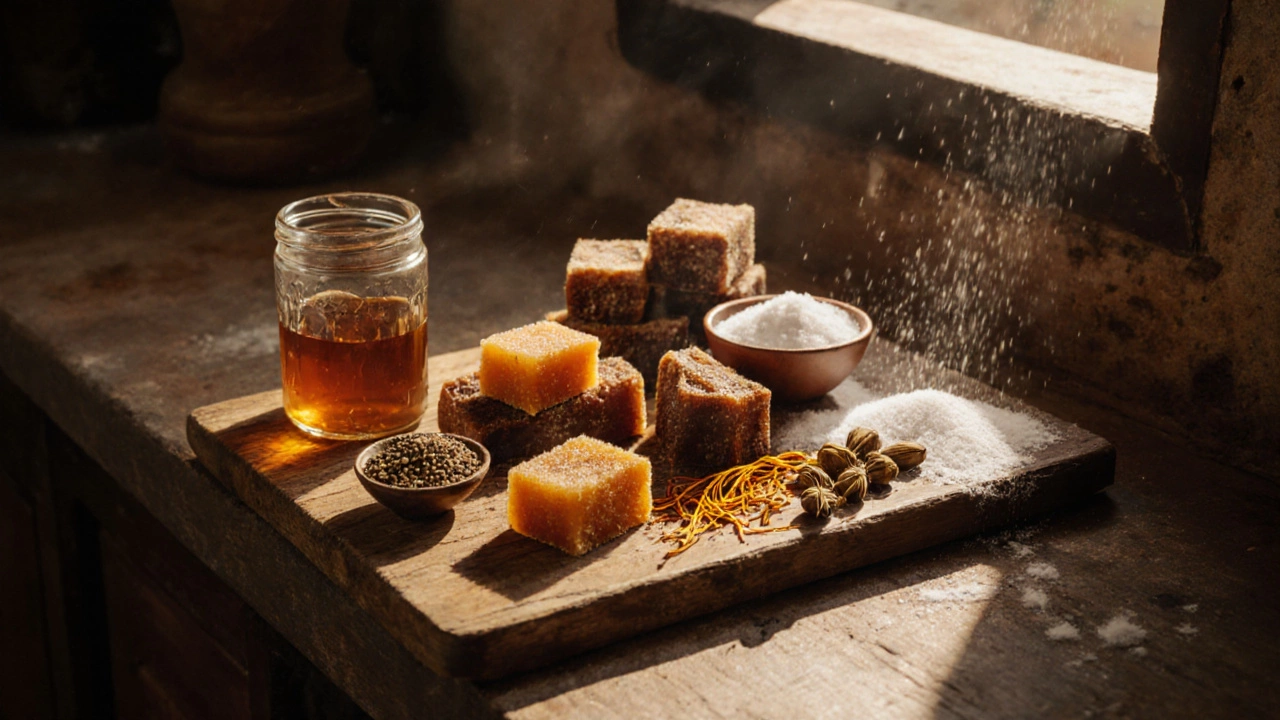
Explore why Indian cuisine tastes sweet, from jaggery and honey to cardamom and saffron, plus cooking tricks and regional twists that shape the signature flavor.
When you bite into a warm jalebi, a crispy, syrup-soaked Indian sweet made from fermented batter and soaked in sugar syrup, you’re not just tasting sugar—you’re tasting a century of tradition built on a few key Indian sweet ingredients, the foundational components used across India to create sweets that are rich, dense, and deeply aromatic. These aren’t fancy or imported. They’re humble, local, and often made in home kitchens: milk reduced to khoya, ghee from cow’s butter, semolina, cardamom, and sugar syrup cooked just right. These ingredients don’t just flavor sweets—they define them.
Take khoya, milk slowly simmered for hours until it thickens into a solid, creamy mass. It’s the backbone of barfi, peda, and gulab jamun. You won’t find it in a grocery aisle—you make it yourself by boiling whole milk for hours, stirring constantly until it turns golden and pulls away from the pan. Then there’s ghee, clarified butter that’s been cooked until the milk solids caramelize. It’s not just for frying; it’s brushed on sweets for shine, mixed into dough for tenderness, and drizzled over warm desserts for that unmistakable nutty depth. Even something as simple as semolina, coarse wheat flour used in rava laddoo and sooji halwa carries weight—it’s the texture anchor that holds sweetness together without needing flour or eggs.
These ingredients work because they’re concentrated. Unlike Western desserts that rely on cream or butterfat, Indian sweets get their richness from reduction and time. You don’t add cream to make barfi creamy—you reduce milk for hours. You don’t use vanilla extract—you toast cardamom pods and crush them by hand. The flavor isn’t layered—it’s built from the ground up. That’s why store-bought versions often fall flat. Real Indian sweets need the right ingredients, yes, but they also need patience. And that’s what you’ll find in the posts below: real, tested methods for making these ingredients from scratch, fixing common mistakes, and understanding why certain recipes call for specific types of milk, sugar, or fat. Whether you’re trying to perfect your khoya, learn how much ghee to use in laddoo, or figure out why your jalebi syrup turns cloudy, the answers are here—not in theory, but in practice.
Explore why Indian cuisine tastes sweet, from jaggery and honey to cardamom and saffron, plus cooking tricks and regional twists that shape the signature flavor.