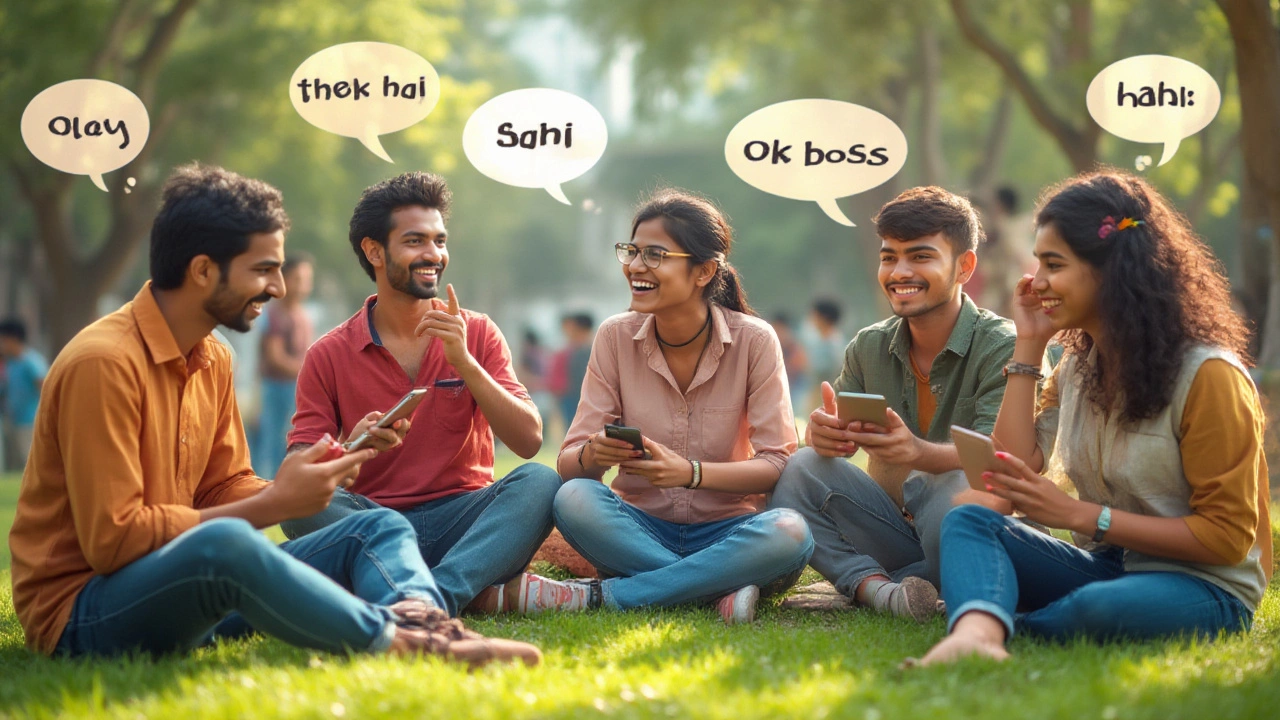
Popular Indian Slang for Okay and What It Really Means in Daily Life
Want to know how Indians say 'okay' in daily chats? Get to know the coolest slang, their roots, and how they're used in real life across India.
When someone asks if you’re ready, or if the plan works, or if you understood—what do you actually say in India? It’s not always "okay." In fact, "okay" is often the last thing you hear. The real answer lives in Indian slang for okay, a collection of everyday phrases used across homes, streets, and shops to confirm, agree, or signal understanding without sounding robotic. Also known as Indian colloquialisms, these expressions vary by region, class, and even mood—but they all do the same thing: keep conversation flowing. You won’t find these in language apps. You’ll hear them when your aunt says "theek hai" while handing you a plate, or when a rickshaw driver shrugs and mutters "chalta hai" like it’s the final word on life.
Across North India, "theek hai" is the go-to. It’s simple, clear, and works for everything—from approving a bill to nodding along during a long story. But down south, you’ll hear "sari" in Tamil or "chala" in Telugu. In Maharashtra, people say "chalel" with a sharp tone, meaning "fine, but don’t push it." And in urban centers like Delhi or Bangalore, you’ll catch "sure" or even "yaar" tossed in like punctuation. Indian everyday language, isn’t about grammar—it’s about rhythm, tone, and cultural context. It’s shaped by decades of mixing English with local tongues, and it changes faster than traffic in Mumbai. You don’t need to memorize all of them. But if you understand that "chalta hai" doesn’t mean "it’s perfect," it means "it’ll do," you’ll start reading the real India.
These phrases aren’t just words—they’re social tools. Saying "theek hai" softly means you’re agreeing but not excited. Shouting it means you’re done with the conversation. Saying "haan ji" with a smile? That’s polite compliance. Saying "theek hai" while rolling your eyes? That’s silent rebellion. This is the kind of nuance you only learn by listening, not studying. And that’s why the posts below aren’t about dictionary definitions. They’re about real moments: how people actually talk while making paneer, stirring curry, or waiting for dosa batter to ferment. You’ll find how language folds into daily routines—how a single word like "chalta hai" can carry the weight of patience, compromise, or quiet resignation.
What follows isn’t a list of phrases. It’s a window into how Indians communicate when no one’s watching. Whether it’s the way a vendor nods after haggling, or how a grandmother says "theek hai" when you spill milk, these small exchanges hold the rhythm of everyday life. You’ll see how food, work, and family all run on the same unspoken rules—and the same handful of words that mean more than they say.
Want to know how Indians say 'okay' in daily chats? Get to know the coolest slang, their roots, and how they're used in real life across India.