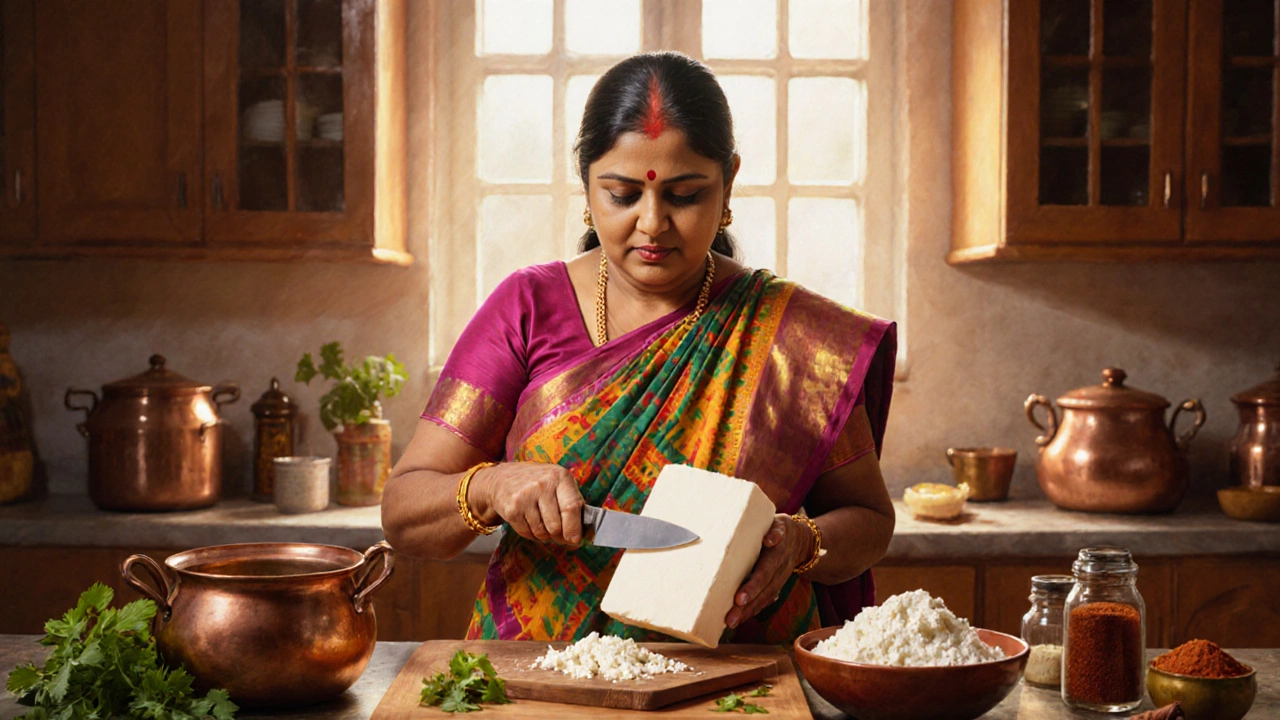
Paneer English Name: What to Call Indian Cottage Cheese
Discover the proper English name for paneer, how it differs from cottage cheese, and when to use each term in recipes, menus, and food labels.
When you think of Indian cottage cheese, a fresh, non-melting cheese made by curdling milk with acid, commonly used in Indian curries and grilled dishes. Also known as paneer, it's the backbone of meals from palak paneer to paneer tikka. Unlike cheddar or mozzarella, it doesn’t melt. That’s not a flaw—it’s the point. You grill it, fry it, simmer it in sauce, and it holds its shape, soaking up flavor without falling apart.
Making paneer at home is simple: heat milk, add lemon juice or vinegar, let the curds separate, then press out the whey. But getting it right? That’s where most people stumble. Too much acid and it turns grainy. Not enough pressure and it’s too soft. The milk-to-paneer ratio, typically 1 liter of full-fat milk yields about 200 grams of paneer matters more than you think. Whole milk gives you the creamiest result—skim milk? You’ll get crumbly, dry chunks. And soaking the final block in cold water for 30 minutes? That’s the secret trick restaurants use to make it tender, not rubbery.
The paneer texture, how firm or soft it feels after pressing and soaking changes everything in a dish. A good paneer should give slightly when you press it—like a firm sponge. If it’s hard as a brick, you over-pressed it. If it’s mushy, you didn’t press enough. That’s why so many recipes now include a step to soak it before cooking. It’s not optional—it’s essential for that melt-in-your-mouth feel in your favorite curry.
People often confuse paneer with other cheeses, but it’s closer to farmer’s cheese or quark than to aged varieties. It’s eaten fresh, within hours or days of making it. No aging, no rind, no mold. Just pure, milky goodness. And it’s everywhere in Indian kitchens—from breakfast parathas stuffed with spiced paneer to desserts like paneer kheer. It’s affordable, shelf-stable without refrigeration for a day, and packed with protein—perfect for busy households.
What you’ll find in the posts below isn’t just recipes. It’s the real talk: how much milk you actually need to make a block, why baking powder ruins paneer (yes, some people try it), what happens if you skip soaking, and how restaurants keep it soft while yours turns tough. You’ll see the mistakes people make—and how to fix them in minutes. Whether you’re making paneer for the first time or trying to fix a rubbery batch, this collection gives you the straight facts, no fluff.
Discover the proper English name for paneer, how it differs from cottage cheese, and when to use each term in recipes, menus, and food labels.