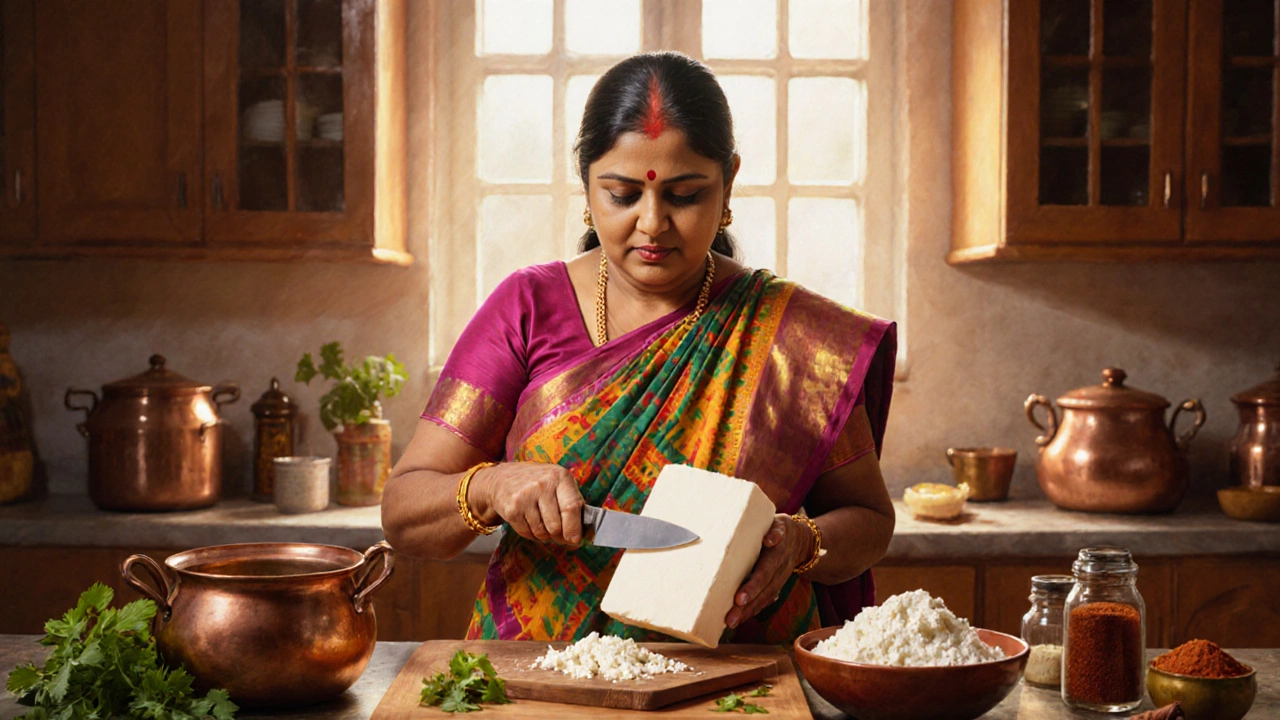
Paneer English Name: What to Call Indian Cottage Cheese
Discover the proper English name for paneer, how it differs from cottage cheese, and when to use each term in recipes, menus, and food labels.
When people talk about Indian cheese, a soft, unaged cheese made by curdling milk with acid, commonly used in curries and grills across India. Also known as paneer, it is one of the most widely consumed dairy products in the country, found in everything from street food to home-cooked meals. Unlike cheddar or mozzarella, Indian cheese doesn’t melt. It holds its shape, absorbs spices, and stays firm even after frying or simmering for hours. This isn’t an accident—it’s the result of a simple, centuries-old technique that doesn’t need rennet, cultures, or aging. Just milk, heat, and something acidic like lemon juice or vinegar.
What makes paneer, a fresh cheese made by curdling milk with acid, commonly used in Indian cooking so popular isn’t just taste—it’s accessibility. You don’t need fancy equipment. A pot, a strainer, and a few pounds of milk are all it takes. In fact, most households in India make paneer at least once a week. The process is so common that even small dairy shops sell it fresh daily. And while Western cheese relies on bacterial fermentation and long aging, paneer skips all that. It’s made in under an hour. That speed, combined with its high protein and low fat, makes it a go-to for vegetarians, athletes, and families alike.
There’s a reason you’ll find paneer in Punjabi butter chicken, Kashmiri dum aloo, and even in Mumbai’s street-side tikkas. It’s the perfect blank canvas—mild, porous, and able to soak up bold spices without falling apart. And unlike processed cheese slices or blocks, homemade paneer doesn’t contain preservatives or stabilizers. It’s pure milk turned into solid protein. That’s why food manufacturers in India treat it as a high-volume, high-demand product. Factories produce tons of it daily, using standardized pasteurization and curdling methods to meet demand across cities and villages.
But making good paneer isn’t just about following a recipe. It’s about the milk. Full-fat cow or buffalo milk gives you the best yield and texture. Skim milk? You’ll get rubbery, crumbly results. And the acid you use matters too. Lemon juice gives a clean tang, while vinegar can leave a sharper aftertaste. Even the water temperature during curdling changes the final product. Too hot, and the curds turn tough. Too cool, and they won’t set right.
There’s also a cultural layer here. In many parts of India, paneer isn’t just food—it’s tradition. It’s served during festivals, offered in temples, and given to new mothers for recovery. Its simplicity makes it a symbol of purity and nourishment. And while you might hear it called "Indian cheese English" online, no one in India calls it that. They just call it paneer. The term "Indian cheese" is mostly used by foreigners trying to find it in global grocery stores.
So if you’ve ever wondered why paneer doesn’t melt like mozzarella, or why it’s so cheap in India but expensive abroad, the answer lies in how it’s made—and who makes it. The same hands that press the curds in rural kitchens are also running large-scale dairy units in Punjab and Gujarat. The process hasn’t changed much in 500 years, but the scale has. And that’s what makes Indian cheese, or paneer, such a unique part of India’s food manufacturing story.
Below, you’ll find real guides on how to make it at home, how much milk you really need, common mistakes to avoid, and why soaking it before cooking makes all the difference. No fluff. Just what works.
Discover the proper English name for paneer, how it differs from cottage cheese, and when to use each term in recipes, menus, and food labels.