Homemade Cheese: How to Make Paneer and Other Indian Dairy Treats
When you make homemade cheese, a fresh, unaged dairy product made by curdling milk with acid or enzymes. Also known as Indian cheese, it’s a daily staple in homes across India—not a luxury, but a practical, affordable way to get protein and fat without processed ingredients. Unlike store-bought cheddar or mozzarella, Indian homemade cheese is soft, crumbly, and made in under an hour with just milk and lemon juice or vinegar. It’s not fancy, but it’s powerful: it holds up in curries, grills perfectly on skewers, and soaks up spices like a sponge.
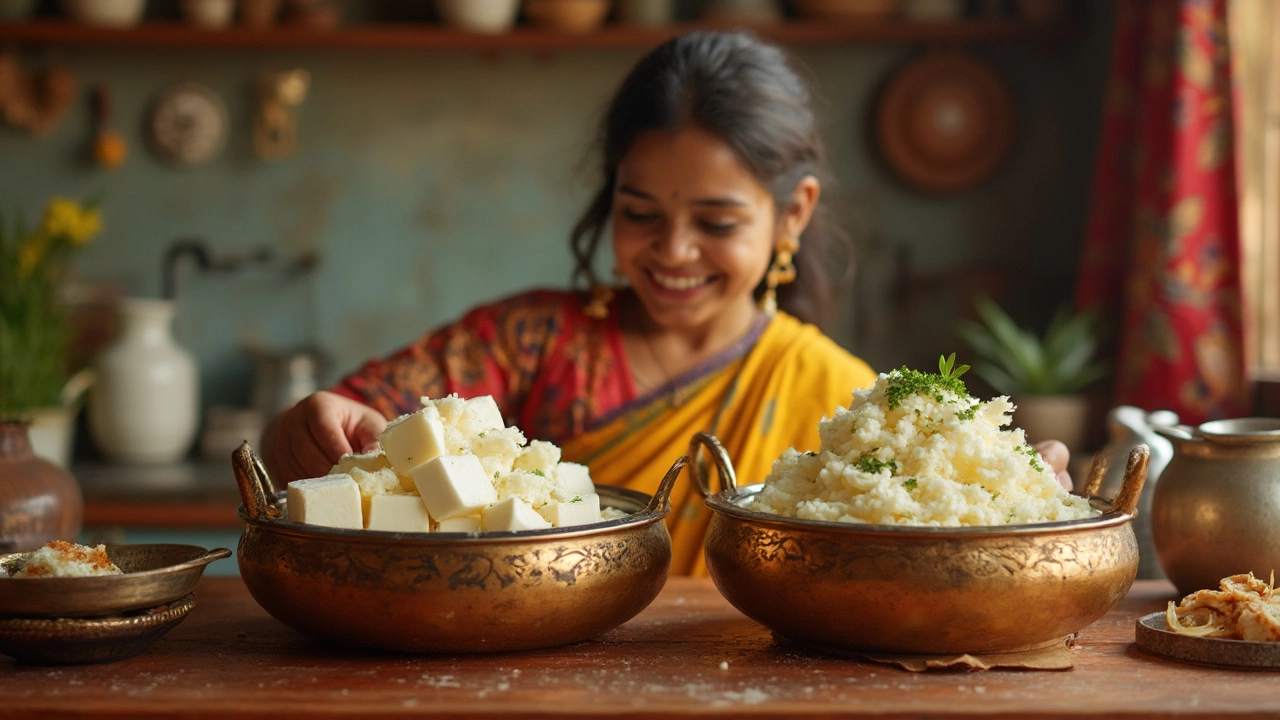
The star of homemade cheese in India is paneer, a non-melting, acid-set cheese made by curdling hot milk with lemon juice or vinegar. Also known as Indian cottage cheese, it’s the backbone of dishes like palak paneer, paneer tikka, and mattar paneer. Making paneer isn’t magic—it’s physics. Heat milk to just below boiling, add acid, wait for the curds to separate from the whey, then press out the excess liquid. The key? High-fat milk. Whole milk gives you the best yield and texture. Skim milk? You’ll get less than half the cheese. One liter of milk gives you about 200 grams of paneer. That’s the rule. No guesswork.
People mess up paneer all the time. Too little acid? Curds won’t form. Too much heat? Curds turn rubbery. Skip pressing? Your paneer stays soggy. Soaking it in warm water for 10 minutes before cooking? That’s the secret trick restaurants use to make it soft. And yes, you can make it without a cheese press—just stack a heavy pot on top of the wrapped curds. No fancy tools needed.
Homemade cheese isn’t just about paneer. It’s about control. You know exactly what went in—no preservatives, no stabilizers, no hidden additives. It’s also about timing. Making paneer in the morning means you have fresh cheese for dinner. That’s the rhythm of Indian kitchens. You don’t buy cheese. You make it. And when you do, you start to notice things: how the milk smells when it’s just right, how the curds look when they’re ready, how the whey clears up as it drains. It’s not cooking. It’s sensing.
Behind every block of paneer is a story of milk, heat, and patience. You’ll find posts here that break down exactly how much milk you need, why soaking matters, what happens when you overcook it, and how to fix rubbery cheese in seconds. You’ll also see how this simple process connects to bigger ideas—like food safety, waste reduction, and the quiet revolution of home-based food production in India. This isn’t a niche hobby. It’s a tradition that feeds millions. And now, you can do it too.