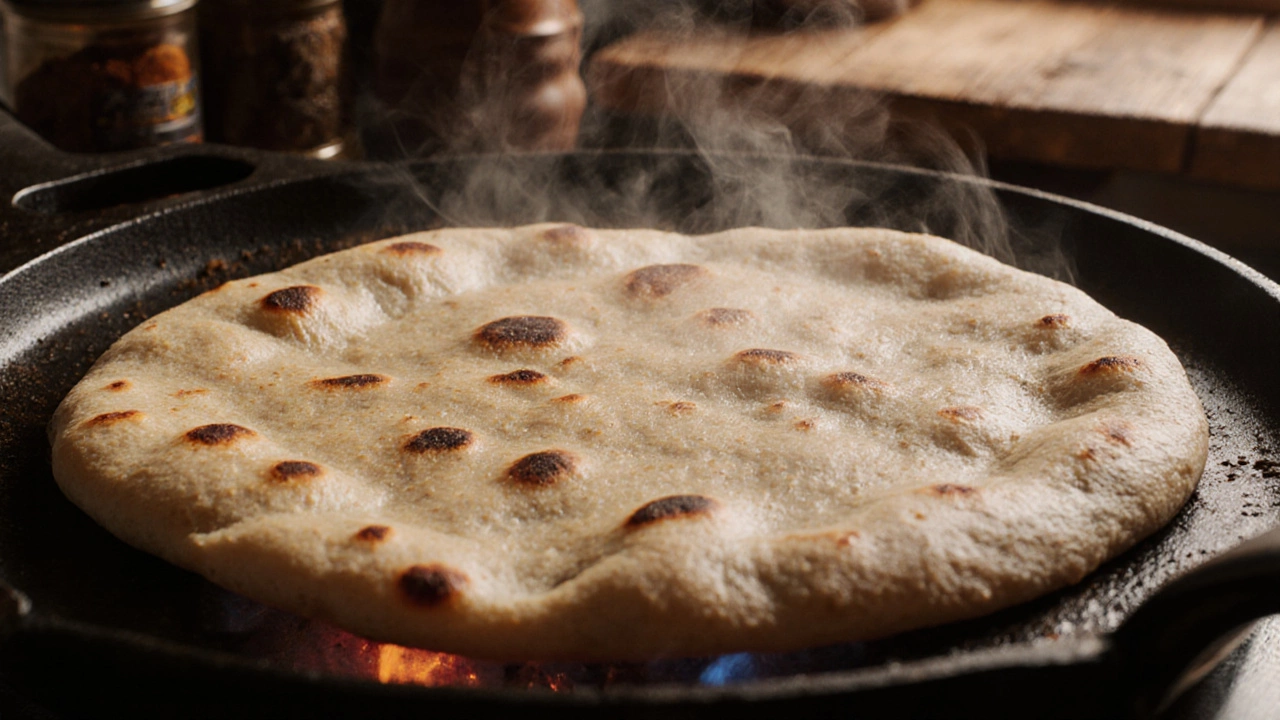
Flatbread: The Simple, Ancient Food That Feeds India and Beyond
When you think of flatbread, a thin, unleavened or lightly leavened bread baked or cooked on a hot surface. Also known as roti, chapati, or naan, it is the foundation of meals for over a billion people in South Asia. It doesn’t need an oven. It doesn’t need yeast. Just flour, water, salt, and heat. Yet it carries centuries of tradition, regional pride, and daily ritual. In India, flatbread isn’t just food—it’s the plate, the spoon, the wrapper, and the comfort all in one.
Every region has its version. In Punjab, naan, a soft, leavened flatbread baked in a tandoor oven puffs up with air and soaks up curry like a sponge. In Tamil Nadu, roti, a thin, whole wheat flatbread cooked on a griddle is rolled by hand and flipped with a flick of the wrist. In Maharashtra, chapati, a simple, unleavened bread made from atta flour is eaten with dal and pickles at every meal. These aren’t just recipes—they’re techniques passed down through generations, shaped by climate, crop cycles, and kitchen tools. The difference between a good flatbread and a great one? It’s not the spice. It’s the heat, the timing, and the touch.
What makes flatbread so universal? It’s efficient. It’s cheap. It’s forgiving. You don’t need fancy equipment—just a tawa, a clay oven, or even an open flame. It pairs with everything: lentils, yogurt, grilled meat, vegetables, even sweet tea. In Indian homes, the sound of a flatbread hitting the hot surface is as familiar as a morning alarm. And in restaurants, it’s the first thing served and the last thing licked clean. The best flatbreads aren’t made in labs. They’re made in kitchens where hands know when the dough is ready, when the flame is right, and when it’s time to flip.
What you’ll find below isn’t just a list of articles. It’s a collection of real, practical guides that show you how flatbread fits into the bigger picture of Indian food manufacturing and home cooking. From how milk turns into paneer to why soaking urad dal matters for dosa batter, these posts connect the dots between ingredients, techniques, and traditions. You’ll learn how texture, timing, and temperature shape what ends up on your plate—not just in restaurants, but in the factories and homes that feed the country. No fluff. Just what works.