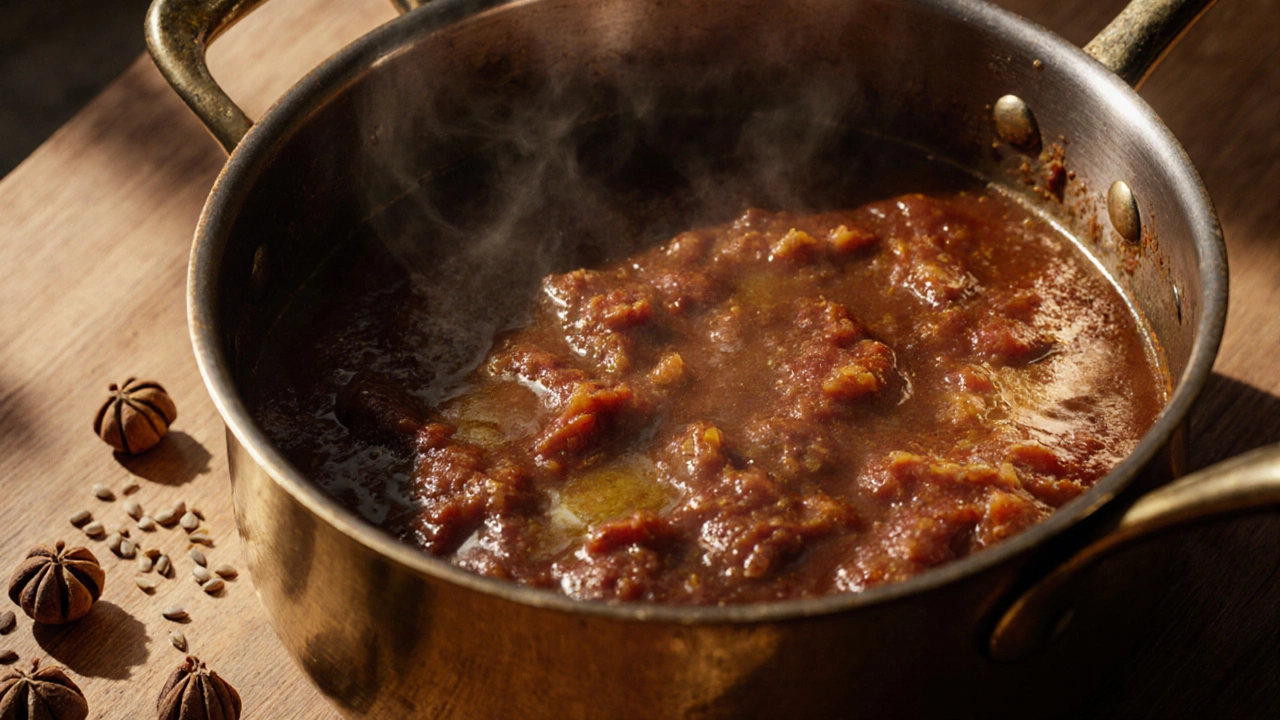
Curry Base: What It Is, How It's Made, and Why It Matters in Indian Cooking
When you think of Indian curry, you’re really thinking of the curry base, a foundational mixture of fried spices, aromatics, and liquids that forms the flavor backbone of hundreds of regional dishes. Also known as curry paste or masala base, it’s what turns plain onions, tomatoes, and oil into something deeply aromatic and complex. Without a well-made curry base, even the best meats or vegetables fall flat.
This base isn’t just a recipe—it’s a technique. It starts with heating oil or ghee, then adding whole spices like cumin, mustard, or fenugreek to release their oils. Next come ground spices—turmeric, coriander, cumin, chili—fried just long enough to wake them up but not burn. Then onions, garlic, ginger, and tomatoes go in, simmered until they melt into a thick, rich paste. This process, called browning the masala, the critical step that develops depth and removes raw spice flavors, is what separates home cooks from professionals. It’s the same method used in restaurants across India, from Mumbai street stalls to Punjabi dhabas.
What makes a good curry base? It’s not about heat or exotic ingredients. It’s about balance: the tang of tomatoes, the earthiness of cumin, the warmth of cinnamon, the punch of garlic and ginger. Some bases include yogurt or coconut milk for creaminess; others rely on roasted nuts or cashew paste for body. The spice blend, a customized mix of dried ground spices that defines the character of the curry varies by region—South Indian bases lean on mustard and curry leaves, while North Indian ones use garam masala and dried fenugreek. And while store-bought pastes exist, they lack the freshness and control you get when making it yourself.
You’ll find this base in everything from butter chicken to chana masala, from dal makhani to rogan josh. It’s the silent hero behind the dishes you crave. In the posts below, you’ll see how this base connects to everything from the perfect biryani layering to the texture of paneer in gravy, how soaking onions affects flavor, and why some cooks skip garlic entirely. You’ll learn how to fix a bland base, how to store it for weeks, and why the same base can make three different curries. This isn’t theory—it’s practice. And if you’ve ever wondered why your curry doesn’t taste like the one at your favorite restaurant, the answer starts here.