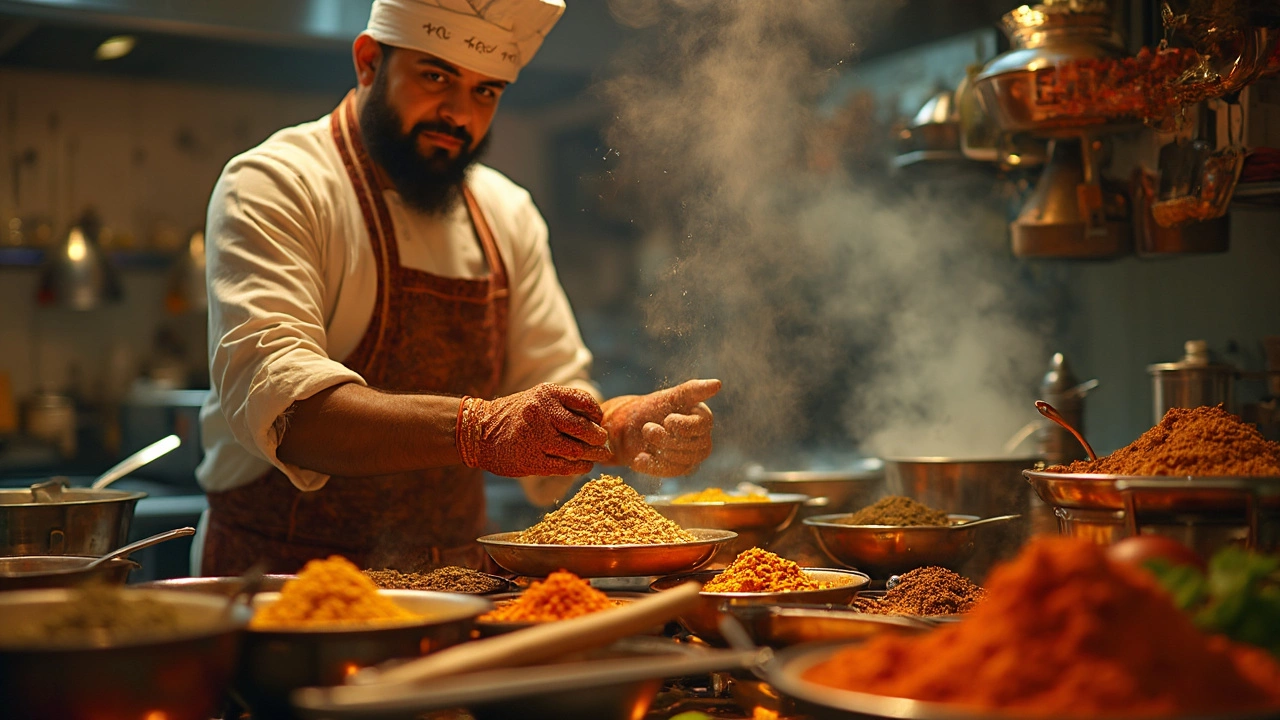
Culinary Science: How Food Chemistry and Techniques Shape Indian Cooking
When you make culinary science, the application of chemistry, physics, and biology to understand how food behaves during cooking and processing. Also known as food science, it’s not just lab coats and microscopes—it’s why your idli batter rises, why your curry thickens without flour, and why soaking urad dal for exactly 8 hours makes all the difference. This isn’t theory—it’s the hidden engine behind every bite of Indian food you love.
Culinary science connects directly to food chemistry, the study of molecular changes in ingredients during heating, mixing, or fermenting. When you add lemon juice to milk to make paneer, you’re not just curdling—it’s acid denaturing casein proteins. When you ferment dosa batter, lactic acid bacteria are breaking down starches into gases that puff up your batter. And when you slow-cook onions for hours to thicken a curry, you’re triggering Maillard reactions and caramelization—chemical processes that build deep, complex flavor. These aren’t tricks. They’re predictable reactions you can control.
It also links to food processing, the series of physical and chemical steps used to turn raw ingredients into safe, consistent, shelf-stable products. Pasteurizing milk, drying spices, vacuum-sealing snacks—all of it follows the same rules as what you do at home, just on a bigger scale. That’s why understanding unit operations—like filtration, evaporation, or homogenization—helps you see why restaurant food tastes so uniform. It’s not magic. It’s engineered precision.
And then there’s cooking techniques, the hands-on methods that apply culinary science in real time. Steaming idlis? That’s controlled heat transfer. Frying papad? That’s rapid moisture removal. Soaking paneer before cooking? That’s reversing protein shrinkage. These aren’t just recipes—they’re interventions based on how water, heat, and proteins behave. Skip the science, and you’re guessing. Understand it, and you’re in control.
You’ll find posts here that show exactly how these ideas play out in Indian kitchens. From the exact milk-to-paneer ratio to why roti doesn’t need baking powder, from how fermentation timing affects texture to why restaurant curries stay thick without cream. No fluff. No myths. Just the real reasons things work—or don’t. Whether you’re making food at home, running a small kitchen, or just curious why your food turns out the way it does, this collection gives you the tools to cook smarter, not harder.