Can You Eat Beef in India? Legal, Cultural & Practical Guide
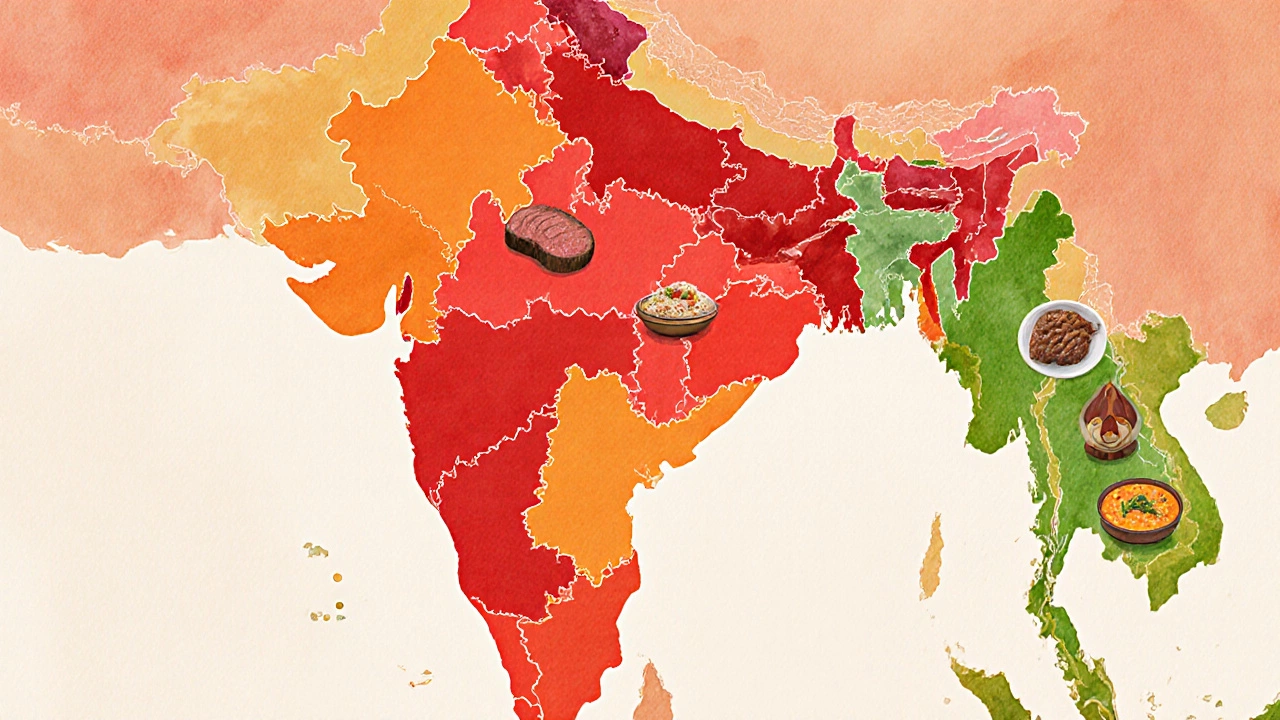
Explore India's complex beef laws, cultural attitudes, regional dishes, safety tips, and travel advice to know if you can eat beef safely across the country.
When you talk about cow meat taboo, the widespread cultural and religious rejection of beef consumption in India. Also known as beef ban India, it’s not just a dietary preference—it’s a deeply rooted social norm tied to religion, identity, and economics. Unlike in many parts of the world where beef is a staple, in India, cows are seen as sacred, especially in Hinduism, which is followed by over 80% of the population. This isn’t about health trends or environmental claims—it’s about centuries-old belief systems that treat the cow as a symbol of life, motherhood, and non-violence.
The Hindu dietary laws, religious guidelines that shape food practices across India don’t just forbid eating beef—they elevate the cow to a status that affects everything from farming to food manufacturing. In states like Uttar Pradesh, Gujarat, and Maharashtra, laws ban cow slaughter, and even transporting beef can trigger legal trouble. This shapes what food companies can produce, what restaurants can serve, and how supply chains are built. You won’t find beef in most Indian food factories, even though the country has one of the largest cattle populations in the world. Instead, dairy is king—paneer, ghee, and milk-based sweets dominate because they align with these beliefs. Even in regions where other meats are common, beef remains off-limits for most.
The Indian food culture, the complex mix of traditions, regional dishes, and religious practices that define how India eats doesn’t just avoid beef—it redefines what’s valuable in food. The cow provides milk, dung for fuel, and labor in rural areas. Killing it isn’t just taboo—it’s seen as wasteful. This cultural logic influences everything from street food vendors to large-scale manufacturers. You’ll see dairy-based snacks like paneer tikka or milk sweets everywhere, but zero beef products in mainstream packaging. Even global brands adapting to India skip beef entirely. This isn’t a gap in the market—it’s a deliberate, culturally enforced boundary.
What does this mean for you if you’re in food manufacturing, retail, or just curious about Indian eating habits? It means you can’t treat India like any other market. You can’t assume protein = beef. You can’t copy Western menus and expect them to work. The cow meat taboo isn’t a loophole to exploit—it’s a rule that defines the entire system. The posts below show how this belief shapes everyday food practices: from why paneer is so common to how restaurants build flavor without meat. You’ll see how tradition drives innovation, not blocks it. And you’ll understand why, in India, the most important ingredient isn’t spice or oil—it’s respect.
Explore India's complex beef laws, cultural attitudes, regional dishes, safety tips, and travel advice to know if you can eat beef safely across the country.