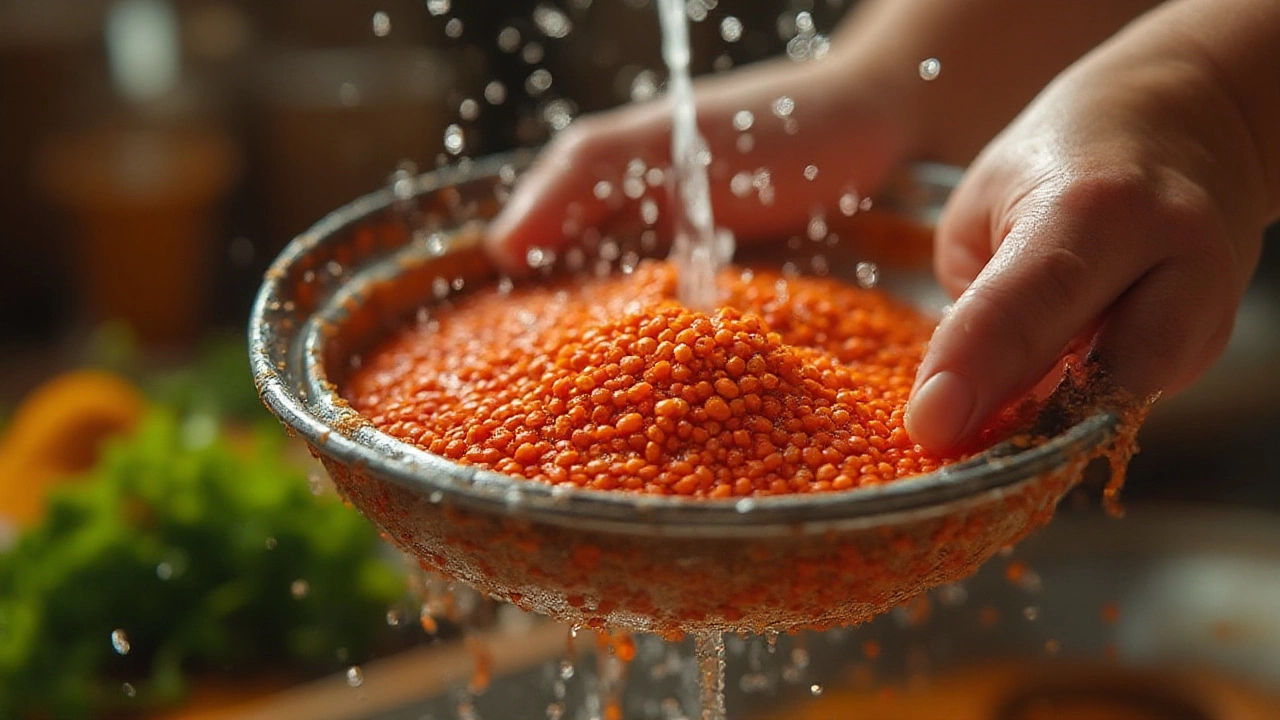
Cooking Lentils: How to Get Them Right Every Time
When you cook lentils, a small, protein-packed legume used daily across India in dals, soups, and stews. Also known as dal, they’re one of the most common ingredients in Indian homes—simple, cheap, and packed with nutrition. But get them wrong, and you’re stuck with chalky, undercooked beans or a mushy mess. The difference between good and great lentils isn’t about fancy spices—it’s about time, water, and heat.
Not all lentils behave the same. urad dal, the black lentil used for dosa batter, needs hours of soaking to ferment right. masoor dal, the red lentil that turns creamy in minutes, cooks fast but breaks down if you stir too much. chana dal, split chickpeas with a nutty bite, needs longer simmering and benefits from soaking overnight. Each type has its own rhythm. Skip the soaking? You’ll waste fuel and time. Boil too hard? They burst and turn gluey. Too little water? They stick and burn.
Indian kitchens don’t use timers for lentils—they use feel. You know they’re done when they split open slightly and mash easily against the side of the pot. No need for baking soda or pressure cookers unless you’re in a hurry. The secret? Low heat, enough water, and patience. Many people add salt at the start, thinking it helps, but it actually toughens the skin. Wait until the end. A pinch of cumin or asafoetida while sautéing the tempering makes all the difference—not because it’s magic, but because it wakes up the flavor.
What you’ll find below isn’t just recipes. It’s the real talk from kitchens that make lentils every single day. From how long to soak urad dal for perfect dosa batter to why soaking paneer matters (yes, it’s connected), these posts cut through the noise. No fluff. No vague advice. Just what works in Indian homes, restaurants, and small food factories where lentils are the backbone of the meal.