Why Is My Chicken Still Pink After Cooking? Causes & Fixes
Find out why chicken can stay pink after long cooking, how to test safety with temperature, and practical tips to avoid the pink surprise.
When you're cooking chicken doneness, the point at which chicken reaches a safe internal temperature and changes texture to be juicy, not rubbery. Also known as poultry doneness, it's not just about avoiding food poisoning—it's about getting that perfect bite every time. Too little heat and you risk salmonella. Too much and you get dry, chewy meat that no one wants to eat.
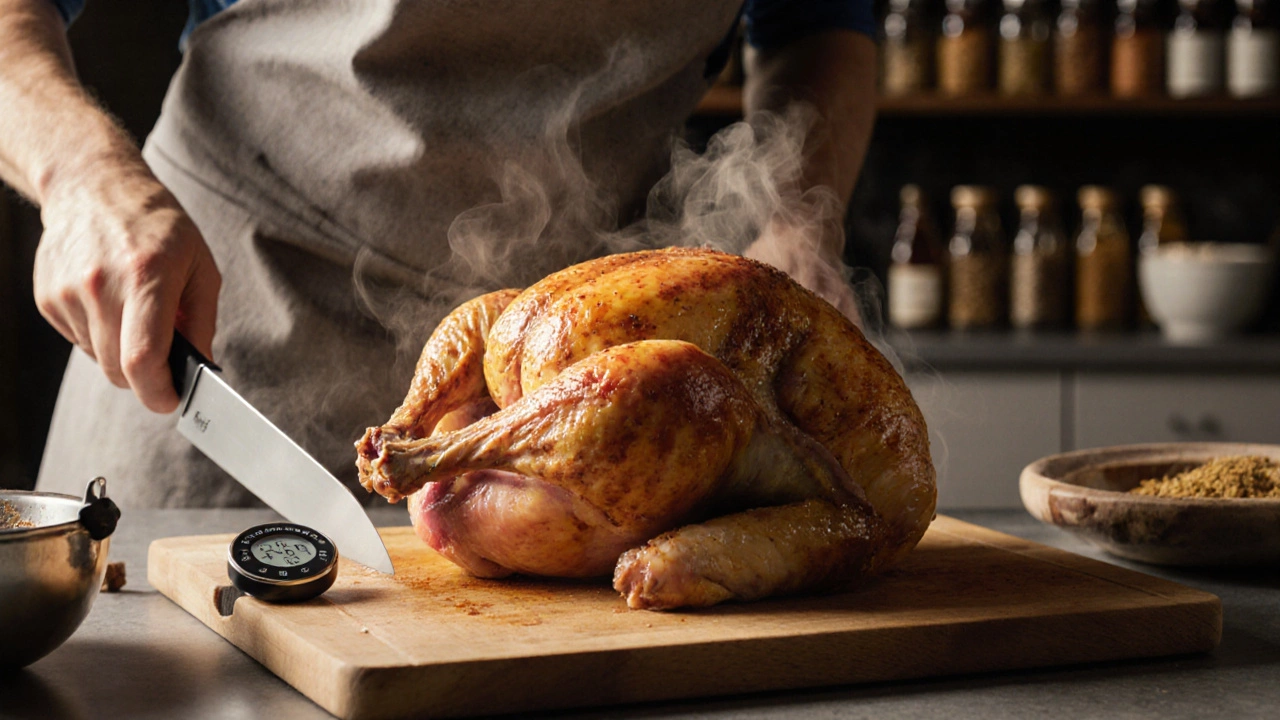
Most people rely on color or juice clarity, but those tricks are unreliable. The real answer is chicken temperature, the internal heat level measured with a thermometer. The USDA says chicken doneness is achieved at 165°F (74°C). That’s it. No exceptions. Whether it’s a breast, thigh, or whole bird, if the thickest part hits that number and holds for a second, it’s done. No need to cut into it. No need to guess. Just grab a $15 digital thermometer and stop worrying. You’ll also notice the meat pulls away from the bone, feels springy but not spongy, and the juices run clear—not pink. These are helpful clues, but they’re backup signs, not the rule.
Thighs and drumsticks can handle a little more heat than breasts, so if you’re cooking a whole chicken, aim for 165°F in the breast and let the legs go to 175°F. That’s why we often separate them when roasting. And if you’re grilling chicken pieces? Keep them away from direct flames. High heat burns the outside before the inside cooks. Low and slow wins here. You’ll find plenty of real-world examples in the posts below—how restaurants get it right, how home cooks mess it up, and how to fix rubbery paneer (yes, that’s related—texture matters just as much as temperature).
There’s no magic trick. No secret spice. Just science, timing, and a good thermometer. The posts here cover everything from curry thickness to paneer texture—all tied to the same idea: control the process, get the result. Whether you’re making biryani, chicken tikka, or just grilled chicken for lunch, knowing chicken doneness changes everything. You’ll find real tips, real mistakes, and real fixes—all tested in Indian kitchens and home stoves.
Find out why chicken can stay pink after long cooking, how to test safety with temperature, and practical tips to avoid the pink surprise.