Common Mistakes When Making Homemade Paneer (And How to Fix Them)
Learn the common mistakes that ruin homemade paneer and how to fix them. Get a step‑by‑step guide, troubleshooting table, and FAQs for perfect cheese every time.
When you think of cheese making, the process of turning milk into solid curds through acid or rennet. Also known as dairy coagulation, it’s not just a Western tradition—it’s deeply rooted in Indian kitchens. In India, cheese making mostly means making paneer, a fresh, unaged Indian cheese made by curdling milk with lemon juice or vinegar. Unlike cheddar or mozzarella, paneer doesn’t melt. It holds its shape, making it perfect for curries, grilling, or frying. You don’t need fancy equipment. Just milk, an acid, and heat. That’s it.
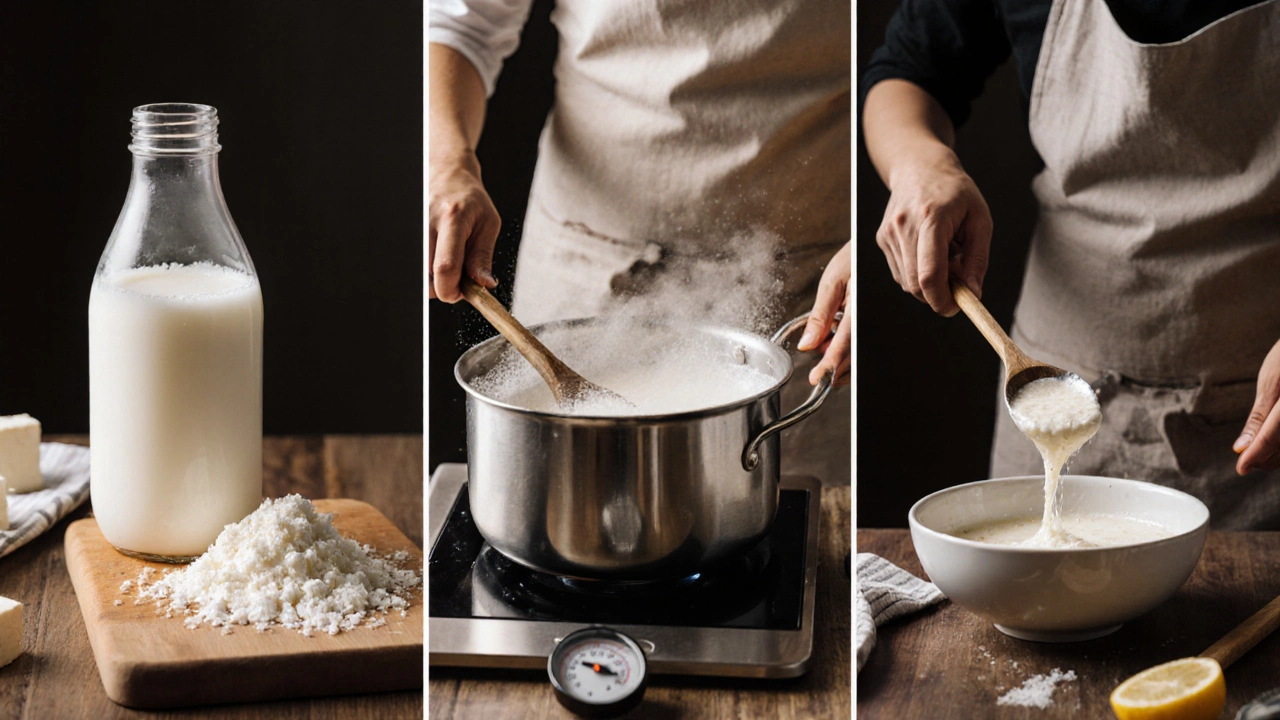
Most Indian households make paneer from scratch because it’s cheaper and tastes better than store-bought. You need about 1 liter of full-fat milk to get roughly 200 grams of paneer. The milk is heated, then lemon juice or vinegar is added. The curds separate from the whey. You drain it in a cloth, press it lightly, and you’ve got firm, white cheese. No cultures. No aging. No rinds. It’s simple, fast, and done in under an hour. This method is so common that even small food factories in Gujarat, Punjab, or Uttar Pradesh use the same technique—just at larger scale. They pasteurize the milk first, but the rest? Same as your kitchen.
What makes Indian cheese making different? It’s all about the acid. In Europe, they use rennet or bacterial cultures. In India, it’s lemon juice, yogurt, or even tamarind. The result? A mild, slightly tangy cheese that absorbs spices beautifully. That’s why paneer works so well in butter chicken or paneer tikka. It doesn’t fight the flavors—it carries them. And because it’s fresh, it doesn’t need refrigeration for a day or two. That’s why street vendors sell it in baskets without ice.
There’s more to cheese making than paneer. Some small dairies in Kashmir make kalari, a stretched-curd cheese similar to mozzarella. In Himachal, they make chhurpi—hard, dried cheese that lasts for months. But these are exceptions. For most people, cheese making means paneer. And that’s what the posts here cover: how to get the right texture, how much milk you need, why soaking paneer before cooking makes it tender, and how to avoid rubbery results. You’ll find real, tested methods—not theory. No fancy machines. No imported cultures. Just milk, heat, and a little patience.
If you’ve ever wondered why your homemade paneer turned out crumbly or too soft, the answers are here. You’ll learn what temperature to heat the milk to, how long to let it sit after adding lemon juice, and why using full-fat milk matters. You’ll also see how restaurants make paneer in bulk, and why they soak it in warm water before using it. These aren’t tricks. They’re basics. And they work.
Learn the common mistakes that ruin homemade paneer and how to fix them. Get a step‑by‑step guide, troubleshooting table, and FAQs for perfect cheese every time.