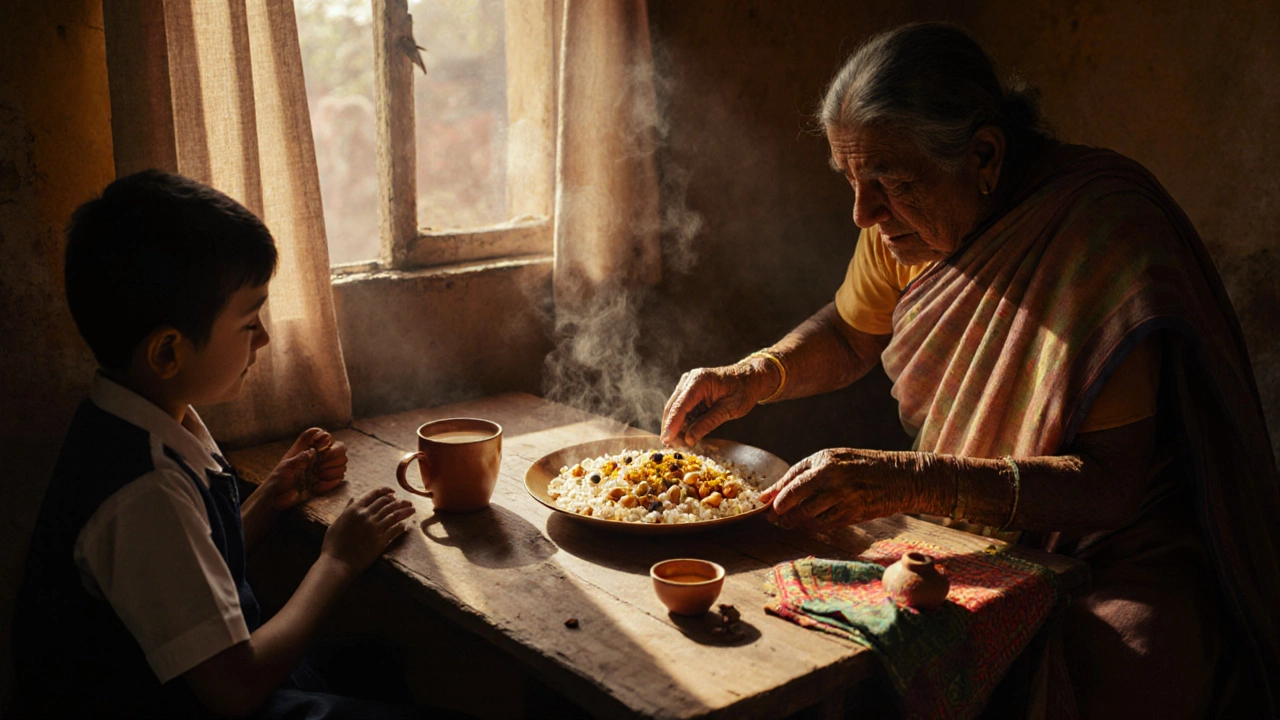
Breakfast in India: Traditional Meals, Regional Varieties, and How They're Made
When you think of breakfast in India, a diverse, region-specific set of daily meals built on fermented grains, fresh dairy, and slow-cooked spices. Also known as Indian morning meal, it’s not just about eating—it’s about timing, texture, and tradition. Unlike Western breakfasts that often rely on cereal or toast, Indian breakfasts are warm, savory, or slightly sweet, made from ingredients you can find in any local market. The real magic? It’s not fancy. It’s science—fermentation, soaking, steaming, and slow cooking—that turns simple ingredients into something unforgettable.
Take urad dal, a black lentil that’s the backbone of South Indian dosas and idlis. Also known as black gram, it needs to soak for 6 to 8 hours—too little and your batter won’t rise; too much and it turns slimy. This isn’t guesswork. It’s controlled fermentation, the same process that makes yogurt and sourdough work. Then there’s paneer, a fresh, unaged cheese made by curdling milk with lemon juice or vinegar. Also known as Indian cottage cheese, it’s used in breakfasts like paneer parathas or served with chai. Making it at home? You need just milk and acid—but the trick is in the draining and pressing. Too little pressure, and it’s crumbly. Too much, and it’s rubbery.
Breakfast in India doesn’t stop at dosas and paneer. In the north, it’s parathas stuffed with potatoes or paneer. In the east, it’s pitha or chira-muri. In the west, you’ll find dhokla or thekua. Each region has its own rhythm, its own ingredients, its own rules. And every single one of them relies on small, repeatable food processes—what food engineers call unit operations, the basic physical steps like soaking, grinding, fermenting, and steaming that turn raw ingredients into food. Also known as food processing steps, these are the invisible hands behind every bite. You don’t need a factory to do them. You just need time, patience, and a little understanding of what’s happening in your bowl.
What you’ll find in the posts below isn’t just recipes. It’s the why behind the what. Why you soak urad dal. Why paneer needs to be soaked before cooking. Why roti doesn’t need baking powder. Why some breakfasts take hours to make—and why that’s exactly how they’re supposed to be. This isn’t about trends. It’s about what’s worked for generations. And if you’ve ever wondered how Indian homes make breakfast taste so different from anything you’ve had elsewhere, the answers are right here.