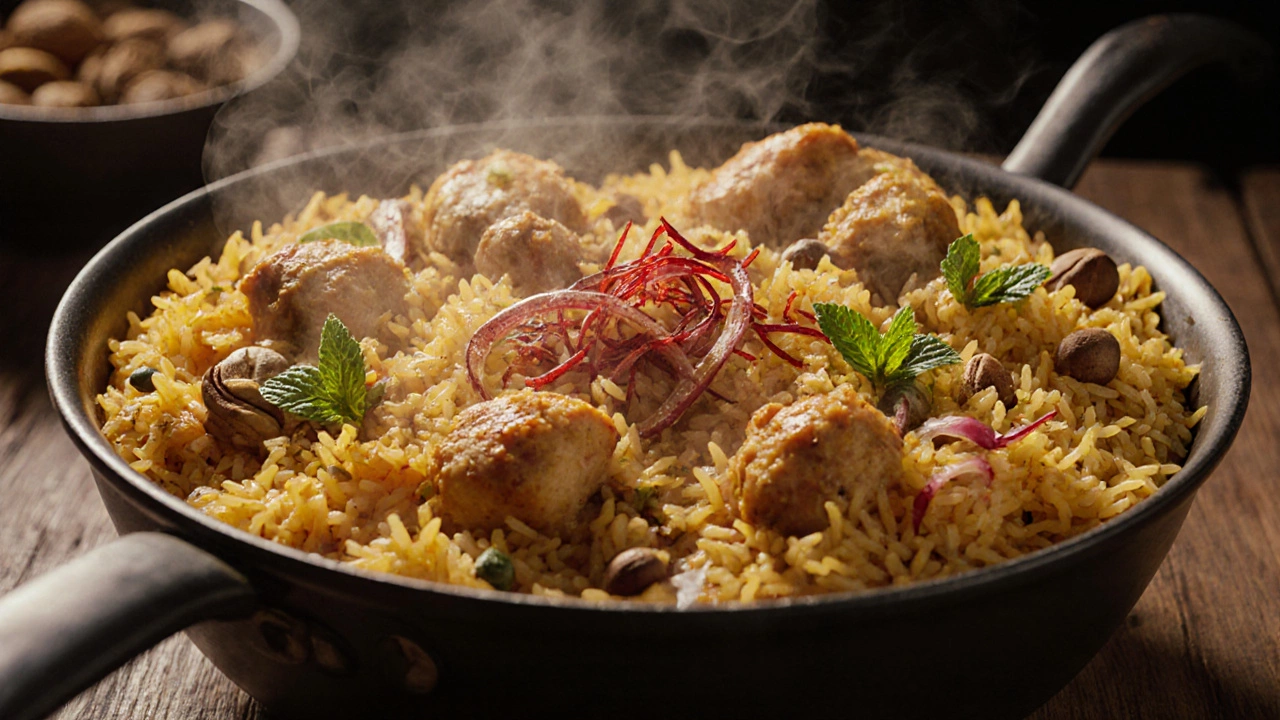
World's Tastiest Biryani: Top Picks, Tasting Tips & Authentic Recipes
Discover the world's tastiest biryani styles, learn how to taste them like a pro, and get authentic recipes to recreate each favorite at home.
When you think of biryani, a layered rice dish cooked with spices, meat, and sometimes eggs or potatoes, deeply rooted in India’s culinary history, you’re not just thinking of food—you’re thinking of family gatherings, festivals, and long-simmered flavors passed down for generations. Biryani isn’t one recipe. It’s a family of dishes, each shaped by region, culture, and history. In Hyderabad, it’s spicy, fragrant, and cooked in a sealed pot called a dum. In Lucknow, it’s subtle, aromatic, and slow-cooked to let each spice breathe. In Kolkata, it’s sweetened with potatoes and boiled eggs, a legacy of royal kitchens adapting to local ingredients. These aren’t just variations—they’re identities.
What makes one biryani different from another isn’t just the spice mix. It’s the rice—Basmati from the foothills of the Himalayas, soaked just right, never overcooked. It’s the layering: meat at the bottom, rice on top, saffron milk drizzled in between, and a lid sealed with dough to trap steam. The Hyderabadi biryani, a bold, fiery dish from Telangana, often uses goat meat and fried onions for crunch is cooked in a single pot, letting the flavors meld deeply. The Lucknowi biryani, also called Awadhi biryani, uses the dum pukht method, where the pot is sealed and cooked over low heat for hours, resulting in tender meat and fragrant rice that stays separate. Then there’s the Kolkata biryani, a unique blend of Mughal technique and Bengali taste, with potatoes and a hint of rosewater. Even in Tamil Nadu, Kerala, and Punjab, you’ll find versions with local twists—coconut milk, fish, or even chicken with cashews.
Behind every great biryani is a simple truth: technique beats ingredients. Soaking the rice too long? It turns mushy. Over-spicing? You lose the nuance. Skipping the sealing step? The aroma escapes. The best biryanis aren’t made with rare spices—they’re made with patience, timing, and respect for tradition. You’ll find posts here that break down exactly how to layer the rice, why saffron matters more than you think, and how to fix rubbery meat without adding cream or sauce. Whether you’re trying to replicate your grandmother’s recipe or understand why your friend’s biryani tastes nothing like yours, the answers are here—not in flashy gadgets or imported ingredients, but in the quiet details that make all the difference.
Discover the world's tastiest biryani styles, learn how to taste them like a pro, and get authentic recipes to recreate each favorite at home.